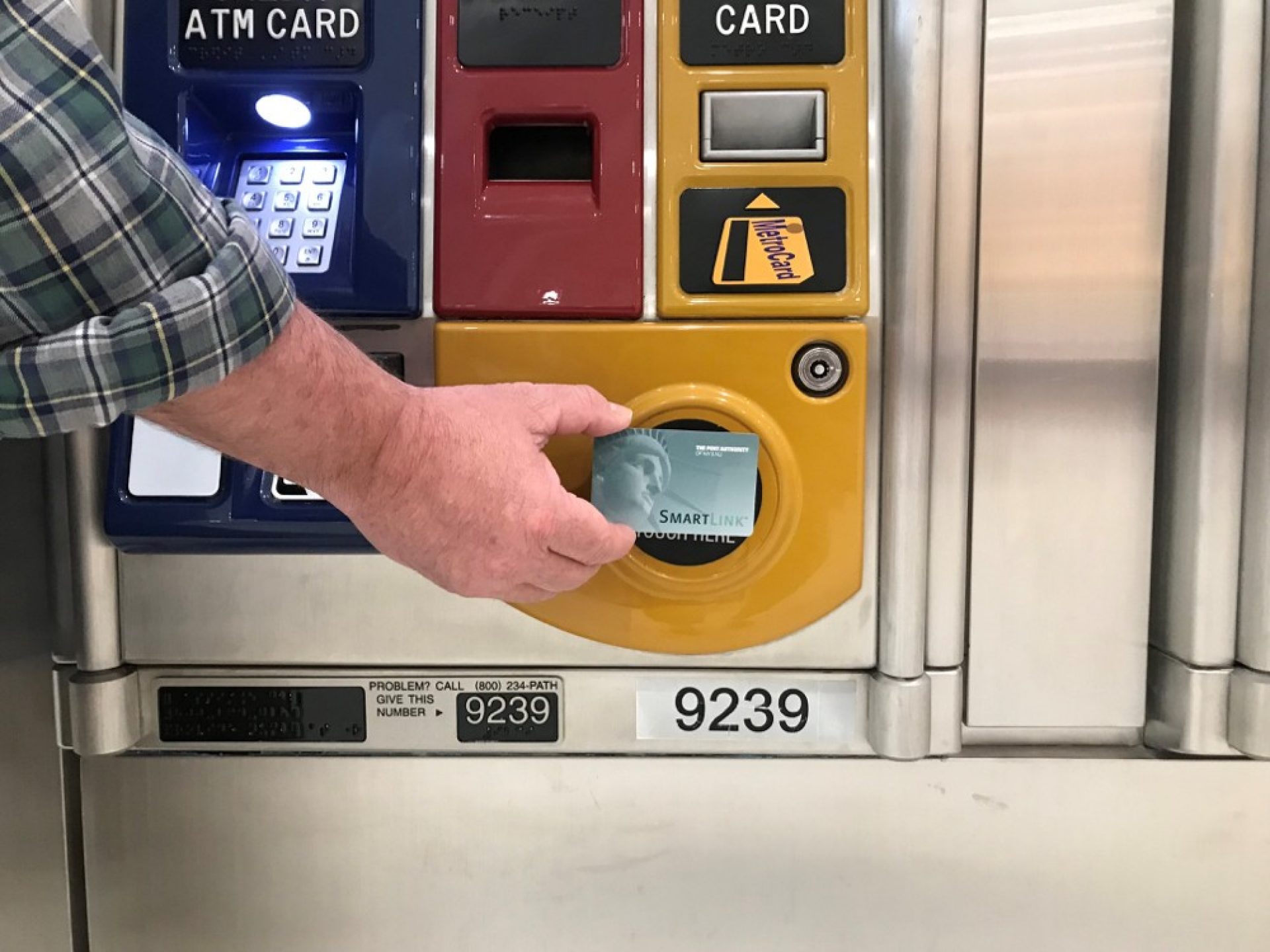
Consider the small ceremony of paying for a train. You arrive at a barrier, locate the right object, present it correctly, and wait for permission to continue. Repeat that ceremony enough times and the object becomes part of the journey. For PATH riders, SmartLink was that object: a plastic card with a chip, a little stored travel, and a place in the wallet beside everything else that promised to simplify life.
- SmartLink brought reloadable tap-and-go fares to PATH in 2007.
- Its replacement, TAPP, lets riders use contactless bank cards, digital wallets or a dedicated transit card.
- SmartLink is retired. Remaining balance-transfer requests run through February 2027.
A small improvement, repeated
Smart Link, as the name appears here, is PATH’s SmartLink fare program, operated by Port Authority Trans-Hudson Corporation. Its business was collecting railway fares between New Jersey and Manhattan. The product lived at the point where public infrastructure meets a hurried person. A useful design at that point has a modest ambition: keep the person moving.
SmartLink replaced the disposable logic of the magnetic-stripe QuickCard with something riders could keep and refill. It arrived in 2007. By the end of 2009, when QuickCard was phased out, half of daily riders had switched to the reloadable card. That is a satisfying kind of adoption story: a familiar journey, with one repeated task made easier.
The standard card cost $5 before fares. Customers bought trips or unlimited passes, then reloaded the same piece of plastic. Registration offered protection for eligible unused travel if the card went missing. Online accounts and automatic replenishment moved some of the ticket-machine work away from the station. The value proposition was tangible: fewer occasions to stop before boarding.
The machinery failed first
To understand the invention, go back further than its launch. In December 2001, PATH’s board described a fare system becoming difficult to maintain. Component failures were increasing. Replacement parts for equipment no longer manufactured were costly and hard to obtain. The old system also lacked payment flexibility and automatic financial reconciliation.
This was an operational problem before it was a consumer convenience problem. The board authorized an estimated $51 million regional fare-collection project, including an estimated $32 million Cubic contract for equipment and software. Those were authorized estimates for a broader system, rather than a final bill for the plastic cards. The distinction matters whenever an infrastructure project gets reduced to the price of its most visible object.
SmartLink’s expertise therefore extended beyond a card reader. It joined fare products, vending machines, account software and the business of reconciling journeys with money. Commuter benefits added another connection: WageWorks documented direct loads and prepaid benefit cards used to fund SmartLink. A commuter could encounter several organizations behind one apparently simple purchase.
For a service designer, this is the interesting unit of analysis: the entire transaction. Selling a reusable card helped only if the passenger could obtain it, fund it, recover its value after loss and trust the gate to read it. Each supporting service reduced a different reason to hesitate. The card was the portable end of that arrangement.
The border in your wallet
There was a catch to the convenience. SmartLink worked on PATH, not New York City Transit or NJ Transit. A card that made one railroad easier still occupied its own slot in a regional traveler’s wallet. The original regional ambition and the eventual boundary make an instructive pair. Payment technology can cross a reader without crossing an institution.
The card also carried rules beneath its uncomplicated surface. It could hold six fare products, with limits on the number of each type. Online purchases needed a station tap to load, and pending purchases had a 60-day window. These details were manageable for regular users. For an occasional passenger, they were things to learn before a system could feel effortless.
The next improvement followed naturally: accept an object the passenger already owns. TAPP supports contactless bank cards and digital wallets, alongside its own reloadable card. A rider can use the same bank card on PATH and the MTA, although the agencies still run separate systems. A physical OMNY card does not open a PATH gate.
A replacement has to earn its turn
In 2021, PATH authorized a $99.4 million capital project for its new fare system. Cubic’s separate operating arrangements included an estimated $5.1 million annually for six years. A tap may look instantaneous; its supporting commitments run for years. Hosting, maintenance and program management belong in the cost conversation too.
TAPP began its pilot in December 2023 and reached every PATH station in 2024. The transition required more than installing readers. Program director Greg Wong described a specially assembled team, with testing, preparation and training that could involve nights and weekends. His account offers a useful correction to the idea that changing payments is mostly a matter of attaching new hardware.
“We had to create an organization within the organization.”Greg Wong, TAPP program director
The transferable lesson is to introduce the new habit while supporting the old one. PATH kept legacy payment equipment operating as TAPP expanded. Around 60 percent of rides used TAPP in 2024; the agency reported 96 percent adoption by the end of July 2026. These figures describe different reporting periods, but the direction is clear.
One last job for the old card
That approach needs qualifications. A bank-card-first service still needs a route for people who prefer cash or need fare discounts. TAPP’s physical card preserves that choice. The sensible thing to copy is the reduction in repeated effort, together with the alternatives that let different passengers participate.
SmartLink acceptance ended August 31, 2026. Its last useful task is helping former riders recover remaining value. PATH directs customers to request a transfer to a TAPP Card by February 2027, with both cards registered. The old card can remain intact long after the gate stops recognizing it. Durability belongs to the object; usefulness depends on everything around it.