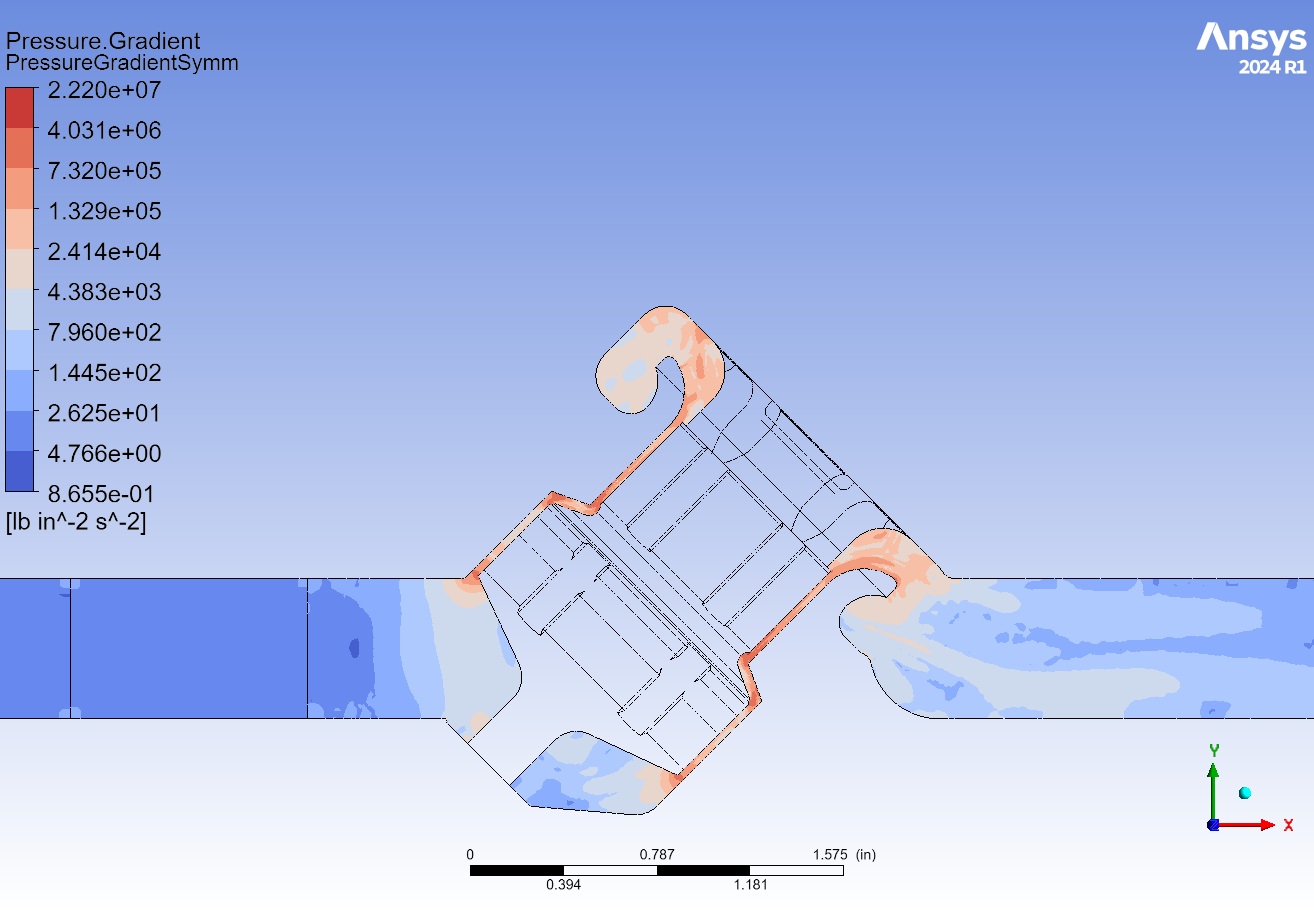
The first useful thing about INFLO Technique’s valve was that the numbers did not agree. Early bench tests and the simulation gave different pressure drops. For a Québec startup designing a shutoff valve for high-pressure air and nitrogen service, that disagreement was consequential. A spring, a disc and the forces between them would determine whether the valve behaved as intended. A convincing picture on a monitor could not settle the question.
- SimuTech supplies Ansys software, technical support, consulting, training and physical testing.
- INFLO reports three to six months saved after resolving a mismatch between simulation and bench results.
- The lesson for product teams: identify the decision, improve the inputs, and check the answer against hardware.
SimuTech Group helped INFLO refine its mesh strategy and extract disc forces. The startup used Ansys CFX for fluid analysis and Ansys Mechanical for structural checks, then completed the design with one set of disc prototypes. Its published account credits the approach with avoiding up to three additional prototype loops. This is a more interesting introduction to SimuTech than a catalogue of software: the company’s value becomes visible at the moment an engineer has reason to doubt the screen.
The model meets the bench
Engineering simulation lets a team investigate a design before committing to another physical version. Finite element analysis divides a structure into manageable pieces to estimate its response. Computational fluid dynamics does similar numerical work with flows. Electromagnetic and optical tools extend that investigation to fields and light. The result can be a useful prediction, provided the model represents the question being asked.
SimuTech occupies the space between access to those tools and competent use of them. It supplies Ansys products and the people who help configure, interpret and apply them. Some customers need a license and support. Others need an analyst to take on a project, a mentor to work alongside their team, or measurements from a test engineer. The software is the common thread; the amount of help varies.
INFLO’s reported schedule reduction on its auto shutoff valve project. A customer result, rather than a promise for every design.
INFLO’s account also makes the economics tangible. Repeated machining consumes money. So does time on a test stand, and so do the engineering hours between iterations. Reducing those loops can justify an investment in software and support. The sensible comparison is the whole development path: licenses, analysis and learning on one side; avoidable rebuilding and delay on the other. A saved calendar month has different value to a startup approaching delivery than to a team exploring a distant concept.
What persuaded INFLO to plan further licenses and training was the corrected model’s usefulness. Agreement with early testing gave the engineers a firmer basis for choosing the design. The copyable move is modest: make the discrepancy a task to investigate. An inconvenient measurement may be the most valuable information in the room.
A hammer belongs in this business
SimuTech’s physical testing work explains why its offering reaches beyond software resale. In modal testing, engineers excite a structure and measure its response to determine natural frequencies, mode shapes and damping. The excitation can come from a shaker, a piezoelectric actuator or a hammer. The company’s own description includes the admirably plain word “bonk.” Even elaborate engineering retains a place for hitting something and listening carefully.
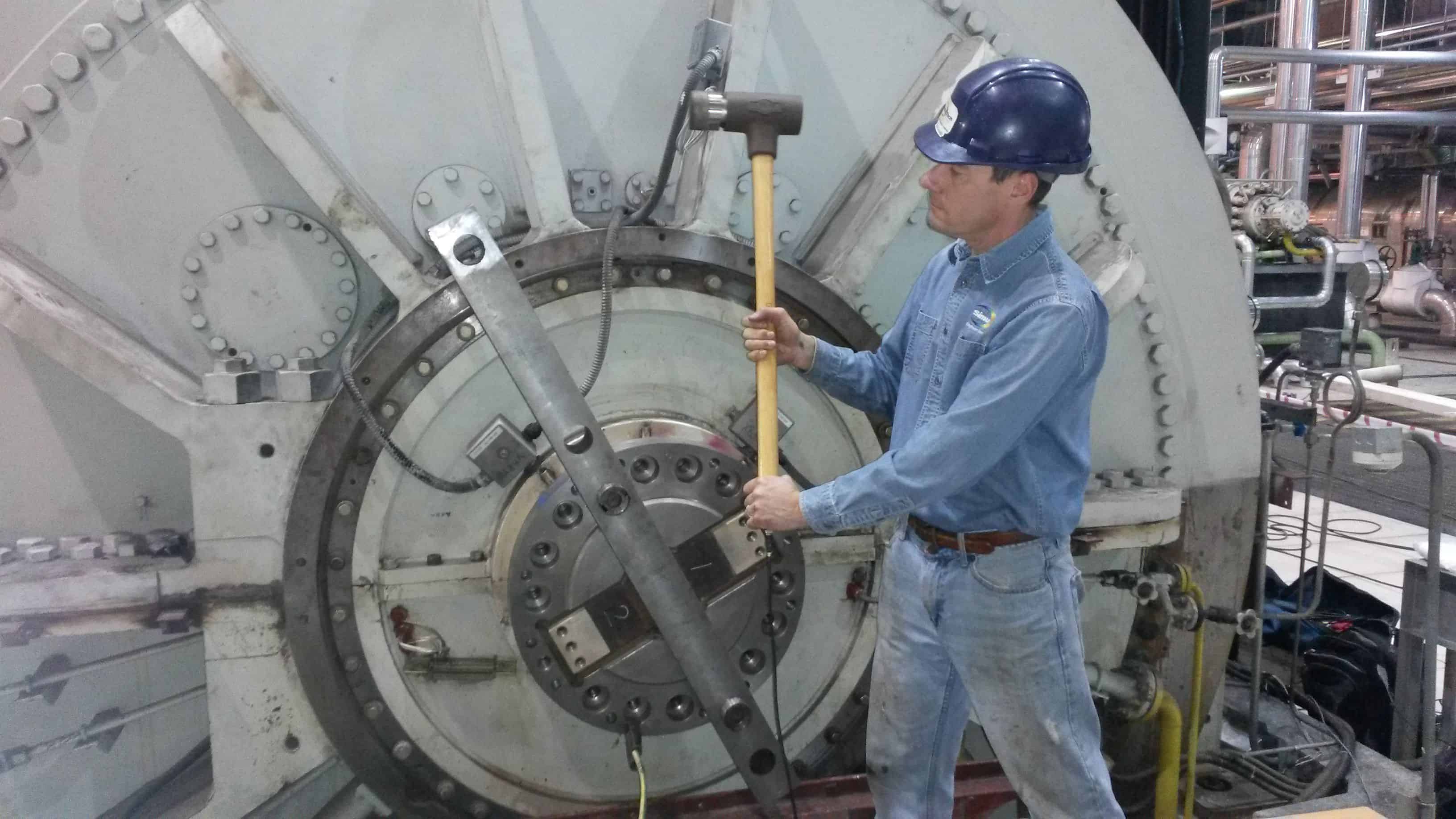
Those measurements can help validate a finite element model. A comparison asks whether the calculated behavior resembles the structure’s actual behavior, including the effects of material properties and how it is supported. SimuTech performs this work in laboratories and at customer sites, alongside other testing services for turbine blades and airframes. For a customer trying to explain a vibration problem, analysis and measurement can therefore sit within the same engagement.
The distinction matters when evaluating providers. A software seller, a training instructor and a test laboratory can each be useful. Coordinating them takes work. SimuTech offers these capabilities together, which gives a team a route from a theoretical question to an experimental check. Whether that route is worth buying depends on the question and the expertise already available inside the customer’s organization.
Conceptual workflow. A disagreement can send the team back to the model.
Quantum refrigerators and tank sludge
The range of customers is best understood through their constraints. Maybell Quantum needed a dilution refrigerator to accommodate more sample mass while keeping sample-plate deflection within its allowable limit. Ansys Mechanical helped explore support structures under different load positions. The glamorous setting was quantum technology; the immediate engineering problem was keeping a plate from bending too much and preserving ease of assembly.
TankScope’s challenge was dirtier. Industrial tank cleaning suffers when estimates of sludge do not match what crews encounter. Its workflow uses material sampling to improve the inputs to Ansys Fluent, then investigates flow patterns, mixers and cleaning arrangements. A model of a proposed mixing system in a 220-foot oil tank illustrates the scale involved. The case describes better planning and a move toward non-entry cleaning, rather than a universal savings percentage.
These projects share a useful discipline. Start with the consequence that matters: plate deflection, sludge distribution, a valve’s closing behavior. Then choose the analysis. Beginning with the software’s most impressive feature risks answering a question nobody needed answered. A purchasing committee may admire a rendering; a production engineer wants to know what to change.
Buying the answer, learning the method
SimuTech’s business combines B2B software sales with engineering services. Consulting can address a single project or an ongoing engagement. Training includes instructor-led and online options, self-paced material and customized instruction. Mentoring gives an engineer help with the work already on the desk. Workflow automation services address another familiar problem: repeating setup and analysis tasks consumes specialist time.
A customer can consequently buy different outcomes. Consulting buys capacity and specialist judgment for a defined problem. Training builds the team’s ability to handle subsequent problems. Support helps an existing user get past a technical obstacle. Physical testing supplies evidence about the real object. Choosing among them requires an honest assessment of whether the bottleneck is time, skill, software access or missing measurements.
Other routes remain available. A capable internal analysis team may need less outside help. Direct vendor support may meet a narrower requirement. Cloud simulation platforms such as SimScale offer another way to access analysis tools. SimuTech’s position is particularly relevant to teams choosing the Ansys ecosystem and wanting engineering assistance around it. Its breadth of services should be judged against the work the customer actually needs done.
A wider bench of specialists
The September 2025 merger announcement with Ozen Engineering described a combined organization of more than 200 employees and a stronger California presence. That expansion matters because simulation expertise is specific. An engineer comfortable with structural fatigue is not automatically the right person for a photonics problem. A wider pool can make it easier to find the relevant experience, especially when a design crosses disciplines.
In March 2026, the ESSS Mexico partnership expanded through the acquisition of GrupoSSC’s simulation resale and support business, extending the regional offering in Mexico and Central America. SimuTech also announced its 2025 Worldwide Channel Partner of the Year recognition in February 2026. The award establishes standing within the vendor’s channel; the customer projects explain what that standing might mean at a workbench.
Its recent medical-device work sharpens the underlying argument. In August 2026, principal engineers Mark Goodin and Ertan Taskin announced a chapter on establishing the credibility of blood-pump models in an open-access handbook. Their subject is verification, validation and uncertainty quantification: how to assess whether computational evidence deserves the weight placed on it.
“There’s a real sense of accomplishment in contributing to a device that benefits a patient.”Mark Goodin / Principal Engineer, SimuTech Group
How to borrow the method
A product team can borrow the sequence without copying a particular customer’s tools. Define the decision and its acceptance criteria. Collect the inputs that influence it. Run the model, compare the prediction with relevant measurements, and investigate disagreements before making the next expensive commitment. Ask a prospective consultant what assumptions need checking and what deliverable will let the team act.
The economics become less attractive when a simple calculation already settles the issue, when the team cannot obtain useful inputs, or when analysis cannot arrive in time to influence the design. A simulation also needs scrutiny proportionate to the decision it supports. More reliance on a model creates a greater burden to establish its credibility. SimuTech’s most instructive customer story begins with precisely that burden: the bench disagreed, and somebody had to find out why.
Keep investigating
Explore SimuTech Group, its customer projects, training courses and company news.
LinkedInXInstagramFacebookYouTube
Watch the method
↗ Mesh adaptation: the initial approach↗ Geometry-based mesh adaptation: the revised workflow