Company Hardware · Climate · Smart Lighting
Signify Turned the Light Bulb Into a Data Business
The company that used to be Philips Lighting bet that a light bulb is really a data point. Here is how a 130-year-old lamp business turned itself into smart homes, connected cities and carbon-neutral factories - and where that bet gets shaky.
You almost certainly own a Signify product and have no idea. The Philips bulb over your kitchen table, the color-changing Hue strip behind a teenager's TV, the streetlight you walked under last night, the grow lights over a Dutch greenhouse growing your winter tomatoes - all of them trace back to one company in Eindhoven that most people have never heard of. It used to be called Philips Lighting. In 2018 it renamed itself Signify, and the name is the whole thesis: light that signifies, light that carries meaning and data, not just brightness.
That is a strange bet for a business whose roots go back to an 1891 incandescent-lamp factory. Lighting is supposed to be a commodity - cheap glass, cheaper competition, a race to the bottom that killed most of the 20th-century lamp giants once LEDs made bulbs last for decades. Signify's answer was to stop selling the bulb and start selling what the bulb can do: connect, sense, save energy, and get billed as a service. This is the story of how that reinvention actually works, what it costs, and where it wobbles.
01 / What it doesFrom a lamp company to a light platform
Signify makes light in every form a customer might buy it. At the cheap, familiar end there are LED lamps and tubes under the Philips brand - the company still licenses the Philips name even though it is now a separate business. At the premium end there is Philips Hue, one of the world's most widely used smart-home lighting systems, and WiZ, a Wi-Fi-based budget sibling that skips the hub. In the middle sit professional luminaires for offices, factories, stadiums, roads and cities.
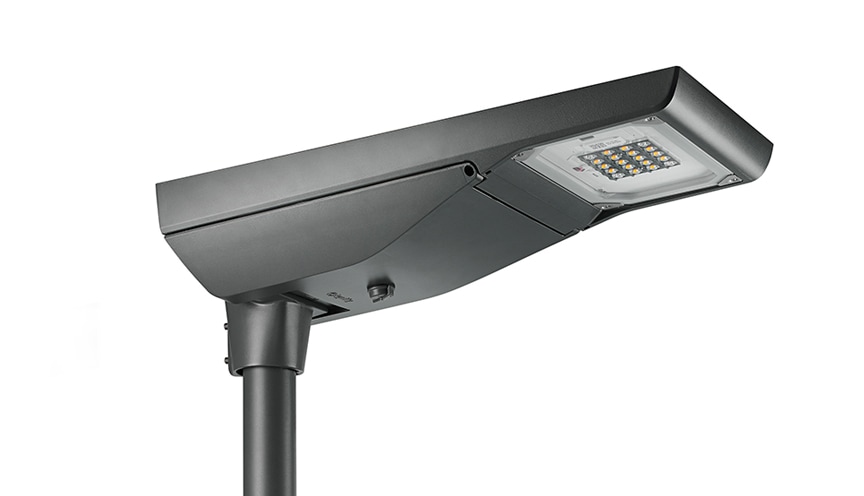
The part that changes the business is the software. Signify's Interact platform treats every connected luminaire as a sensor and a node - collecting occupancy, energy and environmental data and feeding it into dashboards, analytics and machine learning. A streetlight stops being a streetlight and becomes a data point on a map a city can manage. That is the pivot the entire hardware world is chasing, and lighting has an unfair advantage: the fixtures are already everywhere, already wired, already overhead.
02 / Who buys itTwo customers who look nothing alike
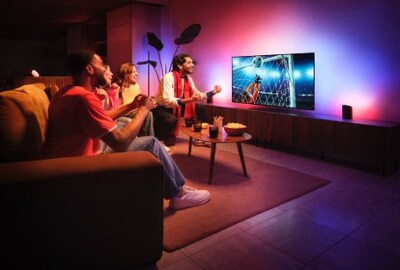
Signify serves two audiences that share almost nothing. One is the homeowner who buys a single Hue bulb to make movie nights better and slowly ends up with forty of them, plus sensors, plus the app. The other is a procurement officer at a city, a hospital, a football stadium or a greenhouse operator who signs off on a multi-year connected-lighting project. Consumer sales are impulsive and emotional; professional sales are slow, technical and enormous.
The genius of Philips Hue is that it works as a Trojan horse. The first bulb is a low-stakes purchase. But it installs an app, a bridge and a habit - and from there Signify can sell you strips, outdoor lights, security cameras and, most recently, lighting that reacts to live sports scores. The bulb is the foot in the door. The ecosystem is the business.
Carbon neutrality is not an excuse for complacency - you must never take your foot off the accelerator on emission reduction.Eric Rondolat, former CEO of Signify
03 / The problems it solvesEnergy, data, and the sun itself
Strip away the branding and Signify sells three things: energy savings, connectivity, and control over light where nature does not cooperate. LED retrofits cut the electricity a building or a city burns on lighting, often dramatically - that is the hard number that gets municipal projects approved. Connectivity turns those same fixtures into infrastructure that can dim, respond to occupancy, and report back.
Then there is the strangest corner of the portfolio. Trulifi uses LiFi - internet transmitted through light instead of radio - to deliver connectivity in hospitals, factories and secure rooms where WiFi is unwanted or easy to intercept. GrowWise and the GreenPower horticulture range let greenhouses and vertical farms grow year-round under precisely tuned LED spectra; Signify says its smart spectrum can lift crop growth by up to 6% or cut energy use. During the COVID-19 pandemic, the company leaned on decades of UV-C know-how to ship germicidal lamps that disinfect air and surfaces. Same core competency - controlling photons - pointed at very different problems.
04 / How it is differentSoftware on top of a commodity
Signify's rivals - Acuity Brands, Legrand, ams-Osram, LEDVANCE, and a wall of Chinese volume manufacturers - all make good LEDs. Competing on the lamp alone is a losing game once the product lasts fifteen years. Signify's differentiation is the layer above the hardware: the Interact platform, the Hue ecosystem, the service contracts. It is trying to be the company you keep paying after the fixtures are installed, not the one you forget until a bulb dies.
The clearest expression of that is Light as a Service. Instead of buying fixtures, a customer pays for light - Signify keeps ownership of the hardware and is responsible for upgrades, maintenance, energy performance and eventual recycling. Hardware becomes a subscription. It aligns the incentives too: because Signify still owns the gear, it is motivated to make it efficient and long-lived rather than disposable. That is a model plenty of hardware companies talk about and few pull off.
The honest read: revenue is roughly flat-to-down as cheap LED volumes soften. The bet is that connected products and services grow their share of a steadier pie.
05 / Products and servicesThe full portfolio
Philips Hue
Premium connected home lighting - bulbs, strips, fixtures, a bridge, and now an AI scene assistant and home-security features.
WiZ
Wi-Fi-based smart lighting for the mid-market. No hub required; it talks straight to your router.
Interact IoT
The software platform that turns connected luminaires into a data network for buildings and cities.
Trulifi (LiFi)
Two-way, high-speed internet delivered through light - secure connectivity where radio does not belong.
Horticulture LED
GrowWise and GreenPower grow lights and spectrum software for greenhouses and vertical farms.
Professional & outdoor
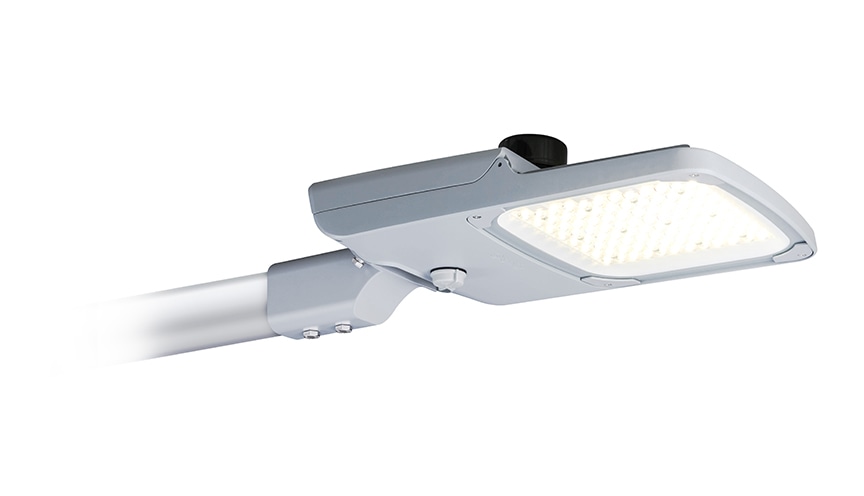
Connected street, solar, sports and industrial luminaires - SunStay, GreenVision Xceed, Actistar and more.
06 / Business modelBoxes, projects, and recurring light
Money reaches Signify three ways. There is one-time product revenue - the Hue box at the store, the LED tube in a warehouse. There is project revenue from big professional installations that can run for months. And there is the growing sliver everyone watches most closely: recurring income from connected software, subscriptions and Light as a Service. The first two are mature and price-competitive. The third is the reason to believe the company is more than a lamp maker.
This is also why flat headline revenue is not the whole story. If connected and service revenue keeps taking share from bare LED volumes, the mix gets healthier even if the top-line number does not sprint. The risk is obvious too: services are a promise, not a product, and delivering them at the scale of a 30,000-person hardware company is hard.
We can solve global issues with light.Eric Rondolat, former CEO of Signify
07 / Expertise & cultureCentury-old, sustainability-obsessed
Signify's real moat is boring and hard to copy: a century-plus of lighting physics, optics, drivers, manufacturing and standards work, plus a global professional sales and installation footprint. Layered on top is a sustainability posture that is unusually concrete for a manufacturer. The company reached carbon neutrality in its operations in 2020, runs on 100% renewable electricity, sends zero waste to landfill, and designs for the circular economy - all packaged under a program it calls Brighter Lives, Better World. For once, the green story is operational, not just a brochure.
Leadership, meanwhile, has been anything but steady. In a single twelve-month stretch the company cycled through three chief executives: long-serving Eric Rondolat stepped down after the 2025 AGM, the CFO held the seat on an interim basis, and As Tempelman - formerly CEO of the Dutch energy company Eneco - took over. Three names on the door, and yet the product roadmap kept shipping. That gap between org-chart chaos and calm execution is itself a tell about where the real gravity of the company sits.
08 / Where it fitsThe infrastructure you never notice
Zoom out and Signify occupies an odd, valuable spot: consumer darling and industrial backbone at the same time. Hue gives it a beloved brand and a direct line into millions of homes. The professional and city business gives it scale, contracts and the least-glamorous kind of durability - infrastructure nobody thinks about until it goes dark. Few companies straddle both a shelf at the electronics store and a municipal procurement portal.
Where would the bet not work? If connected lighting stays a nice-to-have rather than a standard, the software premium never materializes and Signify is left defending margins on commodity LEDs against cheaper rivals. If cities delay the capital cost of smart retrofits, the Interact story slows. And services only pay off if customers actually value the dashboard more than the discount. The company has proved a hardware giant can reinvent itself and go carbon neutral without stalling. Whether it can make the world pay a premium for light that thinks is the question the next chapter answers.