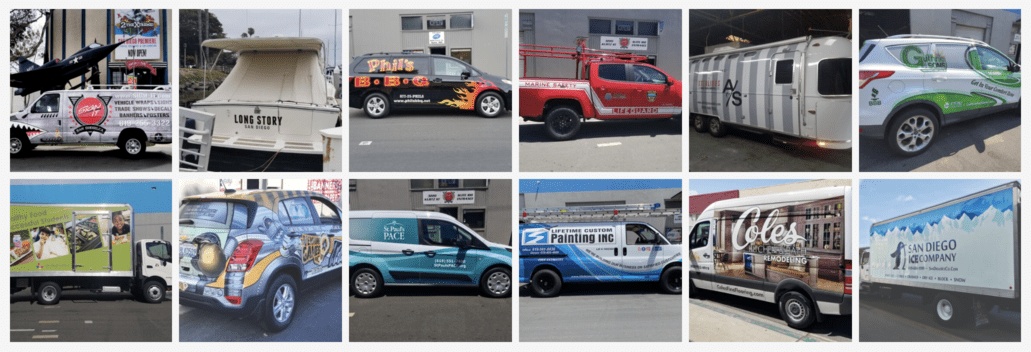
A car wearing the Phil’s BBQ name is a useful place to start. In Sign It’s vehicle portfolio, the restaurant’s lettering rides above a lick of flame along the bodywork. Nearby are wrapped vans, box trucks and a boat with lettering across its stern. The collection makes an ordinary point unusually visible: a company’s identity has to fit the things it owns. Sometimes those things have wheels.
Sign It works in that space between an approved graphic and a finished physical object. The San Diego business designs, produces and installs signs and graphics, with a catalog stretching from reception logos to trade-show displays. It also sells the small stuff: business cards, postcards and menus. A customer can arrive with a storefront problem and discover that the same supplier can handle the truck parked outside.
That breadth is the story. Sign It’s appeal lies in connecting several practical jobs that businesses often encounter together. Opening a location, attending an exhibition or changing a brand can mean ordering a surprising number of objects. Each has its own dimensions, audience and working conditions. Someone has to translate the visual identity for all of them.
A logo with somewhere to go
The company’s vehicle offering is particularly revealing. Full wraps share the menu with lettering, logos, fleet graphics and removable door magnets. It also offers color-change wraps, which give the service a use beyond commercial advertising. A business promoting its name and a driver changing a car’s appearance can approach the same category with quite different objectives.
Those distinctions matter when buying. A removable magnet answers a different brief from a vehicle covered in graphics. Lettering gives a business a way to place identifying information on the bodywork; a larger wrap gives the design more surface to occupy. The sensible question comes before the artwork: what does this vehicle need to communicate, and how permanently should it communicate it?
Sign It describes its design process as a collaboration around the client’s business, goals and visual identity. For a fleet, the stated aim includes consistency across vehicles. The portfolio gives that proposition something concrete to stand on. These are graphics applied to working objects with windows, doors and different proportions. A design has to make sense on the object carrying it.
The customer may arrive on foot
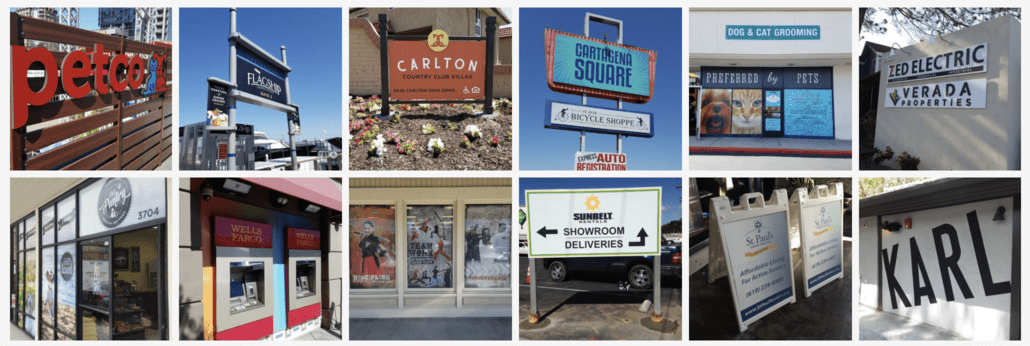
The storefront catalog moves the same problem back to the pavement. Sign It offers sidewalk A-frames, flags, banners, window and door graphics, illuminated light boxes and monument signs. These formats occupy different positions in a visitor’s approach. A sign can identify the building, announce an offer or tell someone they have reached the right door.
Perforated window graphics add another choice. The company markets them as a way to put imagery on glass while retaining an outward view and admitting light. Street-pole banners, also on its list, take the message away from the front window and into the surrounding streetscape. The surface becomes part of the decision, rather than an afterthought once a graphic is finished.
For a buyer, this range invites a useful discipline: describe the encounter before choosing the product. Is the viewer walking past, looking for an entrance or arriving after dark? The answer should shape the brief. Buying the largest available sign is a poor substitute for deciding which moment of confusion or opportunity the sign is meant to address.
Inside, the job changes again
Once someone crosses the threshold, Sign It has another set of surfaces to work with. Its interior range includes reception-area logos, dimensional letters, posters, wallpaper murals and menus. It also offers prints on metal, wood and canvas, along with fine-art and gallery prints. The business extends from identifying a room’s occupant to helping determine how that room looks.
There is a useful distinction here between decoration and information, even when one object does both. A reception logo identifies the organization. A menu has to carry choices. A mural can occupy a wall without asking the visitor to read a long message. Putting these products under one heading does not make their design tasks interchangeable.
Sign It’s general-signage range adds the less glamorous work: parking signs, construction-site signs, real-estate signs, yard signs and directions. Then comes a small comic flourish in the catalog: arrow spinners. The same shop that offers dimensional reception lettering will also make the attention-seeking sign associated with roadside promotions. The tone changes; the purpose remains specific.
A booth that can leave the building
Events introduce a further constraint: the branded environment may have to pack away. Sign It sells retractable banner stands, table throws, custom canopies and fabric pop-ups, as well as trade-show and point-of-purchase displays. A retractable banner rolls into its base. A printed table cover turns a piece of event furniture into another place for the company name.
This is where a broad supplier can become useful to a small marketing team. The booth backdrop, the table and the printed handout all belong to one visitor experience, even though they are separate purchases. Considering them together gives the buyer a chance to decide what each piece should say, instead of repeating the same dense message on everything.
The print catalog completes that thought. Under offset printing, Sign It lists business cards, brochures, flyers, envelopes, mini menus, postcards and rack cards. Large graphics can get someone’s attention; smaller printed pieces can carry information away from the encounter. The combination gives the company a role across both the temporary setting and the material a visitor takes home.
The unglamorous advantage: finishing the job
Sign It dates its business to 1995. Its company description names customers including Scripps, Sea World, Biocom, Phil’s BBQ, Karl Strauss and the Port of San Diego. That company-reported list places it among organizations with very different public faces, from hospitality to institutional services. Its stated reach extends beyond San Diego, and its services page offers shipping across the country.
Its commercial proposition is a custom job, scoped through a quote. The company presents design, production and installation together and also lists custom fabrication and electric and neon sign repair. Those services matter because a sign remains a physical object after the artwork is approved. It has to be made, delivered, mounted and, sometimes, repaired.
“they went out of their way to help me with a mounting issue”
Randall V · customer testimonial published by Sign It
That modest detail from a company-published testimonial is more instructive than a sweeping promise about visibility. A mounting problem is specific. It sits exactly where a printed object meets the place it must live. The company’s customer-facing values emphasize attentiveness, creativity and reliability, and this is the sort of interaction those words are meant to describe.
Against a specialist wrap installer, Sign It offers a wider collection of related materials. Against a print-only vendor, its installation and fabrication services broaden the assignment. These are differences in scope, not proof of a lower price or a better result. Their value depends on whether a customer actually needs the connected work.
Before the quote, write the brief
The buying lesson is straightforward: define the whole job before comparing its price. Sign It’s website directs customers to request a quote, making the project description the starting point. A useful inquiry would name the product, dimensions, quantity, placement and desired delivery date, then explain whether the buyer needs design help, installation or shipping.
A buyer should also ask what the proposed figure includes. Artwork preparation, the finished item and putting it in place are different pieces of work, even when one supplier handles them. A quote for a supplied banner and a quote for a completed installation answer different questions. Comparing their totals without comparing their scope can obscure the decision.
Consider the questions a restaurant owner could bring to that conversation. Does the window need opening hours, a promotional graphic or both? Will a menu be read at the counter or held at a table? Does a vehicle need a recognizable name or a fuller explanation of the business? This is an illustrative brief, not a reported Sign It project. Its usefulness is in separating the jobs before they become purchases. A supplier can then respond to a defined need, and the buyer has a clearer basis for reviewing the proposal.
The same discipline helps establish when this kind of service is a good fit. A business coordinating a new storefront, interior graphics and vehicle lettering has several reasons to want one conversation. Someone reordering a simple print item from finished artwork may have fewer. National shipping is useful for portable products, while any installation away from the shop needs its own discussion.
What another business can copy is the habit of organizing the work around use. Start with where the customer will encounter the message. Decide what that moment requires. Then choose the surface, the format and the words. In Sign It’s portfolio, even the boat gets a name. The practical achievement is making sure the right message ends up on the right thing.