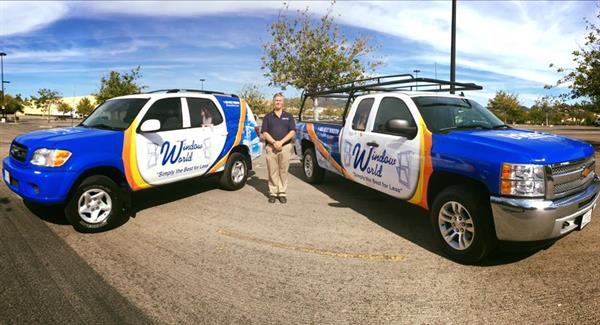
A contractor’s truck has two jobs: get the crew to work and tell the neighborhood who showed up. SignArt Graphix works on the second assignment. In its portfolio, Window World’s blue-and-white vehicles look like members of the same family. A Monkey Wrench Plumbing van gives a cartoon mascot enough room to introduce the business before anyone opens the door. These are working vehicles with a public-facing role, carrying an identity along with the tools.
The San Marcos, California, company designs, prints and installs vehicle graphics, fleet lettering, signs and other large-format work. Its commercial logic is refreshingly tangible. A customer has a surface, a message and a reason to be noticed. SignArt turns those ingredients into something that can survive outside a computer screen.
The interesting part is how far that brief travels. The project gallery ranges from roofing vehicles and a Superior Ready Mix fleet to off-road builds and an Epic Video Game Bus. A sign shop can be a small business serving other small businesses while also handling the visual coordination of a much larger operation. SignArt occupies that stretch of the market.
A paintbrush passes to the next generation
SignArt’s homepage dates the business to 1979 and describes an early trade in hand-painted signs and race-vehicle designs. Today’s shop belongs to a different production era: full-color printing, vinyl wraps and digital previews. The family connection remains visible in the company’s leadership.
Gary Schons and Donna Nicastro are identified as founders and first-generation owners. Natalie Crow is the second-generation owner and creative director. The company credits Crow, who grew up around the shop, with helping it adopt newer printing technology. That is the documented change in direction: the craft expanded into different production methods while retaining its connection to vehicle graphics.
The team page also gives a taste of the workplace’s personality. One installer is called a “Wrap Install Wizard”; production staff get the title “Production Slayer.” Beneath the jokes sits a conventional division of responsibilities, including creative direction, print coordination and installation. The company describes itself as family-run and woman-owned. Its stated mission centers on representing each customer’s particular image and providing attentive service. The promise is personal enough for a local shop, with work intended to travel much farther.
The race car and the roofer share a problem
Racing is part of SignArt’s service offering, not merely an origin-story decoration. The company markets graphics for off-road vehicles, dirt bikes and side-by-sides, as well as broader race-team branding. That can encompass the race vehicle, support trucks, trailers and the visual identity seen by fans. A team’s appearance extends beyond the machine that crosses the finish line.
The business has public connections to that world. In a March 2023 racing update, driver Matt Million named SignArtGraphix among the partners supporting Palomar Racing. SignArt’s own gallery includes a Brian Deegan build, a Baja Designs side-by-side and an Ivan Stewart replica truck wrap. Those examples establish a motorsport presence without requiring a claim that graphics improve race results.
The connection to commercial fleets is easy to see. Both customers need different objects to look related. A race trailer should belong visually to its team; a service truck should belong visually to its employer. The styling may differ considerably, but the design problem travels well. SignArt’s racing work gives prospective buyers a particular body of work to judge, alongside the everyday vehicles that keep local businesses moving.
One truck is a design. A fleet is a system.THE FLEET BUYER’S BRIEF
One truck is a design. A fleet is a system.
SignArt says it holds multiple corporate accounts whose fleets exceed 100 vehicles. Its fleet service advertises corporate discounts, scheduling priority for large fleets and a “No Rush Charge” provision. Those are company-stated account benefits, with the actual job still something to discuss and schedule.
The Window World San Diego project supplies a more concrete example of the work. SignArt identifies Gene and Karyn Bryan as the customers who asked it to redesign their fleet’s look. The photographs show the identity translated across different vehicle shapes. It is a useful illustration of what a fleet buyer purchases: a recognizable relationship between vehicles, rather than a single attractive panel.
SignArt also offers national service by shipping wraps and working with customers’ local installers. That arrangement separates the location where the graphics are produced from the location where they are applied. For a buyer, the practical question becomes coordination: who supplies the vehicle details, who approves the artwork and who handles the installation appointment? The national offer makes those conversations relevant even when the customer never brings a truck to North County San Diego.
Vehicles in multiple corporate customers’ fleets, according to SignArt. A customer-fleet size, not a count of completed wraps.
Approve the shape before printing the sheet
One of SignArt’s more useful offerings is also one of its least theatrical: 3D rendering. Its rendering page contrasts older layout samples with newer previews that show a proposed wrap from multiple angles. Customers can inspect how a design will look on a vehicle before the physical work begins.
The practical benefit follows from the format. A vehicle has corners, windows and separate panels. A buyer reviewing a flat graphic still has to imagine how those surfaces fit together. A three-dimensional preview gives that discussion something more concrete to work with. It can help a customer ask whether the name reads clearly or whether an important part of the design lands awkwardly as the view changes. These are reasons to use the preview, rather than measured claims about time or money saved.
That offers a lesson other service businesses can copy: make the proposed result easier to inspect before asking for approval. SignArt’s sequence puts a visual conversation ahead of production. The customer does not need to learn the printing process to participate; the customer needs to recognize whether the result looks like their business.
A wrap has a price. Coverage sets the starting point.
SignArt’s July 2026 pricing article gives a broad guide: a small partial wrap or decal package can run a few hundred dollars, while a full wrap on a larger vehicle can reach several thousand. These are general ranges, not a published price for the Window World job or a promise about a particular truck.
The company names vehicle size, coverage, design complexity, vinyl quality, preparation and installation as cost drivers. Existing dents, rust or other damage can add preparation work. Supplying usable brand assets and a clear brief can reduce design effort. Across a fleet, reusing design work can help bring down the cost per vehicle.
The business model is a custom service sale: a project is scoped and quoted around the work required. Buyers can commission limited lettering, partial coverage or a fuller treatment. The choice creates room for a useful budget conversation. Start with what must be legible and where it must appear; then price the amount of coverage that supports it. A smaller application is a distinct option in SignArt’s offering, rather than a failed attempt to buy the biggest one.
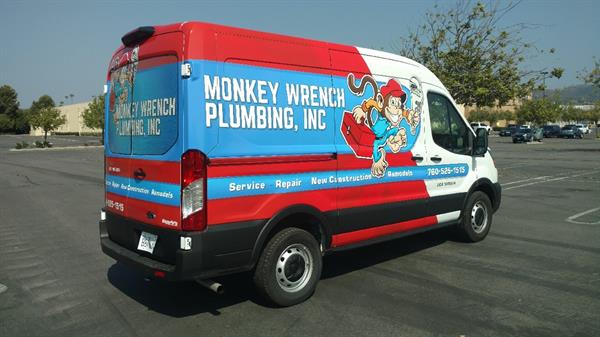
The same identity can leave the parking lot
A vehicle wrap is only one part of the catalog. SignArt’s building-sign service includes non-electrical signs made from wood, acrylic or metal, with dimensional options. It also offers storefront and reception-area graphics, site visits for recommendations and measurements, and installation. A business can therefore extend an identity from the van outside to the entrance customers are trying to find.
Window work includes vinyl decals, etched-glass material, perforated graphics and blockouts. Wall graphics can range from a logo to a larger mural, on interior or exterior surfaces. These products serve different purposes: identification, privacy, decoration or a promotional message. The correct surface and application matter as much as the artwork.
For events, the catalog includes banners and stands, canopy graphics and floor graphics. The large-format service describes hemmed banners with reinforced corners and grommets, small construction details that become quite important when someone has to hang the finished print. Decals bring the offering down in scale again: SignArt makes product stickers, warning labels and fleet vehicle numbers. Its market position rests on this range of physical applications, alongside its vehicle specialty. A customer can compare the shop with another local wrap installer, a broader sign business or an online print vendor, depending on how much design and installation help the job requires.
The first warning may be a lifting corner
The useful answer to what fails first is a maintenance issue, rather than a manufactured business crisis. In its August 2026 care guide, SignArt points to lifting edges and small bubbles as problems to catch early. Ignored damage can admit moisture and debris beneath the film and spread beyond the original trouble spot.
The company recommends regular hand washing with suitable mild soap, soft cleaning materials and periodic checks of edges and seams. It warns against brush-style automatic washes and prolonged exposure to harsh summer conditions. Its separate lifecycle article gives an indicative five-to-seven-year lifespan for a professionally installed wrap, dependent on material, use and care. That is a planning estimate, not a universal warranty.
These conditions put a boundary around the sales pitch. A wrap needs a suitable surface, competent installation and upkeep. A neglected vehicle or damaged bodywork complicates the proposition. Treating the graphic as a permanent, maintenance-free finish misses the physical nature of the product. For fleet managers, the copyable habit is simple: include graphics in the vehicle inspection routine, and ask about a small repair while it is still small.
Give the designer a job, not just a logo
For a prospective customer, SignArt’s range is most useful when the brief starts with a real task. A plumber needs to be identifiable outside a house. A retailer needs people to find the entrance. A race team needs a coherent appearance across equipment. An event exhibitor needs something that can be transported, assembled and read in its intended setting.
Those examples suggest a sensible way to approach the shop: bring the vehicle or surface details, existing artwork, intended use, deadline and budget. Ask to see relevant completed work. Review the proposed design in context. Agree on who will install it and how it should be maintained. This is a practical reading of SignArt’s design, print and installation offering, not a claim that every job follows an identical script.
The company’s appeal is in making a business visible on things it already uses. Its portfolio lets buyers inspect that proposition directly, from a coordinated fleet to a plumber’s mascot. The next customer may encounter the finished work at a storefront, beside a race course or in the next lane. In each case, the graphic has a straightforward assignment: make the business recognizable before the conversation starts.