Before Tiffany Kumar became part of Sidon Farris’s agency leadership, she was someone he wanted to meet. He knew her work in music. He sent her a direct message. A meeting at Soho House followed, then a long conversation about songs. Years later, the young artist asking for a hearing would bring the music executive into the business he had built. The introduction had acquired a sequel.
There is a pleasing reversal here. Farris’s business is arranging relationships between people who make things and people who can help others discover them. His own career contains just such a relationship, stretched across different jobs. Kumar first knew him as an artist. Today, she is chief strategy officer at The Onyx Agency, where he is founder and CEO. Their working history gives a rather literal meaning to the phrase staying in touch.
Farris is based in Los Angeles, a city with considerable experience in introductions. He arrived at this particular trade from the other side of the table. Before he helped companies decide which voices belonged beside their products, he was a songwriter and rapper trying to make his own voice travel. That earlier occupation remains useful to understanding the present one. He has had to be the person whose name goes on the work.
Sidon, read in reverse
His recording name was Nodis: Sidon spelled backward. It is an efficient piece of branding, requiring no focus group and only five letters. PULSE Music Group lists him as a writer and performer, with a Beat House partnership. Its discography includes “Missed Calls, Broken Hearts,” “Stone Cold,” “NO SHOW” and “All About Cake,” the last featuring KyleYouMadeThat. The business biography begins with actual songs, rather than a vague claim to have always loved entertainment.
He grew up in Virginia, in the orbit of the Washington, D.C., Maryland and Virginia music scene. When discussing his beginnings, he named Virginia artists including Pharrell, Timbaland, Missy Elliott and the Clipse. Those names supplied a local frame for his ambitions. The people who had made it out were people from somewhere he recognized. Los Angeles would give him access to another set of collaborators; Virginia had already given him an artistic point of reference.
In a 2020 conversation about his style, he described growing up skateboarding and taking an interest in clothes early. His mother had played drums in a punk band. The household listening crossed genres, from Earth, Wind & Fire to Nirvana and rap. His own music combined hip-hop delivery with pop melodies. It is easy to imagine an industry biography smoothing those influences into one category. The more useful detail is that he was comfortable having several.
He also made unusually concrete claims about the labor of writing. Songs went through revisions. “All About Cake,” he said, came together in two hours, an exception to his more drawn-out process. His description of clothes followed a similar logic: keep changing the combination until it feels right. The public personality was irreverent. The account of making things was considerably more exacting.
A customer with a complaint
Being an artist also meant encountering the businesses that sell help to artists. Farris took a grievance from that experience into his later career. “I dealt with agencies for years before starting my own,” he said in 2024. His complaint concerned promises, delivery and the difficulty of measuring what a client had actually received. Anyone who has bought an impressive presentation and waited for its contents to arrive will recognize the predicament.
His early agency work was tied to music. By January 2023, he was publicly identified as the founder and CEO of c4n2, alongside his identity as Nodis. The company worked on music publicity and branding. Its stated interests included helping artists navigate online distribution and promotion, with an initiative directed toward emerging Latin American talent. The artist and the business owner were, for a time, visible in the same frame.
The agency’s history also places a move toward a more brand-facing model in 2021. Jordan Alexander, its first team member, had worked on entertainment activations and tour sponsorships. That experience became part of the newer commercial offering. A tour sponsor and a creator partnership have different mechanics, but both require someone to find a workable meeting point between a performer’s world and a company’s objectives.
This was a change in where the assignment began. A musician might start with a song and a need for listeners. A consumer company starts with a product and a need for the right introduction. Farris’s career crossed between those positions. The useful continuity is the question of fit: whether the person delivering the message has a reason to deliver it, and whether anyone listening has a reason to care.
“I dealt with agencies for years before starting my own.”
Sidon Farris · 2024
The people who stayed in the picture
The kitchen-table version of the business was literal. In 2019, Farris shared a one-bedroom apartment with five roommates and took client calls at the kitchen table. By October 2025, the agency was described as a 20-person operation. A crowded apartment is a familiar opening scene in an entrepreneurial life. What makes this one worth remembering is the cast that continues into the later scenes.
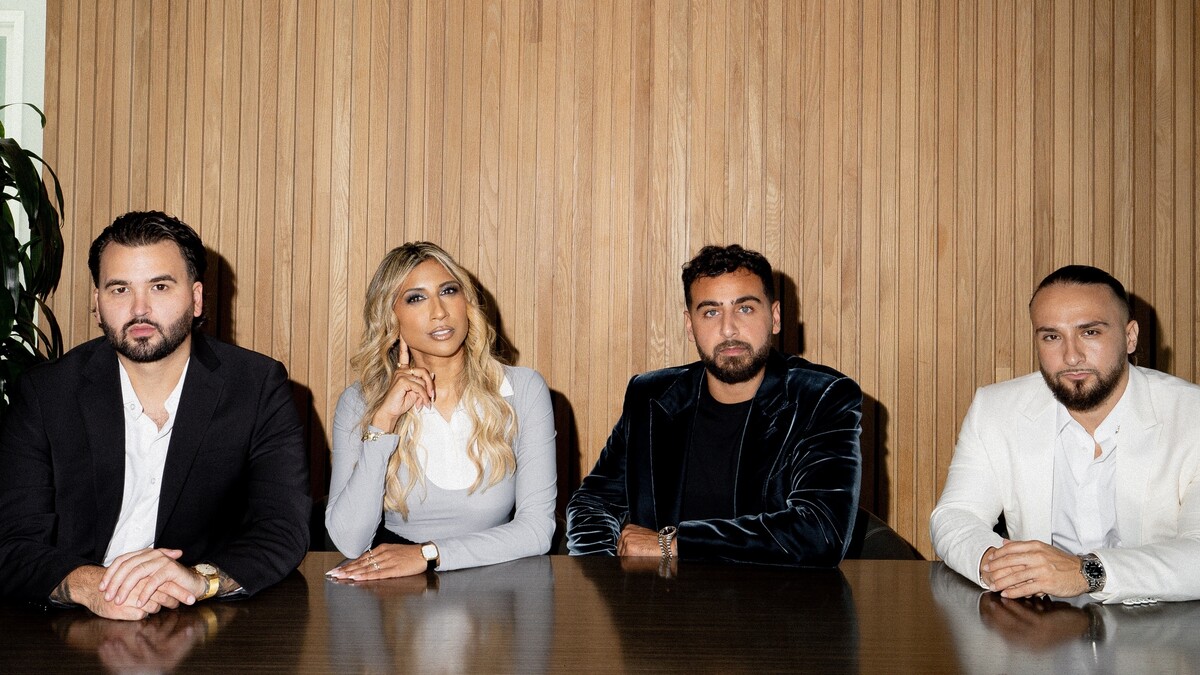
Kumar joined Farris’s business as a partner in 2024, returning to the working relationship in a different capacity. Alexander’s tenure reaches back to the beginning. Cameron Elwell joined in 2023 and now appears on the team page as head of partnerships. The current leadership brings together the founder’s artist background, Kumar’s songwriter-relations experience, Alexander’s early deal work and Elwell’s campaign strategy. Each has a recognizable job beyond being well connected.
That distinction matters in a relationship business. A founder can remember a conversation and see a possible collaboration. Turning it into work requires other people to follow the details through. Onyx’s recruitment for outreach staff has asked for research, spreadsheet skills, project tracking and careful follow-up. The glamorous bit may be a celebrity. Somewhere nearby, somebody still has to update the sheet.
Farris has also publicly welcomed Rachael Cyporyn as director of brand partnerships, pointing to her experience at iHeartMedia and her history of building brand relationships. The emphasis is consistent with the agency’s earlier appointments: bring in people who know how relationships become an ongoing commercial practice. There is less romance in that description than in the word networking, but considerably more work.
What happens after the handshake
Onyx now organizes its services around influencers, celebrities, podcasts and streamers. Those four headings describe quite different encounters with an audience. A short video needs to make sense quickly. A podcast gives someone time to explain. A live stream unfolds in front of people who can answer back. For Farris, the artist’s problem of finding an audience has expanded into deciding which kind of encounter a brand ought to have.
The podcast work makes the distinction especially clear. Onyx offers guest appearances, host reads and custom segments, then the possibility of turning recordings into shorter clips. Its service descriptions give roughly 60 to 90 seconds for a host read and three to five minutes for a custom segment. Time is part of the creative decision. A product with a story to explain needs a different amount of room from a familiar name seeking a reminder.
Streaming adds another variable: the audience is present while the activity happens. The agency describes game launches, software and hardware demonstrations, product integrations and links delivered through live chat. A recommendation in that setting shares space with play, conversation and interruption. The setting helps explain why a person’s familiarity with an audience matters. A message has to survive the room it enters.
Celebrity work includes appearances, speaking engagements and shoots. It also includes negotiating how the resulting material can be used afterward. Influencer campaigns similarly extend into permissions for paid advertising and brand-owned channels. That is the less photogenic half of the proposition. A photograph can finish circulating long after a shoot ends; the commercial agreement needs to know where it is allowed to go.
His public activity offers a modest example of the range. In a LinkedIn post, Farris highlighted a KevinHa collaboration featuring Microsoft’s Copilot+ PC. The technology demonstration sits some distance from his own recording career. Yet the underlying task is recognizable: place a particular voice in a setting where it can make something understandable. The platform and product change. The introduction still has to earn its place.
The name on the work
There are small details from Nodis that resist being tidied into a corporate biography. A neck tattoo that prompted strangers to ask whether he was shy was, he explained, his aunt’s name. He had been raised by his mother and aunt. A potentially mysterious piece of artist styling carried a family explanation. The question from strangers amused him; the name itself mattered for a more ordinary reason.
The same earlier interviews contain an insistence on writing from recognizable experiences and putting personal details into songs. It would be too neat to claim that every decision at Onyx comes from a lyric-writing habit. Still, the two careers pose a related test. Does the voice sound as though it belongs to the person using it? Farris has spent time on both sides of that question, performing the material and arranging the business around it.
His aspirations for the agency center on lasting relationships between brands and talent. Onyx describes its ambition in terms of ongoing ambassadorships and careful matching. That leaves a practical standard by which to judge the work: what remains after the initial appearance? The first encounter can attract attention. A second encounter asks whether the relationship was worth keeping.
Kumar’s place in his career gives that ambition a human scale. First came a message from an artist who knew her work. Then came songs, a business and a return to working together. Farris started by reversing his first name. The more consequential turn was finding another use for the relationships he had made under it.