In Shanghai, a young man shouted his love for a singer in a language he could barely speak. Shunsuke Oyu was standing beside him. Onstage was Hatsune Miku, the virtual idol whose fans have given a synthesized voice a remarkably busy social life. Oyu asked the stranger about his Japanese. He had learned the phrase for that night’s show. Soon the two were singing together.
Oyu remembers the encounter as part of the origin of AnotherBall. He had handed over his first company and was traveling, meeting his longtime collaborator Tatsuro Shimada in cities along the way. The concert offered a compact demonstration of what interested him: people finding each other through something they loved. He never learned the young man’s name. The meeting stayed with him.
Today Oyu is the co-founder and CEO of AnotherBall, which makes Avvy, an app for creating an anime-style avatar and livestreaming from a phone. Friends and colleagues call him Captain. His route to this particular ship runs through a creator platform, a parent community and a VTuber business. Across those changes, he keeps returning to the question of what makes somebody join in.
Before the Captain had a ship
Born in Hyogo Prefecture in 1988, Oyu grew up in a family that moved between regions of Japan. His own account of childhood includes toys, a Game Boy and, later, the online role-playing game Lineage. At Keio Shiki Senior High School, Niconico and Hatsune Miku became part of his education alongside the subjects on the timetable.
The internet was somewhere to find collaborators. Around the end of high school, he put a notice on a bulletin board looking for bandmates. He wanted to play guitar and admitted that he had no experience. People responded anyway. It is a pleasingly practical introduction to online communities: announce an enthusiasm, disclose the small matter of your incompetence, and see who turns up.
He went on to study at Keio University. A period studying in America interrupted the expected journey into a corporate job. Back in Japan, a childhood friend introduced him to Shimada. They decided to build together and founded Connehito in 2012. Their partnership would outlast the first product, the first company and several changes of audience.
“The Internet is a technology that nurtures culture.”
Shunsuke Oyu
The feature he left out
Connehito’s early creator platform, Creatty, did not become the business its founders needed. They changed direction. Mamari arrived in 2014, bringing Oyu into the everyday conversations of parents. Connehito joined the KDDI group in 2016, and he remained in charge for roughly three more years before passing on the presidency.
Some of the revealing decisions were small enough to disappear from a conventional company history. Mamari went about two and a half years without search. Oyu wanted users to feel free to ask a question, even one somebody else had asked before. An archive could supply an answer while also supplying a rebuke: you should have searched. He was designing the etiquette of the room.
Then there was the thank-you button. It automatically produced a reply, a tidy shortcut that users disliked. People who had written thoughtful answers wanted a personal response. The team removed the feature. A button had increased convenience while reducing the sense that another person was present. For a founder interested in connection, that was a useful failure to remember.
A question needs permission.
A reply needs a person.
There is a family resemblance between that concern and the Shanghai memory. Both involve the awkward, ordinary business of approaching another human being. A product can influence how that approach goes. It can make a newcomer feel entitled to speak, or make the same person feel that the conversation was settled before they arrived.
Back to the people making things
After Connehito, Oyu spent time traveling and meeting entrepreneurs. He was also becoming an angel investor. His interest was in services capable of generating new culture, and in the people who wanted to build them. In a 2019 conversation about investing, he put less emphasis on a company’s stage than on what he wanted to support and the possibility of growth.
That perspective allows for a rather untidy career. A founder can discover that a product will not work, change course, sell a company and still feel drawn toward the original subject. Creative work remained in Oyu’s orbit. His next operating chapter, PRISM Project, began in 2021 and took him into an English-language VTuber business. It joined the Sony group in 2022.
- 2012ConnehitoMamari launched in 2014.
Joined KDDI in 2016. - 2021PRISM ProjectGlobal VTuber business.
Joined Sony in 2022. - 2022AnotherBallFounded in May.
Now operating Avvy.
AnotherBall’s Singapore company was founded in May 2022. Its early public work included the VTuber project IZUMO. By November 2023, Global Brain was backing its ambition to give individual creators ways to reach fans and earn money. The investor singled out the founders’ operating experience and knowledge of the field. A personal enthusiasm was acquiring the equipment of a company.
A $12.7 million seed round, led by ANRI and Hashed, brought investors including Globis Capital Partners and Crunchyroll founder Kun Gao into the picture. These were useful connections for a business trying to cross between technology and entertainment. They also made the ambition tangible: this was a company raising money to build a platform for other people’s performances.
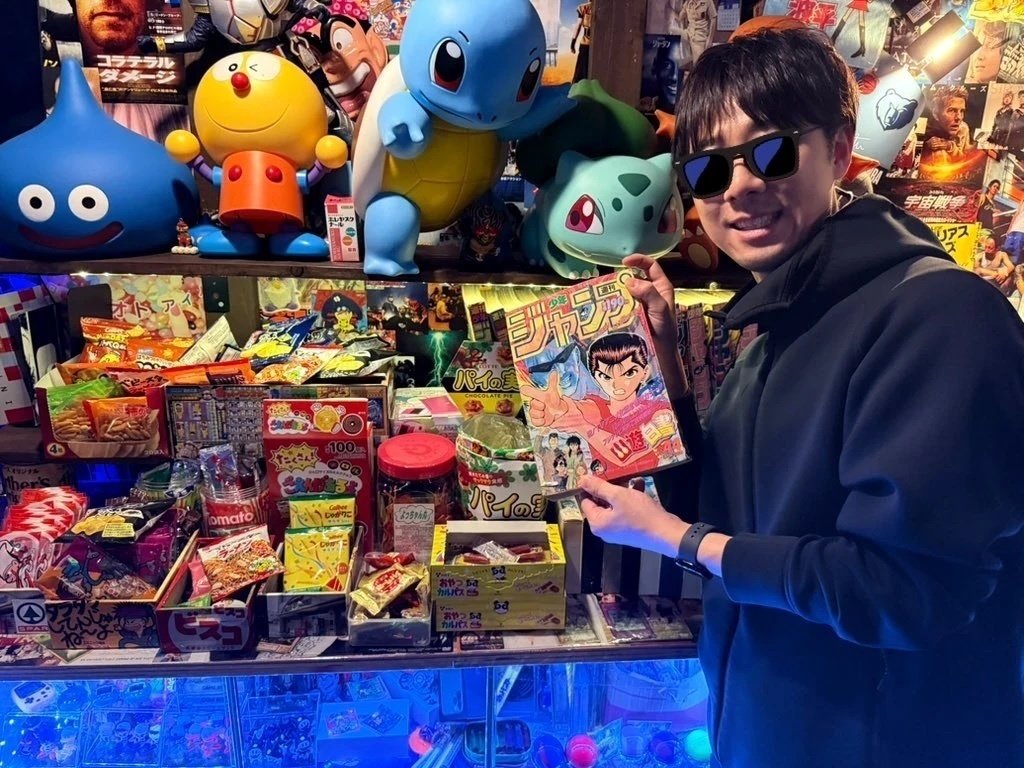
A stage that fits in a pocket
Avvy gives that platform ambition a recognizable shape. Users assemble a 2D avatar from illustrated parts, then use the character for live performance. Oyu has described the barriers facing a would-be VTuber as money, time and the connections needed to commission work. The app brings the process onto a smartphone. The performer still has to give people a reason to stay.
The trial opened on April 3, 2025. By April 13, AnotherBall counted more than 200,000 registrations. The company said it had run no advertising or promotional tie-ups for the launch. Demand exceeded the planned limits, and new registrations were stopped ahead of schedule. For a product about joining in, the queue had become a practical problem.
Trial opensAPR 13
Milestone reached
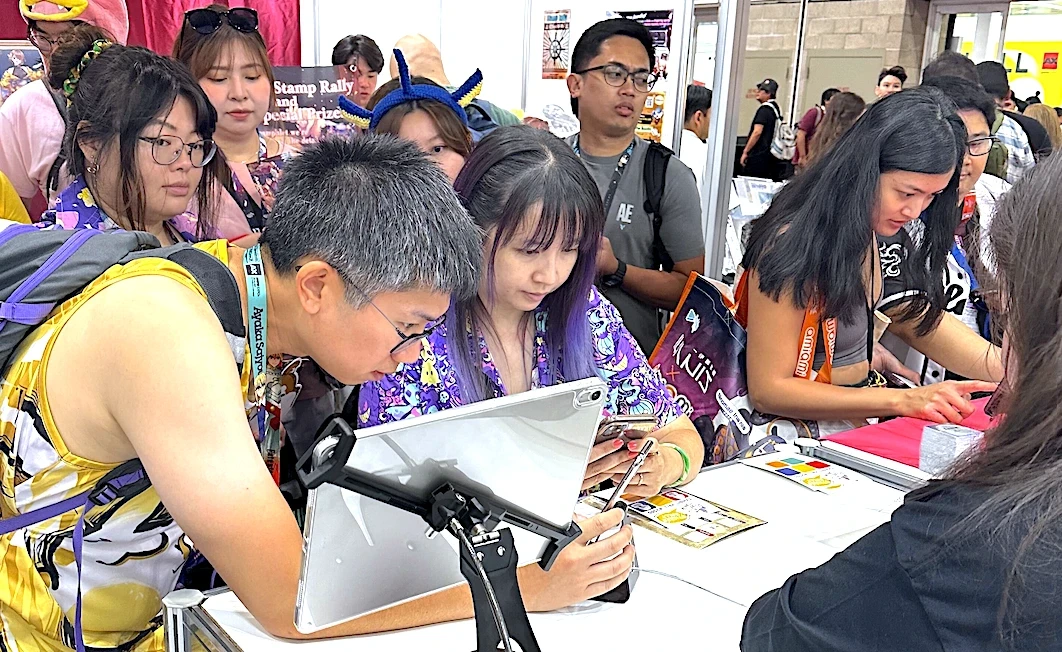
At Anime Expo in Los Angeles that July, the idea met people away from their own screens. AnotherBall counted more than 1,000 visitors trying Avvy across four days at its booth. The team’s account described the enthusiasm of North American users. Oyu’s cross-border thesis was getting a fairly literal test: hand somebody a phone and see what they want to become.
By August 2026, AnotherBall reported approximately one million cumulative registrations. It named markets including Japan, the United States, South Korea, Taiwan and the United Kingdom. That month it was selected for Tokyo’s fifth SusHi Tech Global Startups batch. The concert-goer’s interest in enthusiasm crossing borders now had a product reaching several countries, along with the work of keeping it useful there.
What the Captain owes the room
The financial scale had changed too. In May 2026, AnotherBall announced ¥2.5 billion in debt financing from Shoko Chukin Bank, MUFG, SMBC and Mizuho. Cumulative company funding reached ¥4.7 billion. Oyu intended to expand Avvy internationally and hire. Borrowing brings repayment obligations alongside the room to build. A cheering audience and a banking relationship ask rather different things of a founder.
He was also bringing in people with experience beyond a single app. Kiral Poon joined as VP of R&D that May, after work spanning XR, live entertainment and international operations. AnotherBall described the appointment in terms of developing several ventures. Its creative studio Mayflower adds another route into making the things that audiences eventually gather around.
Oyu’s September 2026 argument about AI turns back toward the maker. As production becomes easier, he places value on a creator’s experiences and decisions: why make this, what seems interesting, which choices belong in the work? Tools can help with research and execution. He wants the decision about what deserves to be communicated to remain with a person. Mamari’s thank-you button makes an unexpectedly good companion to that thought.
Running the room also means protecting the people in it. On October 9, AnotherBall disclosed unauthorized access to Avvy’s administrative system and possible exposure of customer information. The company said it had fixed the issue that enabled access and would strengthen controls and monitoring. That disclosure belongs beside the growth figures. A platform’s relationship with its users includes duties that continue after the show ends.
Oyu’s own tastes remain refreshingly specific. He lists Pompo: The Cinéphile, The Melancholy of Haruhi Suzumiya and Spirited Away among the works that shaped him. Before major projects, he returns to Pompo for encouragement. The founder building tools for performers is still an audience member himself, borrowing momentum from somebody else’s work.
That is what gives the Shanghai scene its staying power. One fan had prepared a phrase. Another fan happened to be standing beside him. Oyu is now trying to make participation easier for people he will never meet. The stranger’s name has slipped beyond the story; his willingness to sing has become part of the business.