The old way to become a VTuber began with a shopping list and a minor identity crisis. You needed an illustrator, a rigger, tracking software, broadcast software and enough cash to commission a face before knowing whether anyone wanted to watch it. AnotherBall looked at that ceremony and asked a wonderfully rude product question: what if the whole thing took one minute?
Its answer is Avvy, a free-to-start mobile app that lets people assemble a 2D anime avatar, move it with a phone camera and record or stream without appearing on camera themselves. Hair, clothes, colors and facial parts click together like a digital wardrobe. Face tracking handles the eyes and mouth. OBS can carry the character onward to YouTube, Twitch or TikTok. It is less a replacement for the big platforms than a factory for the person who shows up on them.
That distinction is the company. AnotherBall is not betting that it can out-Twitch Twitch. It is betting that millions of people would perform, socialize or make videos if the price of a plausible alter ego fell from hundreds of thousands of yen to whatever is already in their pocket.
A product pitch with no assembly required
Avvy's basic tier costs nothing. The business begins after the first face appears. Users buy coins, then spend them on avatar items and digital gifts. In Singapore's App Store, listed coin packs range from S$0.98 to S$149.98; prices vary by market and package. That makes the model familiar even when the product is peculiar: remove the admission charge, sell distinction once a user cares how the character looks, and let fans spend inside streams.
The official release in June 2025 added paid clothing and face parts, saved outfit combinations, a community layer and invitation-based access. In-app streaming and gacha mechanics were placed on the roadmap. The free doorway is important because AnotherBall is attacking a cold-start problem on two sides. A performer needs an audience; an audience needs performers worth returning to. Charging heavily before either side exists would be an excellent way to own a beautiful empty room.
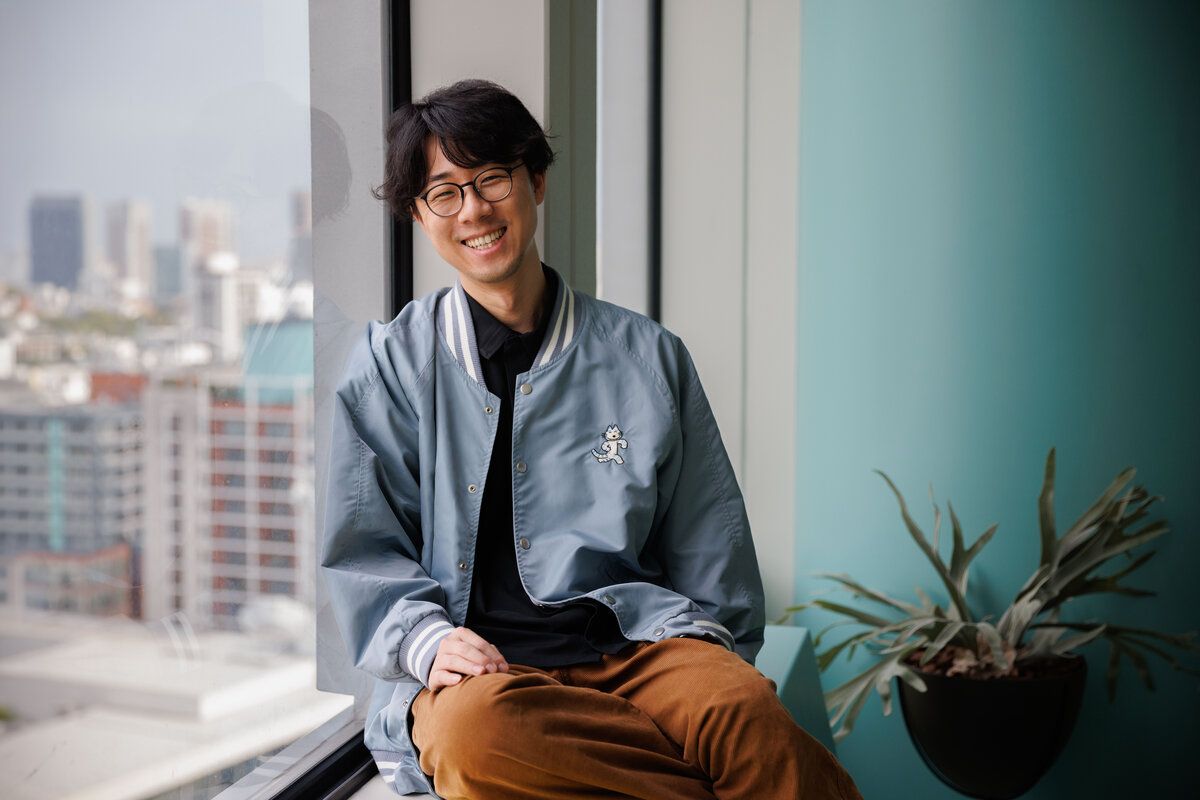
The customer is easy to recognize. She likes anime, wants to stream, dislikes the camera, cannot draw and has never opened Live2D Cubism. He already streams but wants a character for music videos or short clips. They may live in Japan, North America or East Asia. AnotherBall says overseas users make up more than half of Avvy's base. Google Play displays more than 100,000 downloads and thousands of reviews, useful evidence of reach but not proof of retention.
The product is not a cartoon face. It is permission to perform before you can justify commissioning one.
The first idea was bigger - and blurrier
AnotherBall did not arrive at this clarity on day one. Its earlier work lived under IZUMO, a broad VTuber and Web3 project promising a sustainable economy for virtual creators. Experiments included the AI character Ailis, SAI by IZUMO and AniLive, a vertical mobile streaming app aimed at English-speaking creators. In 2023, the company described a coming platform where creators would connect with fans and monetize content.
The first thing to fail was not the fascination with virtual identity. It was the packaging. A network, token layer, AI characters and streaming destination asked users to understand the ecosystem before experiencing the delight. AniLive tested the appetite for phone-native virtual performance, but it did not remain the flagship. Avvy took the accumulated lessons and reversed the order: first make a character in sixty seconds; explain the world later.
There is no public confession pinned to a whiteboard saying “we pivoted because X.” The change is visible in the products. By 2025, the company's home page spoke plainly about one app and one studio. The invitation-only official launch folded user feedback into more item categories, better color controls and saved outfits. Complexity moved behind the screen. The pitch got shorter.
The simplification funnel
The studio hiding inside the software company
AnotherBall has a second business that makes the first more interesting. In May 2024, it acquired Studio Mayflower, a technology-minded anime studio founded to streamline production with 3D tools and digital workflows. Mayflower works on animation, video and games. The acquisition price was not disclosed.
On paper, the fit is neat. Avvy creates a distribution surface and a stream of character behavior; Mayflower brings production craft, artists and relationships with larger intellectual property. A creator app needs a relentless supply of good-looking objects. A studio needs efficient workflows and audiences. If the two sides share assets and insight, AnotherBall can sell both accessible creation to consumers and higher-value production to businesses.
The danger is equally neat. Consumer software and anime production run on different clocks. One wants weekly experiments, cheap iteration and clean metrics. The other depends on scarce artists, long schedules and exacting quality. A corporate diagram can draw an arrow between them in three seconds; an operating team may spend three years making the arrow true.
What founders can copy
Find the expensive initiation ritual in your category. Remove the experts, equipment and waiting, but preserve the emotional payoff. Lead with the smallest moment that makes a new user grin. Only then build the marketplace, community and professional services around it.
Thirty million dollars buys a serious test
AnotherBall has financed the experiment in three conspicuous steps: a $2.2 million angel round in 2023, a $12.7 million seed round later that year, and ¥2.5 billion - about $16 million when announced - in debt from Shoko Chukin Bank, MUFG, SMBC and Mizuho in May 2026. Cumulative financing reached ¥4.7 billion, or roughly $30 million.
The investor list reads like a map of the thesis. ANRI and Hashed led the seed round; Global Brain, Globis, Sfermion, HashKey, Everyrealm, Ethereal Ventures and Emoote joined, along with figures including Crunchyroll founder Kun Gao. The latest money is supposed to fund hiring, global expansion and content collaborations. Debt also brings a less whimsical requirement: repayment. Registrations look lively in a press release; cash flow pays a bank.
The company's best evidence so far is speed. Avvy's trial passed 200,000 registrations within ten days in April 2025. More than 1,000 people tried it at Anime Expo in Los Angeles that summer, according to AnotherBall's internal tally. Those numbers say the demo travels. They do not yet say how many people create a second outfit, stream a fifth time, attract an audience or buy enough coins to support the system.
Why it can work
- A painful setup becomes a quick phone experience.
- Anime's visual language already travels globally.
- Free creation feeds paid identity and fandom goods.
- Mayflower can deepen the supply of visual content.
Why it may not
- Novelty registrations may not become repeat streams.
- Template convenience can make avatars feel interchangeable.
- Established platforms already own audience attention.
- Studio economics can dilute software margins and focus.
Where the bet breaks
Avvy will not work for every creator. A professional with a custom illustrator, a deeply rigged model and a loyal Twitch audience may prefer specialist tools that offer more control. A creator whose distinction depends on owning every line of the character may find a modular wardrobe too generic. Someone with an older phone faces a practical wall: current iPhone listings require recent software, and real-time tracking is not gentle on hardware.
The strategy also weakens if distribution platforms make good avatar creation native, if competitors subsidize comparable models, or if the item economy outruns the free experience. One early Android review captured that risk after previously available items became paid: a user can experience monetization not as added choice but as confiscation. The official transition reset some trial colors and moved some items behind payment. Economically rational, emotionally dangerous.
Culture is AnotherBall's proposed defense. The company publishes three values - be interactive, honest and agile - and recruits people who genuinely care about anime, games and VTubing. Oyu's founding story is almost suspiciously suited to the mission: at a Shanghai virtual-idol concert, a stranger who spoke no Japanese shouted a Japanese declaration of love to Hatsune Miku. Oyu saw two people connect through a character despite language and geography. AnotherBall's mission became “Create mutual understanding beyond boundaries.”
It is sentimental, but not uselessly so. The anecdote names the job better than “virtual entertainment platform.” A good avatar is a social bridge. It lets a shy person be loud, a distant fan be legible and a beginner participate before becoming an expert. The product has to protect that emotional function while the business sells earrings, tails and coin packs around it.
The next face is the real metric
AnotherBall fits between creator tools, social platforms, mobile games and anime production. VRoid Studio and Live2D offer deeper making tools. VTube Studio specializes in tracking and display. IRIAM and Reality offer virtual social spaces. YouTube, Twitch and TikTok own enormous audiences. Avvy's difference is not that none of these pieces exist. It is that the first useful result arrives quickly, on one device, with little money and no art skill.
That is the stealable insight and the unresolved business. Compressing the ritual can open a market, but the ritual used to produce something valuable: uniqueness, commitment and craft. AnotherBall must put those qualities back after removing the friction that once created them. Its studio, marketplace and community are attempts to do exactly that.
Two hundred thousand people were willing to try on a new face. The next chapter depends on whether they recognize themselves in it tomorrow - and whether someone else shows up to watch.