Sherif Ghali chose a dancer’s proverb to explain a founder’s decision. In September 2026, after a decade running the Ghana Chamber of Young Entrepreneurs, he announced he was stepping down as chief executive. “A good dancer knows when to leave the stage,” he said. For someone whose work involves persuading young people to build things, there was a certain elegance in making room for somebody else.
The organisation he had started in 2015 with 15 entrepreneurs was reporting more than 19,000 members. Agnes Anyawen would take over as CEO. Ghali would retain a place in the chamber’s governance and spend more time on the Ghana Youth Federation, which he leads as president. The departure came with a sequel already under construction.
His explanation gave that sequel its purpose: “Young people need structures that outlive the people who start them.” It is a useful way into his career. Ghali has founded companies, represented entrepreneurs and collected committee appointments. The thread connecting those activities is his effort to organise people around problems that keep returning: access to money, useful training, markets and a say in decisions.
Fifteen people become an institution
The chamber began as a small group of young business owners. Formal registration followed in 2016. It joined the Private Enterprise Federation in 2017, adding a connection to the wider private sector. Continental networks extended its reach further. Each step gave the original gathering another way to represent businesses beyond its own membership meetings.
An association has a peculiar job. Its members are busy building separate enterprises, yet some obstacles are shared. A founder can improve a product without being able to rewrite a regulation. A business owner can prepare a financing application without being able to create an affordable lending market. A chamber gives those owners a way to make a collective argument.
Ghali brought an entrepreneur’s background to that task. His public biographies identify him as the founder of GhaTech Solutions Limited, a technology business, and TIL Limited, in transport management. They also place him in discussions between private-sector leaders and government. His working territory grew to include the distance between an individual enterprise and the institutions that shape its prospects.
15 entrepreneurs form the original group.
The chamber is formally registered.
19,000+ members reported at the CEO handover.
Membership growth supplies the visible arc. The intermediate work is more revealing. Programmes had to be created, partners brought together and a constituency represented repeatedly. A chamber earns its usefulness through the next problem a member brings through the door. The founding photograph, however agreeable, cannot do much about the next financing application.
Learn the trade, then take the risk
In September 2023, Ghali offered aspiring entrepreneurs advice with very little confetti attached. Gain knowledge and skills before starting. Work with people who already understand the business. Accumulate some capital. His point was grounded in the difficulty of accessing startup finance in Ghana: experience and preparation matter when money is hard to obtain.
It is patient counsel from someone whose public role is to encourage enterprise. He was asking people to take the work seriously enough to learn it. Enthusiasm may produce the announcement; knowledge has a longer shift to cover. The advice sits comfortably beside the chamber’s emphasis on business development, training and mentorship.
His 2023 AGYLE profile described fundraising support reaching more than 200 young entrepreneurs and speaking engagements at over 80 conferences and seminars. Through the African-German Young Leaders in Business network, Ghali also joined a community beyond Ghana. He later credited that exposure, mentorship and those relationships with strengthening his ability to expand initiatives and participate in policy discussions.
Somewhere to work, someone to call
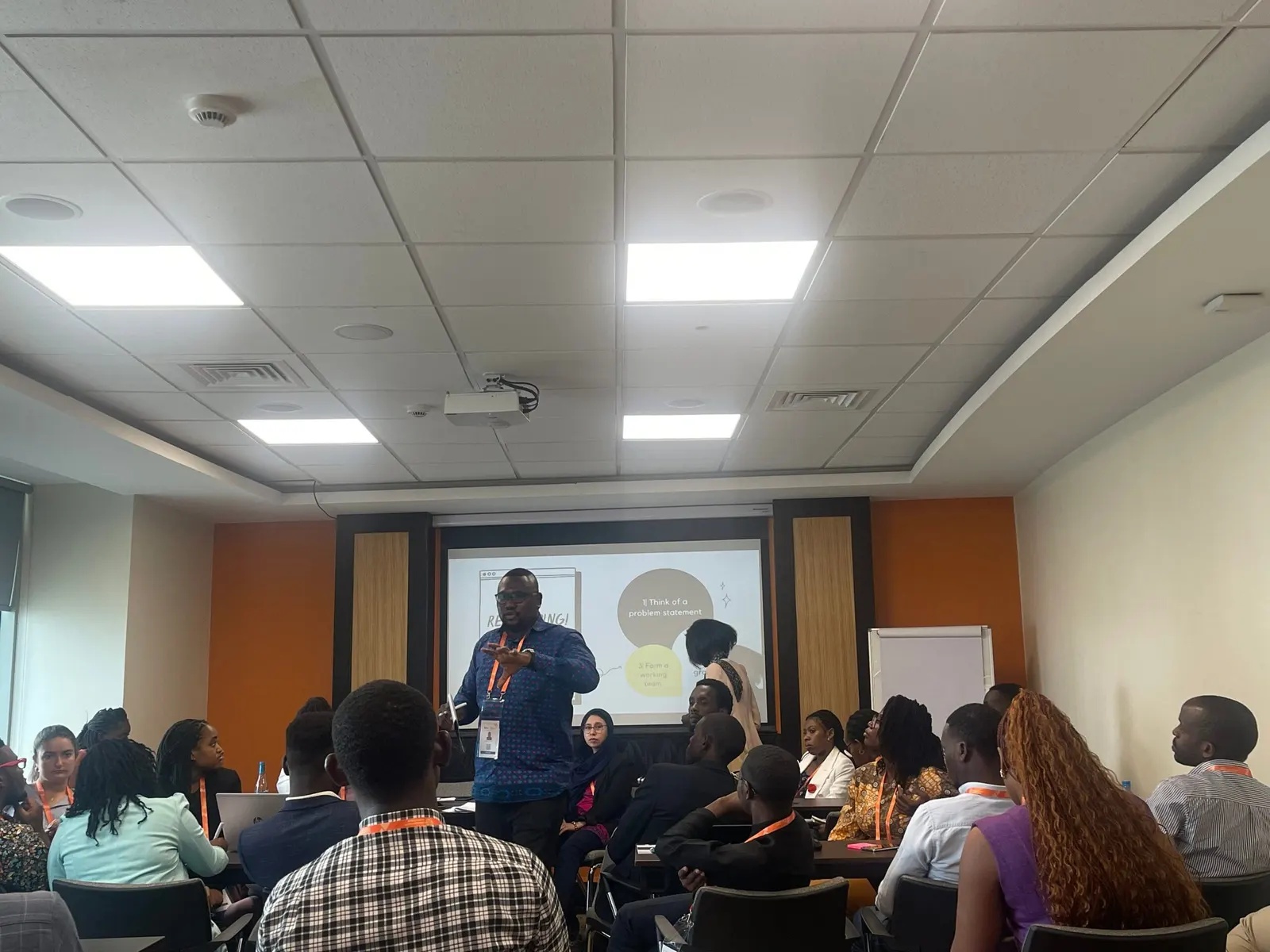
The chamber’s programmes gave practical expression to those concerns. In June 2023, it launched the Young Female Entrepreneurs Programme, or YoFEP, offering training, mentoring and access to capital. Ghali presented the programme’s objectives at its virtual launch. Development Bank Ghana, WUSC Ghana and GIZ Ghana were among the partners supporting the initiative.
That focus made the constituency more specific. Women running businesses would receive support shaped around their needs. The programme placed learning, relationships and financing within the same effort, acknowledging that a business owner may need several kinds of help at once. Completing a training session does not, by itself, supply working capital.
A physical counterpart arrived in 2024 with yecSpace. The shared workspace put desks, meeting facilities, business consulting and training into the chamber’s range of services. A young company could use a working environment without arranging every component alone. Institution building, in this instance, included somewhere to sit and somewhere to meet.
The Young Entrepreneurs and Startups Support Fund added another mechanism during Ghali’s tenure. Alongside the student entrepreneurship programme and YoFEP, it widened the chamber’s activities beyond convening events. These were different routes into enterprise support, aimed at people at different stages of building a business.
Three practical doors into the chamber
Skills and mentoring for business owners.
A support mechanism for young enterprises.
Desks, meeting facilities and business support.
By the 2026 handover, the chamber’s reported record included business development services for more than 4,000 entrepreneurs and funding support for over 200 youth businesses. Those figures describe organisational activity across his leadership. Their significance lies in the work beneath them: people seeking skills, introductions and a chance to keep trading.
The committee room has consequences
Ghali’s work also moved upstream, towards the rules and public programmes affecting those businesses. His roles include leadership in the technical process for Ghana’s startup legislation and chairing the Commonwealth Alliance of Young Entrepreneurs Africa. The former concerns the domestic framework for enterprise; the latter connects young business owners’ interests across countries.
In June 2025, the chamber launched a National Business Agenda with technical assistance from the Investment Climate Reform Facility. Its preparation drew on more than 100 entrepreneurs and 60 stakeholders. The issues included access to credit, disparities in procurement, incubation infrastructure and regulatory reform. These are specific frictions, with consequences for who can start and who can grow.
The consultation mattered to the character of the exercise. Business owners were contributing experience to a reform agenda, rather than simply attending its presentation. Ghali’s role was to help carry those concerns into a form institutions could consider. A recommendation still has to travel through implementation, but making the problem legible is part of the job.
His appointments brought him closer to that implementation work. In 2025, he joined the National Youth Authority Board and, in November, the advisory board of the Ministry of Youth Development and Empowerment. In January 2026, he announced an appointment to the Adwumawura Programme’s Grant Management Committee, concerned with the assessment and allocation of enterprise grants.
Recognition accompanied the public work. In 2024, Ghali and the chamber’s Governing Council chair, Ernest Agyenim Boateng, received Royal Africa Awards presented by the Ooni of Ife. Ghali connected the honour to his continuing mission of improving conditions for entrepreneurship. The shared recognition also points to the colleagues and governing structures surrounding a founder’s public profile.
A larger constituency
The Ghana Youth Federation gives Ghali a broader organising task. Its constituency extends beyond entrepreneurs to youth organisations. At the launch of its Eastern Region chapter in Koforidua on 6 August 2026, 79 youth leaders attended from all 33 districts. Regional mobilisation was already becoming an exercise in assembling representation from existing groups.
The federation’s approach centres on youth-led and youth-focused organisations registered with the National Youth Authority. District Youth Assemblies were the next stage of the regional process, leading towards a Regional Youth Assembly and elected leadership. The architecture matters: a national voice needs a way to hear from people outside the national meeting room.
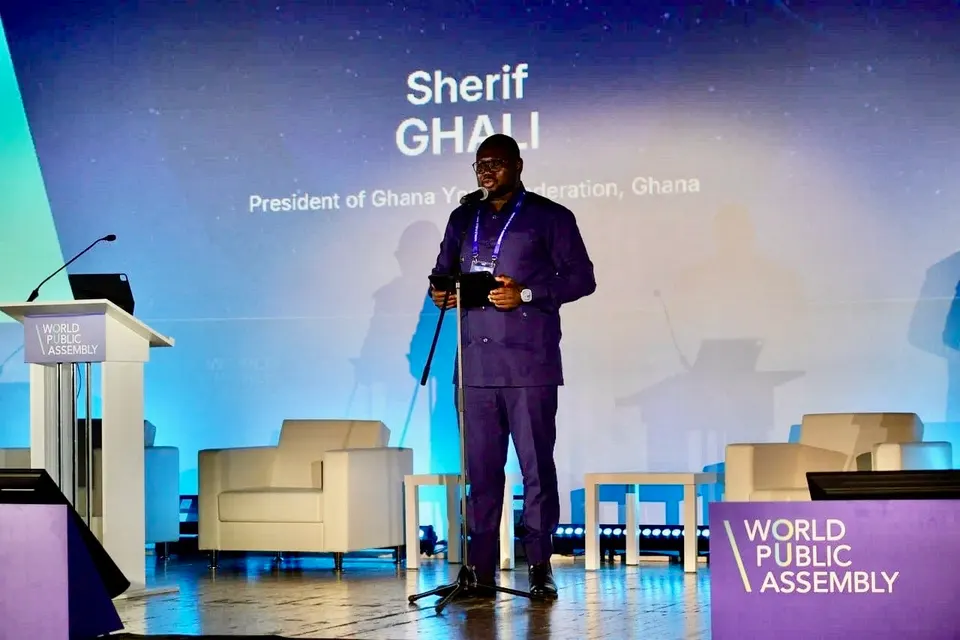
In October 2026, Ghali published an essay following that Moscow engagement, questioning how much influence youth representatives actually exercise. He recalled occasions when young people spoke at meetings and the document under discussion emerged unchanged. His proposed test was practical: examine whether their contributions alter decisions, spending or delivery schedules.
He also asked representatives to arrive prepared. His argument placed responsibility on youth organisations as well as public institutions: understand the figures, bring workable proposals and remain accountable to the constituency being represented. That is a demanding view of participation. An invitation creates an opportunity; preparation determines what a representative can do with it.
Ghali has described a growing interest in using data and technology to make development policy easier to measure and understand. His portfolio includes a Youth Dashboard alongside the more familiar chamber programmes. The stated ambition connects his technology background to his public roles: help citizens see what institutions are doing, and help institutions make decisions with better information. It extends the question of participation beyond who attends a meeting to who can follow what happens afterwards.
That emphasis gives his next chapter a further dimension. The federation needs regional and district organisation; his policy work asks for clear proposals and visible results. Both require ways to carry information between people and institutions. In his own account of the work, digital tools and evidence are part of making that exchange more useful.
“Young people need structures that outlive the people who start them.”
Sherif Ghali, on his next chapter
The chamber’s handover gives those ideas a test close to home. Ghali has transferred the executive role while retaining a connection to the organisation he founded. Anyawen inherits its programmes, relationships and membership. His own attention turns increasingly towards a federation whose reach depends on many other leaders doing their part.
Fifteen entrepreneurs was a beginning small enough to count without a spreadsheet. The years since have brought programmes, committees, workspace and a national network. The next chapter asks whether Ghali can help build another institution with a life beyond its founding personalities. He has left the CEO’s chair. There are, evidently, still plenty of meetings.
Keep the conversation going
Personal website · LinkedIn · X · Facebook · YouTube channel
Watch: timely youth funding and Ghanaian startups
Watch: entrepreneurship and Africa’s jobs challenge
Read the September 2026 handover interview
Read Ghali’s October 2026 essay on youth participation
Ghana Chamber of Young Entrepreneurs · Ghana Youth Federation