Three registrations. That was the awkward number confronting one part of iGen Foundation’s migrant-family business program. The plan had been to teach entrepreneurship in four language groups: Spanish, English, Mandarin and Arabic. But the Arabic group attracted only three people. A curriculum can be translated. A roomful of willing participants has to be assembled.
- Business workshops and mentoring for young people and migrants.
- A six-month youth program, with sponsored places for those unable to pay.
- Deliberate connections across cultures, built into the work.
The independent evaluation records what happened next: iGen and the City of Melbourne discontinued that cohort and arranged alternative support. It is a small administrative detail with a larger implication. Helping someone start a business involves more than offering a good lesson. You have to get the right people into the room, make the room useful, and keep the connection alive after everyone leaves.
The room is part of the curriculum
iGen is a registered Australian charity working at the junction of enterprise education and social inclusion. Young people, migrants and regional communities are its focus. Its premise is straightforward: business ownership can offer a route towards greater economic independence, while the relationships formed around it can help people belong.
The foundation calls its approach intercultural practice. The distinction matters. Its programs deliberately encourage migrants to form relationships with First Nations people and non-Indigenous Australian-born people. Business development becomes a reason for people with different experiences to work together. An introduction, in this account of entrepreneurship, belongs beside a lesson on pricing.
Consider what a conventional workshop assumes. Participants understand the language of the session. They know which advice applies locally. They can ask a question without embarrassment. They may already know someone who has started a business. iGen’s approach makes those social conditions part of the design rather than leaving them to chance.
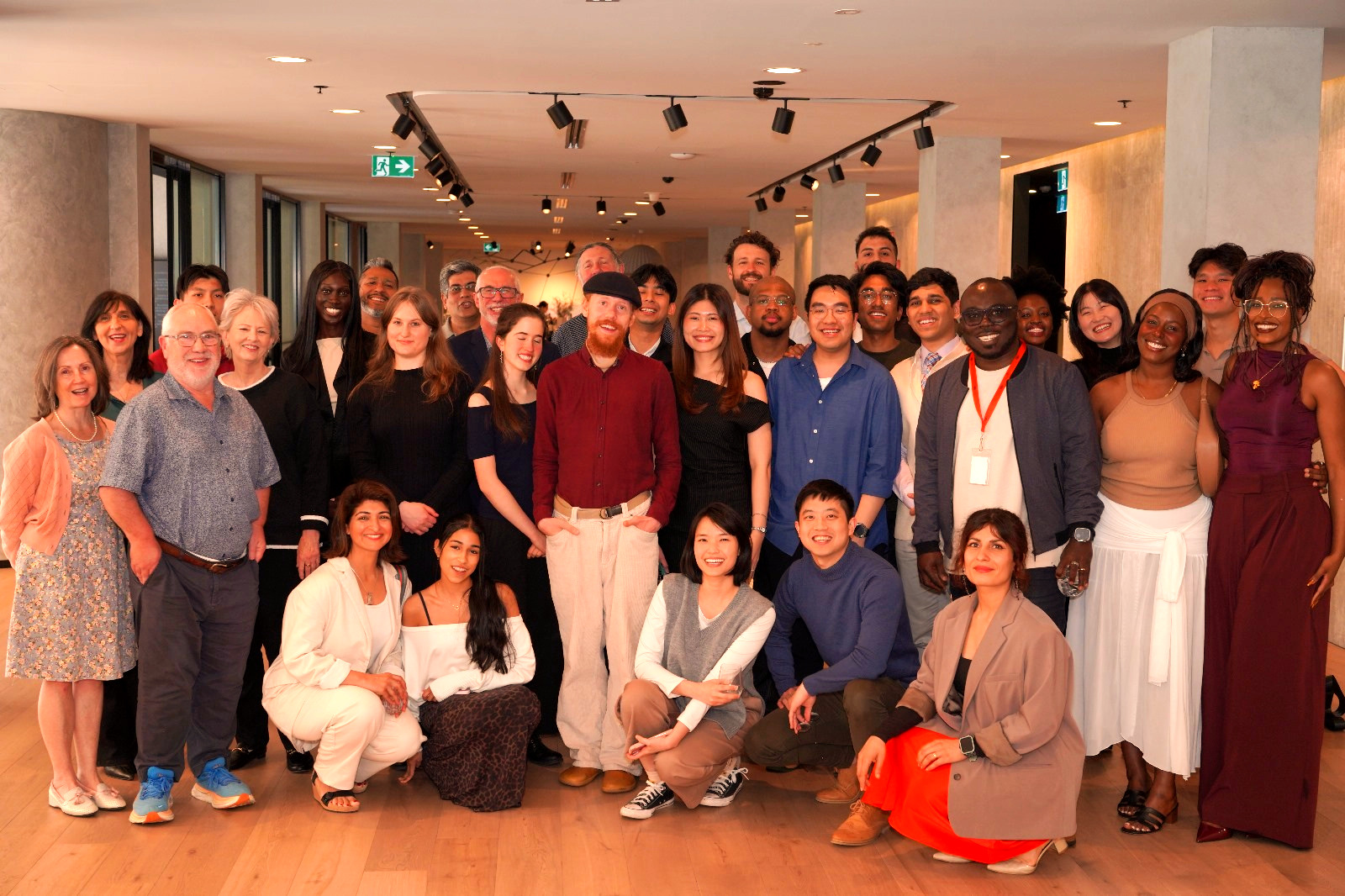
Six months beats one stirring afternoon
The IYE Pre-Accelerator gives this philosophy a schedule. It serves people aged 15 to 30 who have a business idea or an early venture. Participants must live in Melbourne or regional Victoria and be able to attend in Melbourne. The offer is six months of practical development, with workshops, individual mentorship and activities covering business, marketing and finances.
That repetition is the interesting feature. A founder can arrive with an assumption, test it, return with a difficulty and discuss it with someone experienced. The program asks for full commitment and collaborative participation. Access is subsidised, but attention remains the participant’s contribution.
iGen’s program history reports 149 IYE participants and 70 businesses launched. Those are useful measures of activity. Launching a business, of course, says less than sustaining one. Read the figures as evidence that people have moved from discussion to doing, rather than as a promise about what will happen to the next applicant.
Who picks up the bill?
For young people who cannot afford participation, private sponsors cover the cost. Others are invited to contribute financially or through volunteering. The Business Builder Community combines sponsors, mentors and facilitators. Support therefore comes in two currencies: money and experience.
There is a historical price tag, too. LaunchVic awarded iGen AUD 70,000 for its Young Entrepreneurs Mentoring Scheme. Its 2016/17 annual report records 18 young entrepreneurs matched with experienced mentors through YourMentor, using the Mentorloop platform. Matching considered industry experience or the particular skills a participant needed.
For a small charity, the sponsor is also part of the educational machinery. Kristin Brown of ADM Systems describes an unexpected return from supporting IYE: the young entrepreneurs made her look again at her own company. The person funding the lesson found herself learning something.
“They have inspired me to review and reevaluate how I run my business.”Kristin Brown, ADM Systems · IYE sponsor
Translate the invitation, then build the network
Keeping it in the Family took the approach into migrant, refugee and asylum-seeking households. Delivered with Jesuit Social Services and funded by the City of Melbourne, it combined workshops, business education, coaching and networking. The language groups were an attempt to make participation practical, rather than requiring everyone to squeeze through the same English-language doorway.
Swinburne’s evaluation found benefits in entrepreneurial knowledge and network-building. It also recommended earlier resources, better time management and clearer support after completion. The findings suggest a useful discipline for anyone copying the approach: design the next step before celebrating the final session.
- 01 / ExploreBig Ideas Days
- 02 / TestTwo-day Business Builder Workshops
- 03 / DevelopThree-to-six-month pre-accelerators
- 04 / GrowSix-month accelerators
A council can borrow the machinery
iGen’s broader service menu moves from idea assessment to customer validation, costs, revenue and marketing, then towards more intensive development. Its Getting Down to Business program lets organisations commission youth entrepreneurship support tailored to their own groups. Partners can use their own branding while iGen supplies the delivery.
This places the foundation between a business-training provider and a community-development organisation. A council can bring a local need; a sponsor can bring resources; iGen can organise the learning. The combination is most useful where access, confidence and networks matter alongside technical business knowledge.
The conversation gets a life of its own
The same thinking appears in the Australian Intercultural Collaboration, which welcomes councils, researchers, practitioners and businesses. Its work includes peer exchange and discussions about how institutions can encourage contact across cultures. Recorded webinars make those conversations available beyond the meeting itself.
In June 2026, a newer Melton collaboration held its first gathering with South Sudanese Australian community leaders from Melbourne’s west. Leaders choose what to discuss, supported by facilitation. iGen describes monthly meetings without a prescribed agenda or predetermined outcomes. It is a revealing extension of the charity’s work: sometimes the first useful product is a relationship.
For a prospective entrepreneur, the practical move is to check eligibility, register interest and arrive with an idea worth testing. For an organisation, it is to ask what prevents people from participating before ordering another workshop. A fine business plan can wait untouched on a desk. Put its author in useful company, and there is someone to ask the next question.