In December 2004, a translation service at the University of Granada acquired a new description: Junior Empresa. Its students had presented their operation to representatives from across Spain at a national congress. Now they belonged to CEJE, the Confederación Española de Junior Empresas. The interesting part was what they had already built: a service with work to do, people to organise and customers beyond the classroom.
- Students run nonprofit associations with the working habits of a business.
- Individual Junior Empresas deliver projects; CEJE supports and represents the network.
- Recognition, university support and peer exchange give practical learning a structure.
That small change in status captures CEJE’s appeal. A university can teach a student how an organisation ought to work. A student enterprise gives that knowledge somewhere to go. There is a client on the other end, which introduces a wonderfully inconvenient complication: somebody wants the work to be useful.
The customer enters the classroom
Granada’s Servicio de Traducción Universitario, or STU, began as an idea in May 2003, won a competition that July and started work in October. By the following December, the university described translation, interpretation and linguistic accompaniment for Andalusian businesses alongside services for the university itself. Students and graduates participated, with academic advice from the faculty’s student affairs leadership.
Its two purposes fitted neatly together. An increasingly international university needed language services. Students needed a route into professional work. The arrangement brought a recurring need and a learning opportunity into the same room. A business did not have to invent a charitable reason to get involved; it could need something translated.
CEJE operates around such associations. Its own description emphasises preparation for the labour market, managerial skills and entrepreneurial culture. Consulting, IT and telecommunications appear among its specialities. The services vary with the students’ disciplines. The common ingredient is responsibility for work connected to what they study.
“Abriendo caminos, creando futuros...”
CEJE’s public tagline: opening paths, creating futures.
Six starts, one seal of recognition
A second example makes the network’s standards visible. In July 2015, CEJE and the University of Castilla-La Mancha signed a cooperation agreement. Their relationship had begun with entrepreneurship sessions in 2012. By the time they formalised it, six student associations had emerged.
Only one, Ciberbits, had obtained Junior Empresa recognition. Uname was an aspirant; four others were pre-aspirants. The university’s account said Ciberbits had passed controls from the Murcia federation, FEJERM, and CEJE. Starting a group and qualifying for recognition were separate steps. Enthusiasm could get an association moving; the network also asked it to meet requirements.
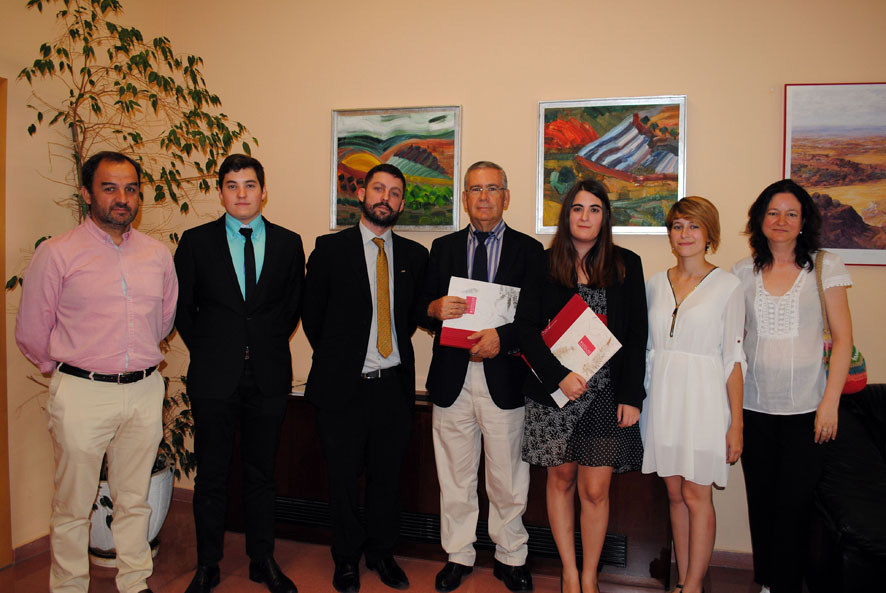
For a prospective client, that distinction is useful. A student team’s ambition tells you little about the specific job it can deliver. Recognition adds an organisational check. It still makes sense to ask about relevant experience, the project’s scope and who reviews the result. The educational purpose does not relieve a customer of ordinary purchasing judgement.
knowledge
association
project
experience
CEJE and regional federations provide support and representation around the associations.
The confederation behind the project
CEJE is a nonprofit umbrella organisation. The client-facing work happens within individual Junior Empresas. Its place in the market is therefore unusual: part of the infrastructure for practical education, connected to organisations that also provide business services.
The alternative depends on whose problem you are considering. A student might choose an internship, a competition or a university entrepreneurship programme. A business might choose a commercial consultancy. Running an association offers students a particular kind of practice: coordinating the people who deliver the work as well as contributing to the work itself.
The historical university-enterprise guide describes university advice, equipment and infrastructure as part of the support around Junior Empresas. It also describes students leaving membership when they graduate. That creates a revealing management question: how does knowledge survive when the people who acquired it move on? Processes and handovers become part of the educational challenge.
Someone still pays for the meetings
Nonprofit is an organisational purpose, not a magic exemption from expenses. Spain’s official gazette offers a concrete glimpse of CEJE’s finances: in November 2012, INJUVE published a €10,070 grant for its operation, maintenance and meetings.
Public operating grant published in 2012.
Operation, maintenance and CEJE meetings.
That amount belongs to a particular historical award. It illustrates the less photogenic side of the model: a network requires coordination as well as motivated students. The association delivering a project and the confederation supporting it have different jobs. A project fee, a university’s facilities and a public operating grant can serve different purposes within that wider arrangement.
A congress is part of the machinery
In November 2014, Granada hosted the 31st national congress, organised by the southern federation in collaboration with CEJE. Its motto was “Atrévete a Compartirlo”: dare to share it. The gathering combined training and contacts with an invitation for other students to join the movement.
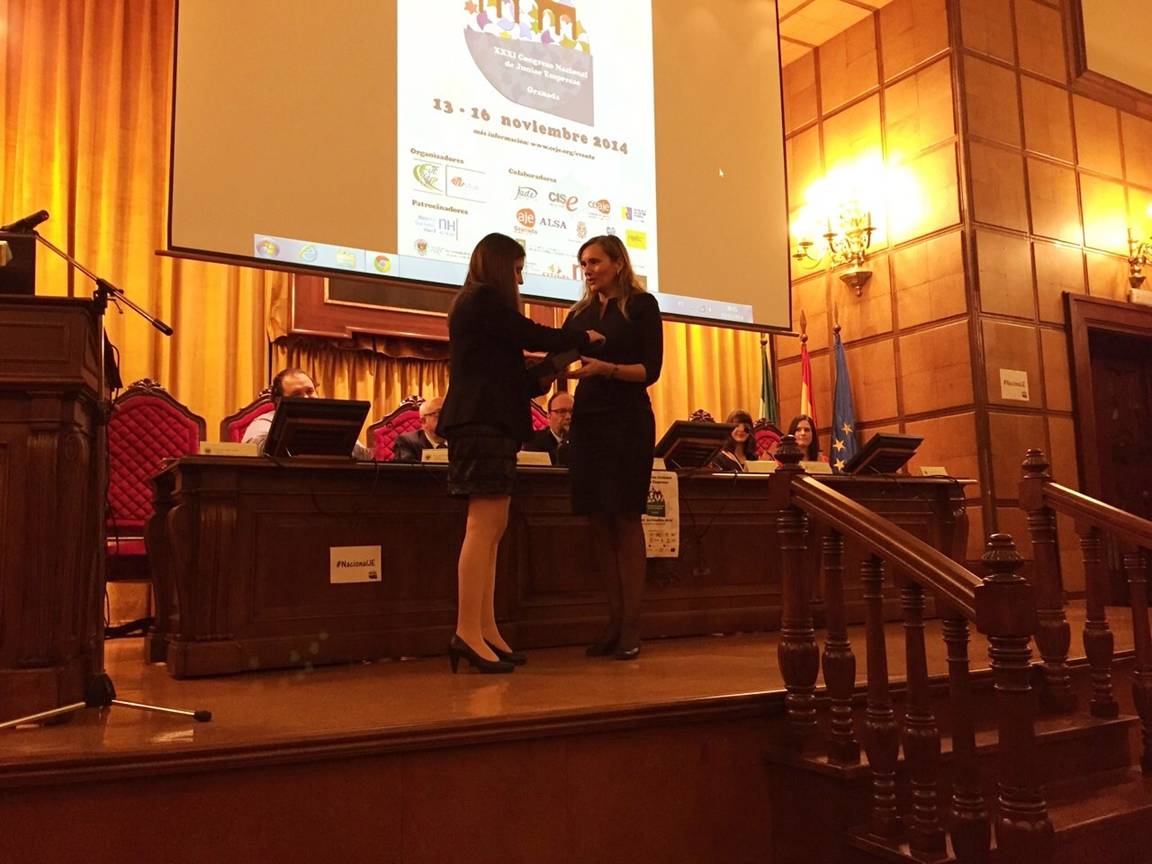
CEJE also recognised Andalucía Emprende’s support that year. The photograph of an award ceremony might look like a detour from practical work. Yet universities, regional federations and enterprise-support organisations help make that work possible. The network has reasons to maintain those relationships.
Borrow the useful part
For a student, the practical starting point is an association linked to their studies. For a potential client, it is a clearly bounded project and a team whose expertise fits. For a university, Granada’s translation service suggests a question worth asking: what useful work already needs doing nearby?
The transferable idea is straightforward. Pair a real need with relevant knowledge, give students room to organise, and provide a structure for review. It depends on available time, suitable projects and support. Work requiring expertise beyond the team’s competence calls for another provider. CEJE’s contribution is to make the passage from knowing something to doing something less solitary.