The family problem came before the financial product. Growing up in India, Shehzan Maredia watched his parents put effort into earning money. Saving it was the harder question. Years later, explaining why he had started Lava, he returned to that distinction: a household could be industrious and still lack a satisfactory place to put the proceeds. His interest in bitcoin began with what happened after the workday ended.
For Maredia, that makes bitcoin a savings technology. It is a conviction, rather than an established guarantee about anyone’s future returns, and it supplies the organizing idea of his company. Lava connects people who want to keep bitcoin with dollars they can use. The apparent contradiction is the business: hold on to an asset, yet put some of its purchasing power to work.
There is a pleasingly domestic quality to this ambition. Cryptocurrency has produced enough talk about replacing the world. Maredia keeps coming back to the household balance sheet. Money arrives. Some should survive the month. Eventually, someone wants a house. A financial system must be able to cope with all three events.
The builder who left the classroom
Before Lava, there were smaller experiments in making things useful. Maredia attended Hoover High School in Alabama and later Duke University. His professional background includes engineering at Google and data science at Shipt. He had worked with artificial intelligence before starting his bitcoin company, so the choice of subject was deliberate rather than a discovery that software could be a career.
He also built CrucialLearning, a personalized learning platform for competition preparation. His own account of the venture describes programming and marketing a database-driven application, reaching more than 5,000 users, and selling it to VitalSmarts in January 2020. Even in that early description, the verbs are practical: build the application, find the users, sell the business.
There was a different kind of organizing in Hoover. His LinkedIn profile records founding CleanHoover, an environmental initiative, and reports more than 800 volunteers and 12,000 gallons of trash collected. Those are his reported totals. A neighborhood cleanup offers a refreshingly literal measure of output: at the end, something that used to be on the ground is in a bag.
By the time he met podcast host Jacob Brown in Miami around 2022, Maredia was starting Lava. Asked in a July 2024 conversation whether he had just finished college, he supplied a correction: “I had dropped out of college, yeah.” The short reply is more useful than a polished founder legend. There was a university, then there was a decision to leave and build.
A wallet with too much homework
Early Lava addressed a problem familiar to people who have tried to manage bitcoin themselves: the money may be digital, but keeping access to it can involve a surprising amount of stationery. Seed phrases, recovery procedures and transfers between services make a simple intention feel like preparation for an examination.
In 2024, Maredia described a mobile wallet organized around several related jobs. Smart Key addressed recovery and the burden of seed phrases. Lava Connect helped users move between ordinary money, bitcoin and digital dollars. Free Pay handled digital-dollar transfers. The point was to put activities that otherwise required several services into a more coherent experience.
He had wanted to use bitcoin and digital dollars himself and had not found a solution he liked. That is an unglamorous origin for a financial company, and a useful one. It begins with an actual user finding an actual task irritating. A wallet earns its place by making the next transaction easier, however eloquent its philosophy may be.
“I enjoy distilling problems to their foundations”
Shehzan Maredia, describing his approach on HumanIPO
His early public self-description fits that approach. On HumanIPO, where he presented himself as a founder and inventor, he emphasized breaking problems down and working with people who shared a vision. The eventual scope of Lava grew considerably. Its starting point remained recognizable: make a few financial actions fit together.
Keeping the coin, finding the dollars
Borrowing became the central application. A customer pledges bitcoin as collateral and receives dollars. If the loan is repaid, the collateral can be released. If the collateral loses too much value relative to the debt, liquidation can follow. Keeping the asset therefore comes with obligations; the debt does not share the owner’s enthusiasm for a future price recovery.
Maredia initially pursued this through Discreet Log Contracts, or DLCs. These are bitcoin contracts whose outcomes can depend on information attested by oracles, such as a price. In September 2024 he posted the second version of Lava’s loan protocol paper to Delving Bitcoin, invited questions and described work on a third version. The founder was discussing the mechanism with a technical community, down to the design of the contracts.
In early 2025, his explanation emphasized the ability to establish possible outcomes ahead of time and constrain how collateral could move. For a borrower, the attraction was more specific than a promise that a company would behave: the contract design was intended to limit what could happen to the bitcoin.
A price decline can trigger liquidation before repayment. Conceptual illustration, not a statement of current loan terms.
The capital behind the conviction
The people funding Lava reflect Maredia’s wish to build a financial platform with a bitcoin foundation. In July 2024, the company announced seed backing led by Caffeinated Capital and UTXO Capital. Its angel list included Steve Lee, Nathan McCauley and Eric Wu, connecting the venture to people with experience at businesses including Square, Anchorage and Opendoor.
In December 2024, Lava announced a $10 million Series A led by Founders Fund and Khosla Ventures. In a later interview about fundraising, Maredia said he had deliberately sought generalist investors. He wanted people who understood the financial product he was building, and he had researched who he wanted to work with before approaching them.
His description of hiring was similarly concrete. He looked for ownership, care and ambition: people able to contribute to decisions, attentive to customers and colleagues, and willing to think over a longer period. Those are the qualities he says he recruits for. They explain the culture he wants to establish more clearly than an office photograph could.
November 2025 brought a larger announcement: $200 million in additional funding, combining venture capital and debt. Anthony Pompliano and Eric Jackson joined as angel investors. The distinction between equity and debt matters in a lending business. Capital can support the company itself and the credit it makes available; the headline total describes a mixture.
December 2024
November 2025
Separate announcements. The figures are not presented as a cumulative equity total.
A harder conversation about trust
Lava’s expansion also brought a change in how it secured funds. The early wallet and loan story had put self-custody and DLCs at its center. In November 2025, Maredia returned to Brown’s Built on Bitcoin podcast for a conversation that included questions about the custody model, the move away from DLCs and the role of practical trust.
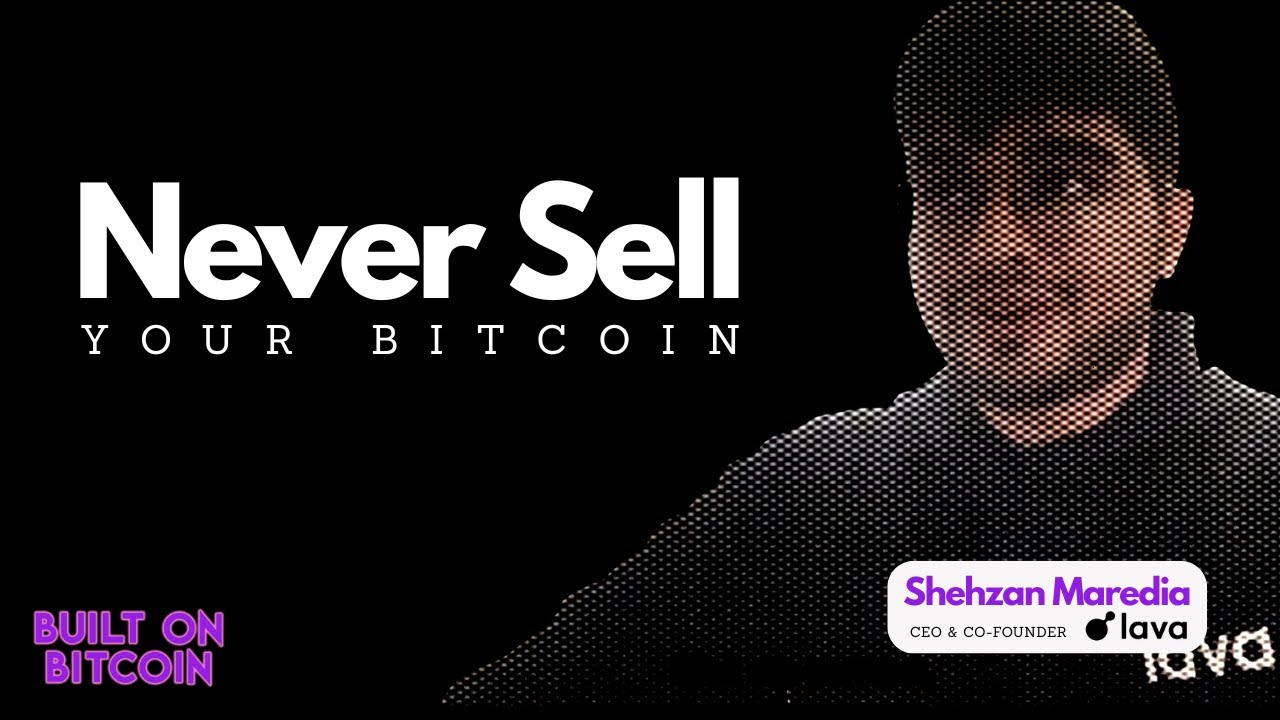
By October 2026, his own description of the infrastructure was explicit: Lava had moved from local signing, DLCs and oracles to cold signing and storage involving multiple entities. He said the change had happened about a year earlier. The company’s current account emphasizes segregated storage and controls intended to prevent a single party, device or location from moving client funds.
This change belongs in Maredia’s story because security was part of his original argument for starting the business. The design evolved while the ambition to serve bitcoin savers persisted. A person considering the company needs to understand the arrangement in use today. The vocabulary of an early product launch cannot do that work indefinitely.
The borrowers surprised him
At Bitcoin Investor Week in New York, in a conversation released in March 2026, Maredia described a surprise. He had originally expected considerable demand from people borrowing to buy more bitcoin. Instead, he said more than 90 percent of Lava’s users borrowed to improve their lives materially, with home purchases among the main uses. That is his description of customers, rather than an independently audited breakdown.
He spoke about people on middle incomes who had accumulated substantial bitcoin savings over time. Their immediate problem was turning that position into something usable without selling it. The founder who began with his parents’ difficulty saving was now talking about people facing the next question: what should a saver be able to do with the savings?
The product choices followed. Lava introduced its Bitcoin Line of Credit in November 2025, offering an ongoing borrowing arrangement rather than a conventional loan with a fixed maturity. In 2026, Lava Card connected dollar and stablecoin spending to bitcoin rewards. The design lets the spending currency and the desired savings asset play different roles in the same account.
From an app to a financial relationship
The next additions brought more people into the process. In July 2026, Maredia announced Lava Prime for institutions, funds, family offices and individuals needing customized borrowing. Loan documents, repayment schedules and custody arrangements could be discussed directly with the team. Lava for Business followed that month, extending accounts to companies.
On October 19, he introduced Lava Private, aimed at people with seven-figure bitcoin holdings and above. Alongside storage and credit, the offering included inheritance planning, trusts, entities and reporting. Those are familiar concerns in wealth management. An asset owner eventually needs to consider who can access the money, how it is accounted for and what happens across generations.
It is a considerable distance from a mobile wallet, although the family question still runs through it. Maredia’s public ambition has expanded from making bitcoin easier to handle to building a financial relationship around it. The work now includes engineers, capital providers, custody arrangements and people answering customers’ questions.
His test remains an ordinary one. Can someone who has worked and saved use that money for the life they want? Lava’s answer rests on bitcoin, dollars and a loan between the two. Maredia has spent years changing the machinery. The household at the center of the problem is still recognizable.
Keep following the questions
- Lava WEBSITE ↗
- Shehzan Maredia on LinkedIn PROFILE ↗
- Shehzan Maredia on X PROFILE ↗
- Shehzan Maredia on GitHub CODE ↗
- Maredia’s product announcements BLOG ↗
- Built on Bitcoin: credit and custody VIDEO ↗
- Save in Bitcoin, Spend in Dollars INTERVIEW ↗
- The early Lava Loans protocol discussion 2024 ↗
- The Block: Lava’s 2025 funding and yield product NEWS ↗