An expense report is an unlikely route to a standing ovation from the stock market. On January 27, 2000, Extensity arrived with an offering price of $20 a share. By the close, it was trading at $71.25. The company had raised $80 million. Somewhere beneath the market’s enthusiasm sat the familiar business of accounting for a trip, getting a manager’s approval and being paid back.
Sharam Sasson had founded Extensity in 1996. Its subject matter was the paperwork of employment: expenses, time cards, purchase requests. These were things people wanted out of the way. A company built to remove them from the way had become a public stock. The receipt, briefly, had acquired a certain glamour.
That contrast offers a useful entrance to Sasson’s career. He co-founded Scopus Technology, founded Extensity and became Jitterbit’s co-founder and original CEO. Each business concerned information that people needed for work. Read together, they suggest an entrepreneurial habit: look closely at the routine transaction, especially the part where somebody has to stop and help it along.
The expense report gets a ticker symbol
Extensity brought those transactions into a browser. Employees could submit expenses over the internet; the software routed reports to managers and passed reimbursement information to accounting. It could flag purchases that violated company policy. Time reporting and purchasing joined the same family of applications. A mundane process contained plenty of moving parts.
The technology underneath was itself a departure. Extensity used Java and WebLogic’s application-server technology, putting enterprise applications into a web environment. For the employee, the appeal was more immediate than the architecture: a form could travel to the person who needed it. A missing approval is rarely improved by an explanation of the software stack.
The debut belongs to the feverish market of early 2000. It gives the story a memorable number, though the more revealing detail is what the company was selling. Sasson had chosen work with a recurring customer: the business that still needed its employees to account for time and money, regardless of the market’s mood.
Before the browser, the customer record
Sasson’s education joined Queen Mary College at the University of London with a master’s degree in engineering at the University of California, Berkeley. His earlier work included research at Lockheed and developing structural modeling software at Bechtel. Before the executive titles came problems that required an engineer’s attention to how a system behaved.
Scopus Technology, which he co-founded in 1990, took him into customer relationship management. He served as a vice president during the company’s early years. Customer service, field service and call-center applications were Scopus’s territory: the information a business needed when somebody on the other end of the relationship expected an answer.
Scopus became publicly traded and merged with Siebel Systems in 1998 in a stock transaction announced at roughly $460 million. By then, Sasson had started Extensity. The two businesses addressed different desks in the same broad office. One helped manage customer interactions; the other dealt with the internal requests that keep employees and accounting departments occupied.
The shortcut was other people
In 1997, while leading Extensity, Sasson described the advantage of belonging to the Kleiner Perkins Java Fund. “It’s basically a giant shortcut,” he said. Backing came with access to people who could otherwise be difficult to reach. For a founder selling enterprise software, a useful introduction could save a great deal of waiting.
There is a pleasing lack of mystique in that description. Venture capital appears as a way through the organization chart. Sasson was building software to move requests along inside companies while appreciating help moving his own company’s requests along outside them. The connection is an editorial parallel, but the practical language was his.
By 1999, Extensity was preparing for a leadership change. Bob Spinner would take over as CEO, with Sasson remaining chairman. At the time, the company had about 100 employees and 30 corporate customers. Founding the business and running its next stage had become separate assignments. That distinction would appear again in Sasson’s career.
Software with an open door
Jitterbit, co-founded in 2003, addressed the work between applications. Companies had systems holding orders, customer details and other business records. Getting those records from one place to another could mean writing and maintaining code. The company’s early software gave that connecting work a visual interface.
In May 2006, Jitterbit made its Community and Professional editions generally available. The Community Edition was free. Professional Edition started at $9,995 per server per year and included full support. Sasson, then president, described an arrangement in which the code was available to the community while the commercial offering supplied support and services.
An early customer makes the proposition concrete. Apparel manufacturer Marena Group had relied on its own programming work to exchange order and product information with partners. Its IT director, Alex Knezevic, wanted something usable without a large staff of programmers. He praised the product’s drag-and-drop approach and the team’s attention before a commercial relationship existed.
A career viewed through the everyday tasks its companies addressed.
Customer support mattered because accessibility has a human component. A tool can be free to download and still expensive to figure out. The customer’s account describes Jitterbit trying to close both gaps. Sasson’s business now concerned connections, and the early relationship with users was part of the machinery.
The cloud still had to meet the office
During the economic downturn, he kept the argument close to operating reality. In February 2009, Jitterbit announced work for Balfour Beatty Construction connecting JD Edwards EnterpriseOne and Autodesk Constructware. The project included notifications, data checks and a way to submit budgets from a designated file. The customer also used Jitterbit’s consulting services.
In an essay that August, Sasson argued that moving to cloud computing required planning for the systems a company already owned. Organizations would move gradually. Some applications might remain on their own premises. Connections had to span both environments, and business users needed ways to manage the resulting work without assembling a specialist team for every task.
His 2010 Salesforce migration offering continued that argument through a combination of software and professional services. He argued that the process of moving data could be made simpler. The business was dealing with the awkward passage from one system to another, including the records a customer could hardly afford to leave behind.
“We believe data migration can and should be simplified.”
Sharam Sasson · March 2010
By 2011, Jitterbit’s product language emphasized collaboration between IT managers and business analysts. That pairing is a useful detail in Sasson’s working history. The person who understands the technical framework and the person who understands the business process need a shared place to work. Otherwise, the handoff becomes another item on somebody’s list.
A founder changes seats
In 2011, Sasson recruited George Gallegos to become Jitterbit’s CEO. Gallegos had been on the leadership team at Cast Iron Systems, an integration company sold to IBM. As at Extensity, someone with operating experience would take the chief executive’s chair. Sasson’s relationship with the business continued through its board.
His investment work widened that circle. Primera Capital lists him among its advisers and identifies his Scopus, Extensity and Jitterbit background, alongside a Kiverdi board role. A 2013 Chegg filing also names him with Ori Sasson, Oren Zeev and Mohan Gyani as managing members of MOOS LLC, sharing voting and investment power over its holdings.
These are distinct ways to participate in a company: founder, executive, director, investor, adviser. Sasson’s career includes each. The record supports the changes in responsibility without needing to turn them into a private philosophy. An organization can continue to occupy a founder’s working life after somebody else takes charge of its daily operations.
An unexpected request for engineers
One of Sasson’s public requests for software help concerns a rather different user. On LinkedIn, he appealed for volunteer engineers for a friend at the Gorilla Foundation. The proposed Koko App would help children communicate with gorillas using sign language. It was an invitation to help build something, with an unusually memorable brief.
Another post is shorter: “Great milestone for Jitterbit! So proud of our team.” The words put the team in the foreground. They are a small glimpse of the founder outside formal announcements, still following the company’s work. The gorilla-app appeal adds another glimpse, without requiring a grand claim about what either post reveals.
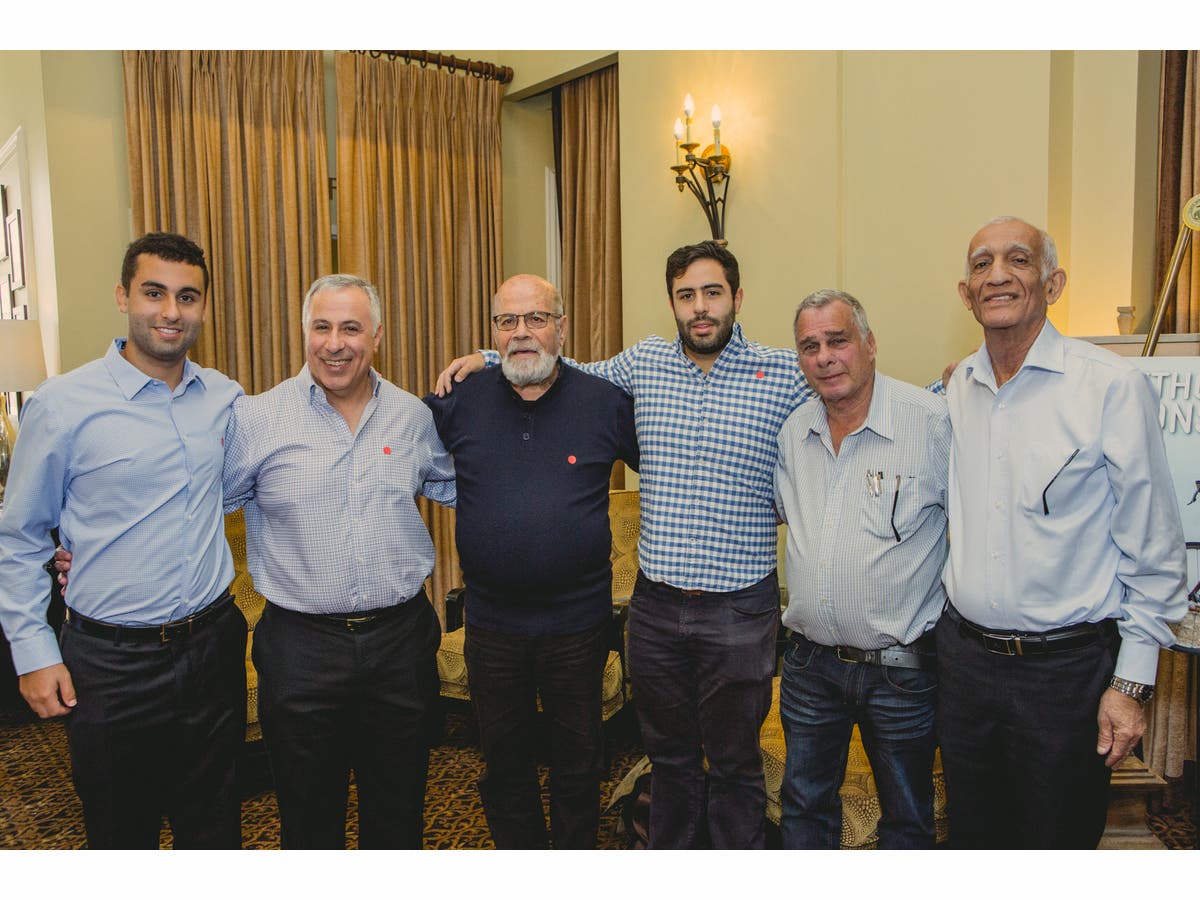
In June 2017, he also appeared at a San Francisco gathering commemorating the fiftieth anniversary of the Six-Day War. A photograph places him with other supporters and three former Israeli paratroopers known from the 1967 Western Wall photograph. Here, the connection was to a historical memory and a community gathering rather than a software transaction.
New arrivals, familiar connections
The company Sasson helped start has continued changing. Jitterbit appointed Mark Logan president and CEO in August 2026. Earlier that year it announced an MCP gateway for AI systems. Its documentation describes a beta offering through which assistants and agents can use governed access to existing Harmony integrations and APIs.
Those are the work of the later company and its teams. They also supply an interesting ending to this career’s earlier chapters. An AI agent arriving in a business still needs access to information and permission to act. The old difficulty of connecting systems has acquired another participant.
Sasson’s story began long before that participant arrived. It passed through customer records, browser-based expense reports and tools for moving data. The thread is ordinary work, followed closely enough to see its complications. The market once gave an expense-report company an exuberant welcome. The less theatrical achievement was giving people a better way to finish the report.