For roughly half a year, Li Jianwen had a job that did not look much like building a chip company. He went to see customers. Dozens of them, according to Denglin cofounder Wang Ping's account of the company's early days. The visits came before a tidy product narrative, before the accelerator cards could be lined up by wattage. They were an attempt to learn what a buyer would ask the silicon to do once it left the slide deck.
That detail is a better introduction to Denglin Technology than a peak-throughput claim. Founded in Shanghai in late 2017, the company designs general-purpose GPU hardware for artificial-intelligence workloads. Its Goldwasser and KS families now cover compact modules and data-center cards. But the valuable thing it is trying to sell is the distance between an AI model that works in a lab and one that keeps working in a school, a factory or a server room.
- Denglin designs AI accelerator hardware and the software needed to run workloads on it.
- Its catalog spans sub-20-watt edge modules and larger server cards.
- Buyers include system integrators serving education, industry, smart cities and energy.
- The company argues that compatibility with familiar GPU workflows can cut migration work; actual savings depend on the model and deployment.
One market, two very different rooms
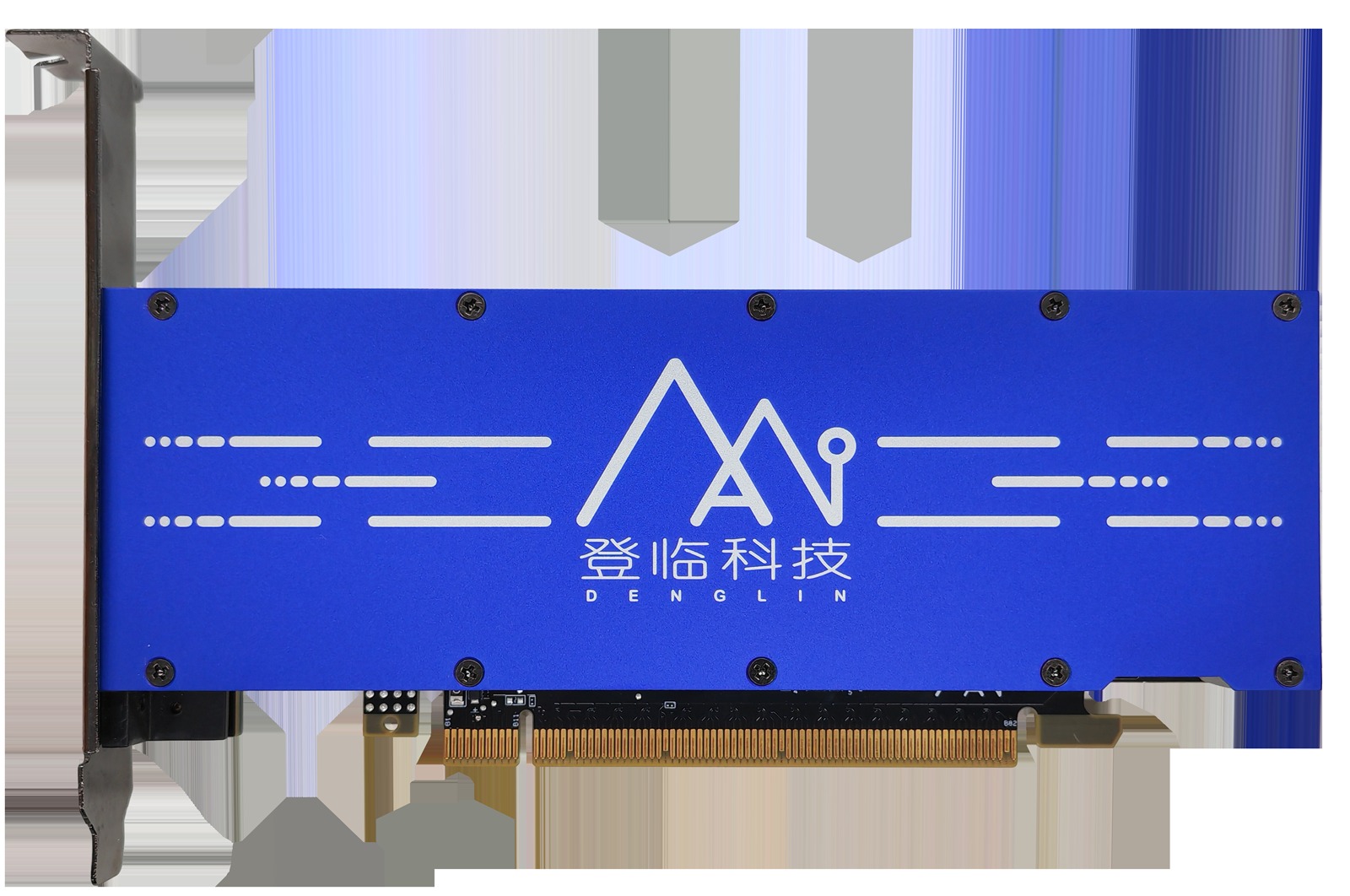
Picture a classroom with several cameras. The immediate problem is not training a vast model from scratch. It is processing video promptly, inside a small machine, without turning the equipment cabinet into a heater. Denglin's first-generation Goldwasser UL and MXM modules are described by the company as using less than 20 watts. It lists uses such as AI-assisted exam monitoring, laboratory assessment and real-time video analysis. Those are specific, prosaic jobs, which is precisely their appeal.
Now picture an enterprise trying to serve a large language model. Memory capacity, server density and the ability to schedule work across cards become central. Denglin's KS28 and KS38 sit at this end of the catalog; the company says they support compute formats from FP32 down to INT4. In March 2026 it described a configuration using two KS38 or KS58 cards to deploy MiniMax M2.5, with up to 128 GB of memory on a card. That is a company deployment claim, not a universal price comparison. Still, it reveals the sales question: how many cards, servers and engineering hours will the model require?
The figures are not interchangeable. A video stream count is shaped by resolution, codec and the model doing the analysis. A memory figure says what might fit; it says little on its own about latency. Denglin's range makes sense when the numbers are treated as constraints for different rooms, not as a single league table.
The software bill arrives with the hardware
For a new GPU supplier, the great incumbent is more than Nvidia's chip. It is the work developers have already done around CUDA, plus the tools, operators and habits embedded in production systems. Denglin presents its GPU+ architecture as compatible with CUDA and OpenCL programming models, and accompanies the hardware with its Hamming software stack. This is the difference between offering a card and offering an adoption path.
Compatibility, however, is not a magic word. It does not certify that every kernel or model will run unchanged, or that throughput will match a favored alternative. A buyer should test its own model, its own precision and the costs of integration. The copyable part of Denglin's approach is the discipline behind the claim: treat the customer's existing software as part of the product specification. A faster chip can still be the slower purchase if a team must rebuild its workflow around it.
“At the beginning of Denglin, CEO Li Jianwen spent more than half a year visiting dozens of customers.”Wang Ping, Denglin cofounder, translated from a 2022 talk
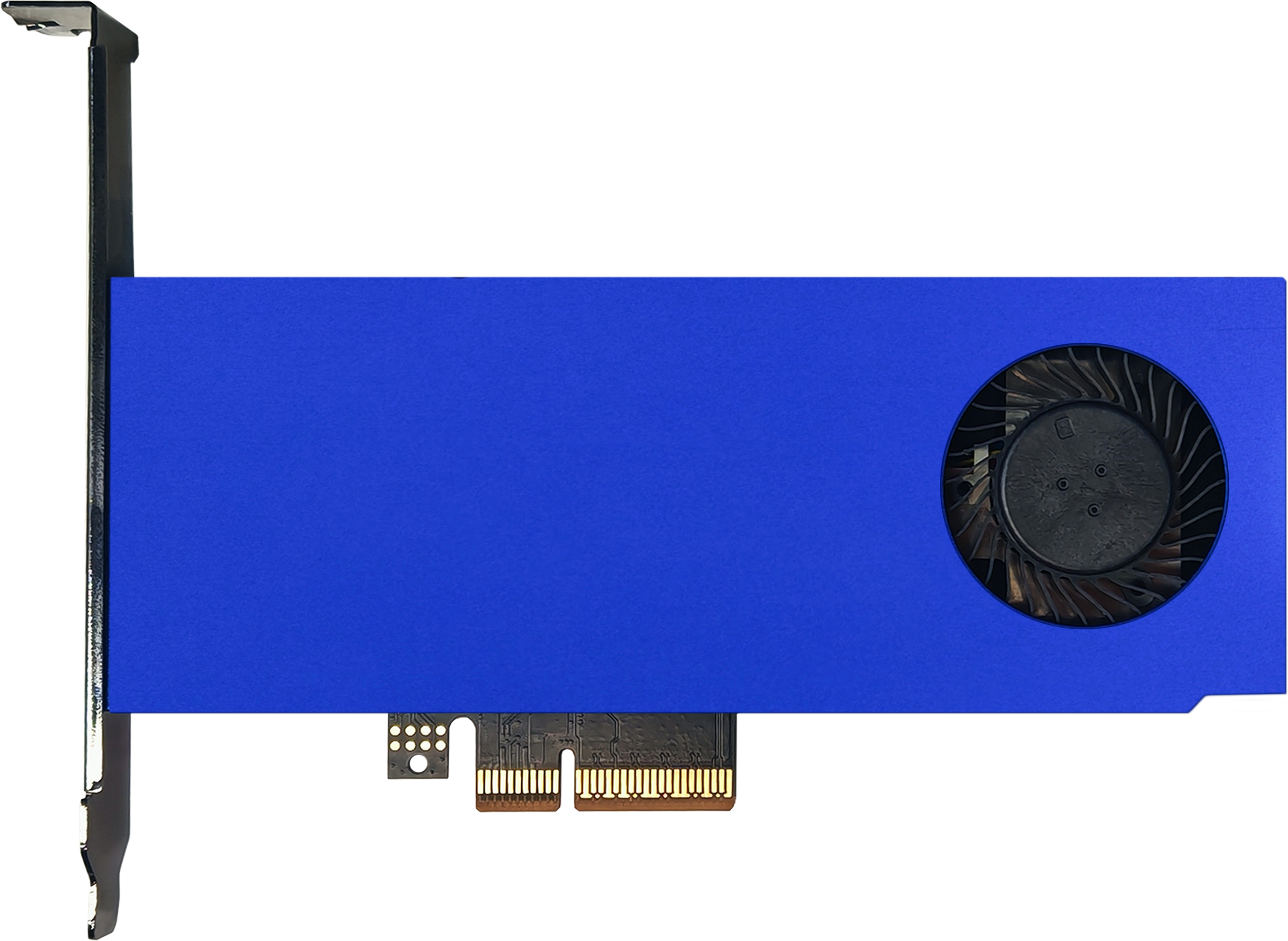
That early tour helps explain a catalog that might otherwise look scattered. The original Goldwasser L cards target enterprise inference, private clouds and industrial inspection. The UL/MXM line squeezes compute into an edge module. The newer KS cards broaden both sides. Denglin also talks about support for domestic operating systems and CPUs, a significant buying condition for some Chinese institutions. These are different purchasing conversations joined by one architecture and a common wish to avoid a painful port.
Customers bring trained models, operators and GPU habits.
Denglin's compatibility pitch aims to reduce migration effort.
Power, memory, latency and integration decide the configuration.
Partners finish the machine
Denglin is a business-to-business supplier. Its cards and modules reach customers through server makers, PC makers and specialist integrators, alongside support and co-designed solutions. It does not post a consumer price list. That leaves the complete cost of a deployment - hardware, software migration, power, support and integration - to a project quote and a proof of concept.
The partners make the abstract hardware concrete. In February 2025, Denglin said it had worked with Lenovo Kaitian on a domestic AI PC and had adapted its Goldwasser products to models including DeepSeek. That is a very different enclosure from a server rack, and a reminder that a compute card has to fit a product somebody will actually sell.
In June 2025 Denglin and Banwei Technology presented KS20, KS28 and KS38 at a joint product event in Suzhou. In 2026 it described work with Tali Technology on an energy and mining decision-support platform, and with Guangshu Huilian on an AI platform for mines and industrial settings. Denglin's account says the latter collaboration had reached more than 1,000 mines. That figure describes a partner platform's footprint, not a public count of Denglin chips. It is nevertheless a useful picture of the route to market: the specialist partner understands the site, while Denglin supplies the computing layer.
What the comparison really measures
Denglin operates in a crowded contest. Nvidia remains the familiar reference point, while Chinese developers including Biren, Moore Threads, MetaX and Iluvatar CoreX offer other routes to domestic GPU supply. Denglin's distinctive claim is not simply that it has another card. It combines a self-designed GPU+ architecture, a range from small edge modules to server products, and a promise to ease the software move. Whether that bundle wins depends on the buyer's actual application.
The company's own language is sometimes more confident than the evidence a buyer can inspect from outside. It reports industrial-inspection results, video concurrency and favorable performance comparisons. Those figures deserve testing under the same models, codecs, batch sizes and power limits as the alternatives. Nor is a statement of CUDA compatibility a substitute for checking the kernels that matter to a particular team. This is where the strategy has a natural boundary: highly specialized workloads, a deeply optimized incumbent stack or a limited engineering budget may keep a customer where it is.
Yet the broader lesson survives any benchmark. Denglin appears to have started by asking what would stop a customer from adopting a new chip. Its product answer has been a menu of form factors and software support instead of one universal GPU. For hardware founders elsewhere, the useful imitation is not the architecture. It is spending time in the room where the device will live, then measuring the cost of getting it there.
Denglin's current website uses the Suzhou Denglin Technology name and lists both Suzhou and Shanghai addresses. Its story still begins in Shanghai, with a founder taking notes from would-be customers. In an industry that loves to speak in tera-operations, the most telling unit may be a visit.