Imagine a camera watching a runner. The runner moves, the camera moves, the light changes, and the little computer inside the device must decide, frame after frame, what to follow. A cloud server could help, provided the signal is good, the delay tolerable, and the battery generous. A camera has none of those luxuries by default. This is the rather unromantic predicament from which Pilot AI Labs built a company.
The short version
- Pilot AI built deep-learning vision software for embedded cameras and other devices with limited computing power.
- Its platform covered labeling, training, object detection, and real-time on-camera analytics.
- Consumer electronics and chip companies were core customers; public records also show U.S. defense work.
- Syntiant acquired the company in 2022 to add vision models and government business.
Founded in 2015 by Ankit Kumar, Elliot English, and Jonathan Su, Pilot AI began with a question that still disciplines the edge AI market: what can the device itself afford to understand? The phrase “edge AI” is now tidy enough for a trade-show banner. At the time, it meant wrestling neural networks into hardware that already had a job to do. Pilot AI’s answer was computationally efficient computer vision that could run on embedded platforms and commodity silicon.
A drone, a runner, and a modest processor
The company’s early patent work makes the problem unusually vivid. A 2016 filing describes a drone using an estimated target position and velocity, plus its own sensor input, to follow a moving object. In the drawing, a runner and a drone are joined by a thin line of measurement. It is almost a cartoon of the company’s ambition: see the world, decide what matters, keep up. The underlying work was more prosaic: detection, tracking, distance estimation, and enough speed to act before the scene changed.
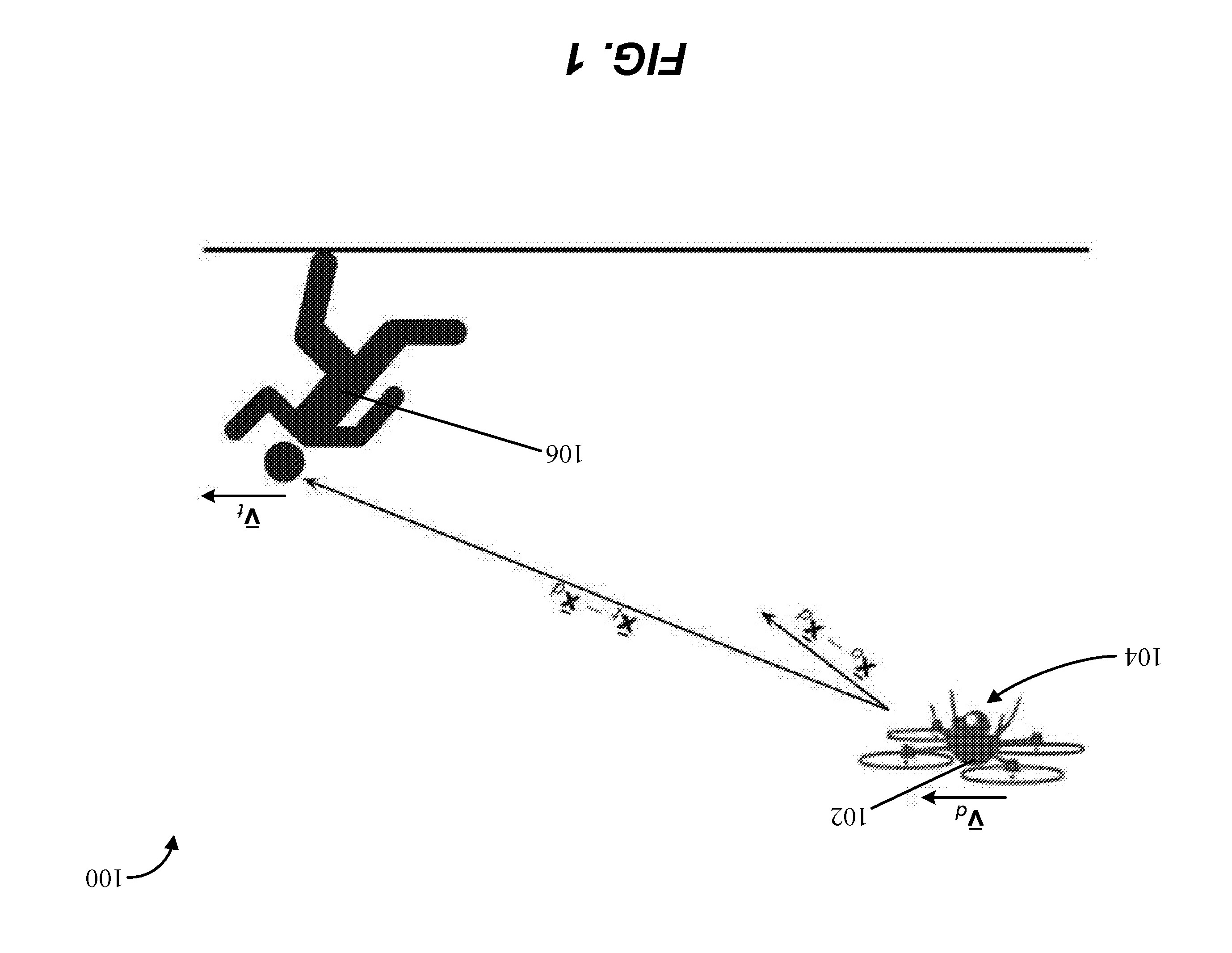
Drones made for a good demonstration, but the company’s broader product was a software layer for cameras. On LinkedIn, Pilot AI described a “drop-in neural network solution” whose work began before inference: ingest data, label it, train a model, then run detection and analytics on the camera. Those first three steps matter because a recognizer is only as useful as the examples it has been taught to notice. A model trained on clean daytime footage may encounter a very different world at dusk, in rain, or through a fisheye lens.
THE WORKFLOW Recognition begins long before a camera draws its first box around an object.
The sale was less glamorous than the demo
Pilot AI’s customers were other businesses, particularly consumer electronics makers and chip companies. Its public product description promised real-time analytics on compute-constrained cameras. A smart-home application could identify and track people, vehicles, pets, or packages. A camera maker could add recognition without obliging every unit to send all its video to a distant server. The buyer, in that arrangement, was likely paying for software and integration that made an existing device more useful. Pilot AI did not publish a standard price list.
Its distinction was the insistence on ordinary silicon. Investor NEA described a framework built for the commodity chips already common in embedded devices. In a federal award abstract, Pilot AI said its software ran across Arm and x86 processors, NVIDIA hardware, digital signal processors, neural-network ASICs, and FPGAs. It also named Qualcomm, Arm, and NXP as partners that helped commercial deployment. That list is technical, but the business point is plain: a company selling software to device makers has a larger addressable shelf if it can fit the chips already on that shelf.
“We’re building a deep-learning based computer vision platform to solve real problems directly on compute-constrained embedded devices.”Pilot AI’s company description
Cloud vision was one alternative. Custom vision hardware was another. Pilot AI sat between them, selling a route to local inference on a variety of processors. That did not make the physics disappear. A model still had to meet the device’s limits for speed, power, memory, and accuracy. It simply shifted the work from buying a new kind of box to engineering the model and its deployment carefully. For a battery-powered camera, those constraints are the product specification, not an afterthought.
Then the camera looked at a different kind of film
In 2019, the U.S. Air Force awarded Pilot AI a $1.5 million Phase II project to find vehicles in very large scans of Optical Bar Camera film. The customer was the 548th Intelligence, Surveillance and Reconnaissance Group. The imagery could include optical distortion from high-altitude capture. Analysts needed help deciding which parts of an enormous image deserved their attention. It was a precise job: locate likely vehicles quickly, tolerate imperfect pictures, and measure both accuracy and speed.
The contract is a better illustration of AI’s commercial value than a dozen generic claims about “seeing.” It specified the image format, the object to detect, the user who would benefit, and the metrics by which the model would be judged: precision, recall, F1, and inference speed. Public SBIR records show two Phase I awards and one Phase II award totaling $1.6 million. Another award abstract said the company’s software had reached millions of consumer and commercial devices; the underlying customer list was not disclosed there.
This is also where the company’s old and new work meet. A drone tracking a runner and an analyst searching a film scan appear to belong to different worlds. Both ask a neural network to find something consequential in visual clutter. The inputs, reliability standards, and deployment conditions differ; the underlying craft of efficient detection travels. The lesson is worth stealing: specify the target, the camera, the environment, and the acceptable delay before falling in love with a model architecture.
The acquirer bought the missing sense
Syntiant, a maker of low-power AI processors and models, acquired Pilot AI in 2022. In its later securities filing, Syntiant said the deal strengthened its computer vision models and team, brought U.S. government and defense business, and helped commercialize software on its own processors and other chips. That is a revealing description of the purchase. Syntiant already had silicon for always-on sensing; Pilot AI brought more of the visual intelligence that could make such silicon useful.
The public funding databases put Pilot AI’s total capital raised at about $6.95 million. An acquisition price has not been publicly established in the materials available here. In a later interview, Syntiant chief executive Kurt Busch said the acquired software-modeling business had doubled revenue since the deal. That is the buyer’s account, not a separately audited Pilot AI figure, but it suggests the models had a life beyond the original company name.
The useful idea to copy
Begin with the device and the decision. Measure the available compute, power, memory, latency, and image quality. Build the smallest model that reliably answers the question a customer actually has. Pilot AI’s Air Force project shows the virtue of writing down the user, the object, and the pass-fail measures before declaring victory.
There is a temptation to tell this as a familiar tale of a startup predicting the future. The more interesting story is smaller. Pilot AI noticed that cameras already had an abundance of images and a shortage of judgment. It built software to put some judgment where the images arrived. A runner, a doorstep package, and a vehicle on old aerial film are very different things to see. For the camera, the essential demand was the same: decide here, and decide in time.