The question mark is doing a lot of work. In Shane Smith Has Questions, the title of the weekly show that returned VICE's co-founder to regular broadcasting, it serves as a mission statement, a confession and a piece of punctuation clever enough to survive a media restructuring. Smith spent three decades speaking in exclamation points. VICE was going global. VICE was reinventing news. VICE would be everywhere, on every screen, all at once. Now the declarative mood has met its natural predator: experience.
The show arrived after a remarkable round trip. A free Canadian magazine became a Brooklyn media company with offices across the world, an HBO series, a cable network, a film and television studio, an advertising agency and a valuation reported at $5.7 billion. Then it became a bankruptcy case. Smith, who served as chief executive until 2018, returned in 2024 as an editor and interviewer with a simpler proposition: sit across from people attached to a noisy subject and keep asking until something useful appears.
It would be easy to frame this as redemption, a genre founders tend to enjoy because it turns a balance sheet into a screenplay. Smith's version is messier. The very instincts that made VICE culturally legible - appetite, speed, swagger, refusal to wait for permission - also made excess feel like evidence of momentum. His career is valuable because the virtues and the errors are not neatly separated. They share a desk.
A magazine with its elbows out
Smith was born in Ottawa in 1969 and studied English literature and political science at Carleton University. Before VICE, he played in punk bands, worked for a spell in a Dublin bar and traveled through Eastern Europe. These details matter less as bohemian garnish than as an early pattern: find the room where polite credentials have limited purchasing power, then learn the local exchange rate.
In Montreal, Smith joined Suroosh Alvi and Gavin McInnes in the publication that would become VICE. It began in 1994 and adopted the voice of a street-level anti-institution: youth culture, music, sex, drugs, fashion and provocation delivered without the careful throat-clearing of legacy magazines. When the operation moved to New York near the end of the decade, the voice moved with it. VICE did not sound like an institution explaining young people. It sounded like people in the scene had seized the printing press.
That voice could be crude, self-satisfied and deliberately offensive. It was also recognizable. Smith understood early that media loyalty can begin with diction. An audience notices when it is being addressed in borrowed language. VICE's pages suggested that seriousness and manners were independent variables. The publication might cover denim with religious intensity, then send a camera toward a political rupture that larger outlets approached through commentary.
“We don't mind if people hate us, we would prefer them to love us, but we don't want indifference.”Shane Smith, 2013
The camera leaves the building
Online video gave the sensibility a larger surface. The VICE Guide to Travel and related projects placed hosts inside stories rather than above them. Smith traveled to North Korea twice and appeared in reporting from locations including Liberia and Greenland. The work was sometimes criticized for turning danger into a personality-led adventure. Yet its visual rule was potent: proximity changes the temperature. The audience was not asked to admire a correspondent's neutrality from across a studio. It was invited to notice what happened when a curious, conspicuous outsider entered the frame.
HBO supplied institutional reach without sanding away the format. VICE premiered in 2013, with Smith as host and executive producer. The second season won the 2014 Emmy for Outstanding Informational Series or Special. VICE News documentaries The Islamic State and Last Chance High, on which Smith served as an executive producer, received Peabody Awards in 2015. The Television Academy now lists 11 nominations and one win under his name.
The most revealing access came in 2015. Smith accompanied Barack Obama to FCI El Reno in Oklahoma during the first visit by a sitting American president to a federal prison. He interviewed Obama, while the documentary placed the president in conversation with incarcerated people. At a White House screening, Obama thanked Smith and the VICE team for the production. Here the company's style found a subject that needed closeness more than performance. A historical first became a room full of people talking about policy's human consequences.
The Montreal magazine begins.
VICE premieres on HBO.
Smith interviews Obama at FCI El Reno.
He leaves the CEO role and becomes executive chairman.
VICE Media files for Chapter 11 protection.
Smith returns with a new VICE News interview show.
The valuation becomes the plot
Success changed the noun. VICE was no longer simply a magazine or even a television show. It was a portfolio: news, studios, digital channels, a cable network, branded content and international operations. Smith was an energetic dealmaker in a period when established media groups feared losing younger audiences and technology platforms promised limitless distribution. Investors including 21st Century Fox, A+E Networks and TPG placed large bets. In 2017, a funding round valued the company at $5.7 billion.
A valuation is a story told in the future tense. VICE's asked the company to convert cultural influence into sustained growth across a complicated collection of businesses. The digital advertising market, meanwhile, was being reorganized around giant technology platforms. Smith himself had warned in 2016 of a coming “bloodbath” across digital, mobile and traditional media. He also argued that publishers had to program every screen and monetize each one differently. The diagnosis was astute. It did not make the treatment inexpensive.
From promise to price - selected reported figures
The 2023 figure was the announced credit bid for substantially all assets, not a directly comparable equity valuation. Scale shows the broad contrast, not an accounting equivalence.
In March 2018, Nancy Dubuc replaced Smith as chief executive. He moved to executive chairman, focusing on deals and content. The transition followed missed financial expectations and a workplace reckoning at VICE. Leadership culture had become part of the company's public record, not a colorful footnote to growth. Any clean account of Smith's tenure has to hold the influential journalism beside the costs of expansion and the responsibility attached to the culture built around it.
VICE filed for Chapter 11 bankruptcy protection in May 2023. A lender group offered a $225 million credit bid for substantially all of the company's assets and assumed significant liabilities. The contrast with the old valuation was brutal and irresistible. But it can also obscure the more durable point. VICE had changed how internet-era reporting looked, while failing to build a financial structure strong enough to carry the size of its ambition.
A smaller room, a longer question
Smith returned to public-facing editorial work in 2024. VICE Media and Bill Maher's Club Random Studios announced a video podcast that would examine memes, misinformation and disputed political and cultural claims. The show emerged as Shane Smith Has Questions and continued releasing interviews through 2026, with VICE News and Studio71 credited as creators.
The format is familiar to anyone watching the migration of media personalities away from institutions and toward feeds: a recognizable host, a guest, a long conversation, clips that travel separately. Yet Smith brings peculiar baggage. He helped build the maximalist version of digital media, the one with bureaus, channels, television carriage and nine-figure investment rounds. His new product is comparatively lean. The institution contracts; the individual voice becomes the distribution strategy.
“Wherever the story takes us, we will follow.”Shane Smith, announcing his return in 2024
The tension has not vanished. A show that calls itself apolitical still makes editorial choices about which doubts deserve airtime, which guests carry authority and how uncertainty is packaged. Asking questions is not an exemption from judgment. It is a promise to show the work. Smith's best reporting has always benefited when the destination mattered more than his performance. His weaker instinct has been to make spectacle feel like proof.
Voice precedes scale
VICE became legible before it became large. Its language created the audience relationship that every later platform tried to monetize.
Reach is rented
Distribution through powerful platforms can enlarge an audience without giving the publisher control over economics, rules or access.
Editorial and financial risk differ
Going somewhere difficult may produce a story. Expanding everywhere at once produces fixed costs. Courage in one category does not solve the other.
Smith once wanted to build the next CNN. For a while, investors behaved as if he might. The more interesting aspiration now lives inside the show's title. Questions are smaller than empires, but they travel well. They can survive a bad quarter, a platform change and even a bankruptcy auction. They also impose a discipline that VICE at its most imperial sometimes resisted: the answer may be less exciting than the pitch.
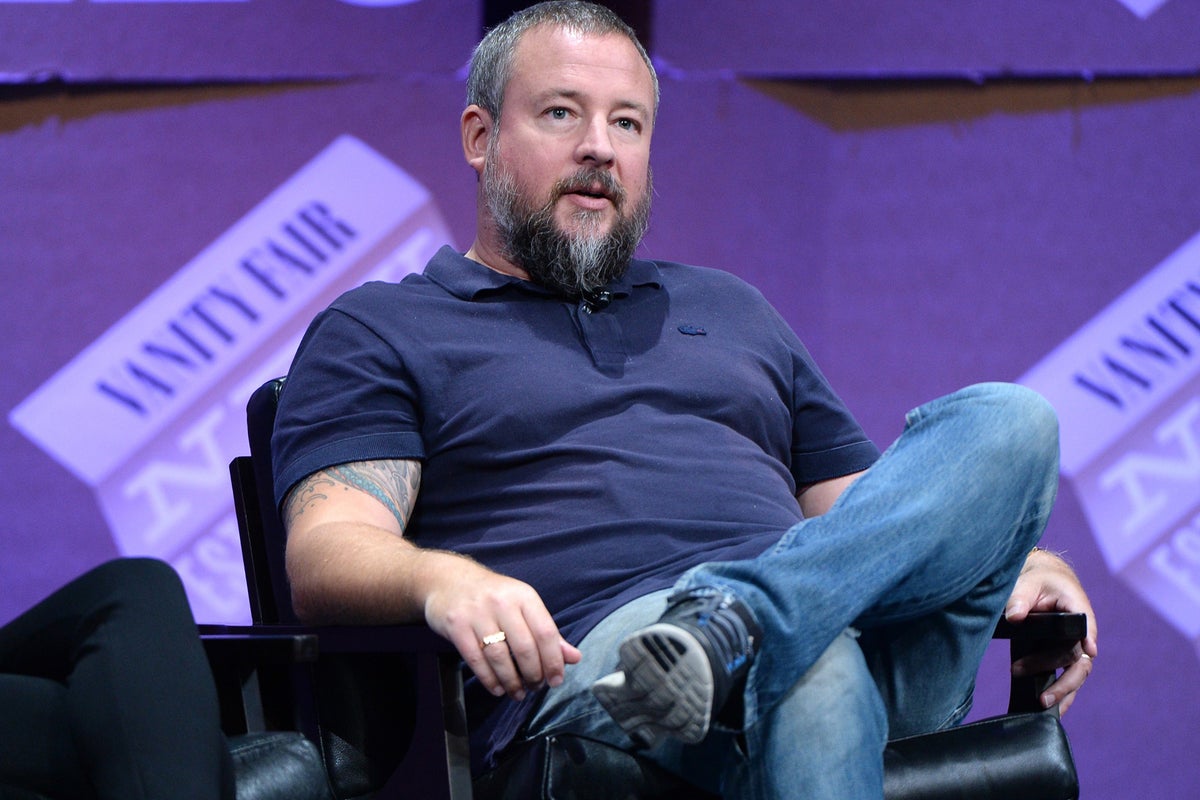
There is no need to romanticize the return. Smith remains inseparable from both VICE's editorial achievements and its managerial record. But the second act contains a useful image. A founder who spent years adding offices, channels and zeros now sits down across from one person. The camera starts. The logo is familiar. The scale is not. Then he asks another question, which may be the oldest workable business model in journalism.