A store can have exquisite lighting, a meticulous merchandising plan and a door that refuses to open. The door wins. For the customer standing outside, every other investment has briefly become irrelevant. Facilities management lives in this awkward territory: the things nobody notices until they stop working.
ServiceChannel has built a business around what happens next. Somebody describes the problem. Somebody chooses a contractor. Somebody approves a bill. Across a chain, those somebodies may never meet. The interesting question is how much money disappears between them.
- Software meets the wrench: work orders, assets, invoices and outside contractors share a system.
- There are three ways in: the platform, its provider marketplace, and optional managed support.
- Cheap labor can be expensive: repeat visits and slow resolution belong in the calculation.
- The useful habit to borrow: record the result of each repair, then use it to improve the next one.
The price of an imprecise request
In a June 2025 customer case, an unnamed nationwide retailer had stores dependent on a call center to request repairs. Generic questioning produced unnecessary work orders and misdirected visits. The first failure was the description of the job, before the technician arrived.
The retailer introduced mobile requests, photographs and decision trees that assigned the trade, priority and provider. It also used historical invoices to adjust spending ceilings. ServiceChannel reports $1,750 in annual savings per location and a 35% reduction in vendor calls seeking clarification. These are vendor-published customer results, rather than a forecast for every buyer.
The wider lesson is almost embarrassingly plain: a maintenance budget can suffer from bad questions. Better intake lets a company spend less time buying the wrong answer.
A marketplace with a memory
ServiceChannel sits at the junction of maintenance software and procurement. Store employees can submit requests; facilities teams can dispatch and monitor work; providers can update progress; finance can examine the invoice. Its catalogue extends to inventory, regulatory compliance, refrigerant tracking, budgets and site inspections. The dullness of this list is part of its charm. Businesses need the roof fixed even when nobody is pitching innovation.
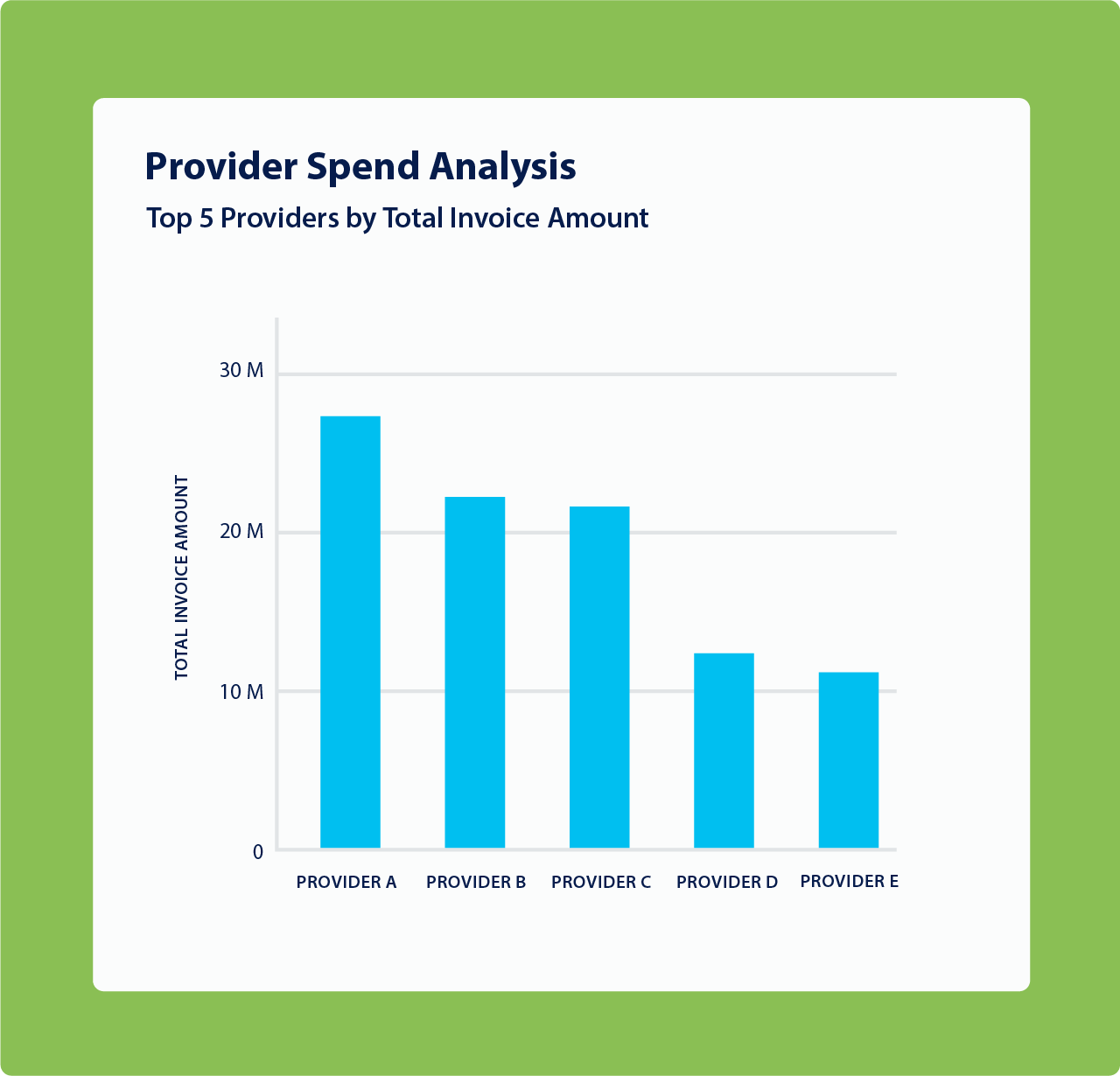
The marketplace adds a record of how contractors actually perform. ServiceChannel’s provider guidance describes four assessment areas: speed, quality, price and engagement. Price means cost-effectiveness at the invoice level. A low hourly rate loses some appeal if the repair requires another visit.
- 01DescribeSymptoms, photos, asset
- 02DispatchTrade, coverage, record
- 03DocumentArrival, work, outcome
- 04ValidateRates, hours, invoice
That connection is ServiceChannel’s distinctive market position. Corrigo is another facilities-management option; MaintainX offers maintenance and asset-management software with work orders, inspections and inventory. ServiceChannel’s particular proposition combines software, provider discovery and people who can help operate the programme. Buyers should compare the mix they need, alongside features on a screen.
Two people, 149 stores
The Vera Bradley case makes the staffing problem concrete. At the time described, EJ Wright and a colleague supported 149 stores, a distribution centre and headquarters. Nights and weekends could become extensions of the working day. Strategy had to wait while the phone rang.
Wright adopted ServiceChannel Managed, including dispatch, provider sourcing, work-order controls and analytics. Within three months, the published case reported 25% savings on general repair and electrical invoices, a 53% improvement in first-time completion, and resolution up to 6.3 days faster across core trades. The completion figure is a reported improvement, not a claim that the rate rose by 53 percentage points.

“The coolest thing about ServiceChannel is the tools.”
EJ Wright, Director of Facilities, Vera Bradley
What changed was the team’s allocation of attention. Routine administration gained support, leaving more room to consider the next repair before it became urgent. That is a more useful test of facilities software than the elegance of its login page.
A bill you can take apart
The platform is sold through subscriptions priced per location. Work-order software is included, and ServiceChannel says implementation usually takes 30 to 90 days. A buyer still needs to agree the package and bring historical records into the process.
Managed services add another commercial layer, priced by scope and volume. ServiceChannel says provider invoices remain visible, while its management fees and platform subscription are invoiced separately. It offers a fixed-fee option and allows customers to bring existing contractors. Those details matter because a facilities buyer needs to understand whether an expensive repair also benefits the intermediary.
Subscription, custom quote
Separate service charges
Commission on approved pre-tax invoices for acquired customers
The provider side has its own price: ServiceChannel’s guidance specifies that commission for customers acquired through the marketplace. The introduction therefore has a measurable cost. An existing relationship and a newly sourced customer should not be treated as interchangeable when modelling the economics.
Invoice controls supply another practical discipline. The platform can compare billed labour with time onsite and agreed rates. Not-to-exceed limits put a ceiling on a job, with proposals required above it. A ceiling still needs a sensible approval route; otherwise a spending control can become a queue of stranded repairs.
The landlord, the sensor and the repair
ServiceChannel began in 1999. Co-founders Steven Gottfried and Serge Lubensky later left to create Re:Tool Ventures in 2017, their third company together over 25 years. That same year, Accel led a $54 million growth financing. In August 2021, Fortive completed an acquisition worth approximately $1.2 billion. That was the purchase price of a business, not a pile of venture funding.
Fortive’s 2021 annual report puts ServiceChannel’s 2020 revenue at approximately $70 million. The investment makes more sense when you see the adjacent work. In 2023, ServiceChannel partnered with fellow Fortive company Accruent: Lucernex could connect lease responsibilities to maintenance, while vx Observe could turn sensor and utility information into work orders. Knowing that the landlord is responsible for a repair can be as valuable as finding somebody to perform it.
The April 2025 Partner Ecosystem added a directory spanning monitoring, payments, training and implementation. Viewpost supports EasyPay; Interplay Learning brings technical training. The proposition stretches beyond ticket tracking into the practical dependencies of completing a job.
AI learns to read the label
The April 2026 ServiceChannel AI announcement reported more than 600 brands, 70,000 contractors and 500,000 commercial locations in 66 countries. Its historical data foundation was described as 300 million work orders. These are different measures: accumulated work-order history is not annual volume.
The summer release offers a pleasingly modest application. Photograph an equipment nameplate, and AI suggests the make, model and serial number. The user confirms the values before saving. Location summaries assemble open work and upcoming maintenance. Both features were described as beta capabilities, so availability and polish should be evaluated at the feature level.
That human check deserves attention. An incorrect serial number can travel through warranties, maintenance records and replacement decisions with impressive confidence. Faster entry is useful when the resulting record is trustworthy.
Copy the discipline before the dashboard
ServiceChannel’s analytics offering connects repair history and asset performance to replacement decisions. That makes facilities information useful to finance and operations, as well as to the person answering the emergency call. The company describes a remote-first culture and continuous learning inspired by kaizen. Repeated small improvements suit a business whose subject is repeated small breakdowns.
The editorial inference is straightforward. You can borrow the process before purchasing the platform: improve the questions at intake, compare contractors on whole-job outcomes, keep records current, and inspect invoice exceptions. Then decide which activities deserve software or managed support.
That approach depends on participation. If store staff leave requests vague, technicians omit updates, or asset histories are unreliable, the next decision inherits those weaknesses. A single site with a trusted local contractor may gain less from a broad marketplace than a chain coordinating many trades. Local coverage and internal ownership deserve examination before a contract is signed.
ServiceChannel sells a way to make the repair loop more legible. The door will still break. The useful question is whether the business learns something each time it pays to open it again.
ServiceChannel website ↗ · Products ↗ · Company blog ↗ · Company news ↗
LinkedIn ↗ · X ↗ · YouTube videos ↗ · Asset recognition product tour ↗