Thirty seconds into a customer’s wait, a small compromise becomes sensible. CxEngage’s routing tutorial begins by looking for a Tier 1 agent with a technical-support proficiency of at least eight. After half a minute, it accepts five. After a minute, it opens the search to Tier 2 as well. Somebody has decided, in advance, how long expertise is worth waiting for.
There, inside an unglamorous configuration screen, is a useful introduction to Serenova. Customer service is full of decisions that sound obvious until thousands of people need them made at once. Which agent? Which channel? Which region? How long before trying something else? Serenova sold software for making those choices consistently. The music merely filled the silence.
- The job: coordinate customer conversations, routing and agent work through cloud software.
- The buyer: enterprise service teams and outsourcers managing distributed operations.
- The inheritance: LiveOps experience, followed by recording, quality and scheduling acquisitions.
- The present: CxEngage is offered by Enghouse Interactive after the 2023 Lifesize asset purchase.
Thirty seconds is a business decision
The tutorial’s numbers are illustrative settings, not a universal service prescription. Their importance is that the trade-off is visible. You can prefer the more qualified agent while giving the queue a way to move. An endlessly patient routing rule is less charming to the person listening to it.
Skill ≥ 8
Skill ≥ 5
Tier 1 or Tier 2
This is contact center as a service, or CCaaS. Businesses use hosted software to organize customer communications rather than making the entire system depend on equipment they operate themselves. Serenova’s CxEngage joined voice and digital interactions with routing, reporting and agent tools. Its open APIs also made the surrounding systems part of the proposition.
A startup with a past
Serenova’s history needs three dates. Its lineage runs back to LiveOps in 2000. The software business became independent under Marlin Equity Partners in December 2015. The Serenova name arrived in October 2016. CxEngage had already launched that March; the product beat the business cards to the meeting.
That distinction matters. LiveOps’ separate agent-services operation did not come with Marlin’s software purchase. Serenova was selling the system that customer service organizations could use, rather than simply supplying the people to answer their calls.
The earlier operating experience still counted. Marlin’s 2015 announcement described a platform that had managed operations for 20,000 home-based independent agents. A distributed workforce was already a practical engineering problem. Years before remote work became an urgent boardroom subject, the software needed to find available people who did not share a building.
“We like to say that LiveOps Cloud is a 16-year-old startup.”
Jeff Thompson, CTO and SVP, writing on the AWS blog in April 2016
The cloud audition
Thompson’s account of choosing infrastructure is unusually specific. The team considered Azure, Rackspace, Google, AWS and a colocated facility. Colocation was the first option rejected: in its assessment, it would not provide the redundancy and scalability the new platform required.
The team selected AWS for its reach and service catalog, describing a Linux-heavy development environment and the ability to choose infrastructure for particular workloads. This was a 2016 explanation of one team’s requirements, not a verdict on today’s rival clouds. The financial logic was equally plain: select the capacity each service needs and avoid overprovisioning.
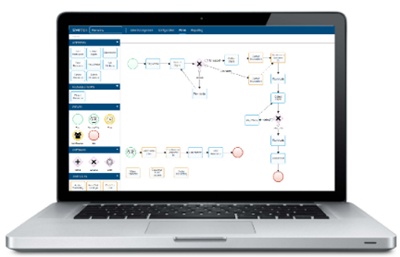
CxEngage’s API-first design made integration central. Documentation describes connections to Salesforce, Zendesk, Twilio, email, REST APIs and Microsoft Teams. An agent can work with customer information in the tools the organization already uses. The attraction is fewer disconnected steps between receiving a question and doing something useful about it.
The report that arrived too late
Consider Hampsta, the New Zealand holiday-shopping savings business in a historical Serenova case study. Before implementation, it used an outsourced call center and manual processes. Reports took weeks. Customer acquisition was below target, and expenses exceeded budget. Management had too little visibility to steer the operation comfortably.
Hampsta adopted LiveOps Social and LiveOps Chat & Email, integrating them with its website and card-management system. The vendor’s case study says the system was operational within weeks and reports better conversion, lower acquisition costs and real-time reporting. These are reported customer outcomes, without a quantified savings figure. They concern the earlier product family, not proof of results from every later CxEngage installation.
The copyable idea is modest: connect the communications process to the business process. Hampsta needed to see responses and campaign results while it could still act on them. A report that arrives after the opportunity has gone is an excellent historical document and an awkward management tool.
Answering was only the beginning
Serenova then bought capabilities for the work surrounding each conversation. TelStrat joined in 2017, bringing call recording, quality analytics and workforce management. ProScheduler followed in 2019, adding forecasting and scheduling technology. Both acquisitions addressed the supervisor’s problem as well as the agent’s.
Routing chooses among the people available. Scheduling helps determine who will be available in the first place. Recording and quality review let managers examine what happened when a conversation was answered. Put together, these functions describe a larger operational ambition than moving a telephone exchange to somebody else’s server.
The market included enterprise service organizations and business process outsourcers, with customers across finance, healthcare, insurance, retail and technology. Historical references include Salesforce, Amway and Nuffield Health. These names establish the breadth of past use; they should not be read as a current customer roster.
When the office became a constraint
In March 2020, the distributed-agent proposition acquired a deadline. Serenova announced CxEngage Rapid Response, offering to move contact center operations into the cloud within 48 hours. Its announcement described a 500-plus-agent government deployment that had already handled more than 150,000 calls, and a 1,000-plus-agent healthcare deployment.
Those examples were company-reported and the customers were unnamed. Even with that qualification, the operational point is clear. Browser access and a prepared deployment process could help organizations keep agents working when gathering them in one office became difficult. The 48-hour offer was a particular program at a particular moment, not a sensible assumption for every migration.
The product outlived the name
Just before that announcement, Marlin had combined Serenova with Lifesize on March 10, 2020. The pairing brought contact center software together with video collaboration and meeting-room technology. The combined business reported more than 10,000 customers; that figure belonged to the combination, not Serenova alone.
- 2015Marlin buys LiveOps Cloud
- 2016Serenova name introduced
- 2020Combination with Lifesize
- 2023Assets acquired by Enghouse
The next transition was more difficult. Lifesize filed pre-negotiated Chapter 11 petitions in May 2023 alongside an asset purchase agreement with Enghouse. In August, Enghouse announced completion of the purchase for approximately US$20.7 million, subject to adjustments. That price covered substantially all Lifesize assets, including Serenova and other brands. It was not Serenova’s standalone valuation.
Today, Enghouse Interactive markets CxEngage as its enterprise cloud contact center platform. Its proposition includes omnichannel engagement, regional deployment and integrations, with tiered packages and optional capabilities. The product has continued across a succession of corporate structures. For customers, continuity of support and the precise service agreement deserve more attention than the changing name above the door.
Borrow the decision, then test the plumbing
Buyers can compare CxEngage with alternatives such as Genesys Cloud CX, NiCE CXone, Five9 and Talkdesk. Serenova’s story suggests a useful evaluation method: test a real queue, a real customer-history lookup and a real supervisor workflow. Channel counts alone reveal little about the handoffs between them.
The documentation also supplies conditions that a demonstration can conceal. It recommends avoiding competing network traffic and using wired connections where possible. An incorrect Twilio Interconnect region can prevent agents from becoming ready or receiving calls. Regional accounts and integration credentials need to match the actual deployment.
For cost, compare the proposed subscription with the work required to connect systems, configure routing and train staff. Request a breakdown of optional quality, workforce and other capabilities. The cloud changes where infrastructure lives; an organization still has to decide what a good service operation looks like.
Start with the question from that little tutorial: how long will you wait for your preferred agent before trying somebody else? Define the exception as carefully as the ideal. Then test it under load. A customer’s patience is a resource, and the hold button has never been a particularly good accountant.
Take a closer look
Explore CxEngage at Enghouse, try the queue-building walkthrough, read the 2016 engineering account, or watch the CxEngage video product demo.