Surgo Health raises $5M seed From neurons to nations Latin for "I rise" 60+ peer-reviewed papers Behavior x Data x Technology Born in Tripoli, schooled in Istanbul The scientist who asks WHY Surgo Health raises $5M seed From neurons to nations Latin for "I rise" 60+ peer-reviewed papers Behavior x Data x Technology Born in Tripoli, schooled in Istanbul The scientist who asks WHY
Sema Sgaier
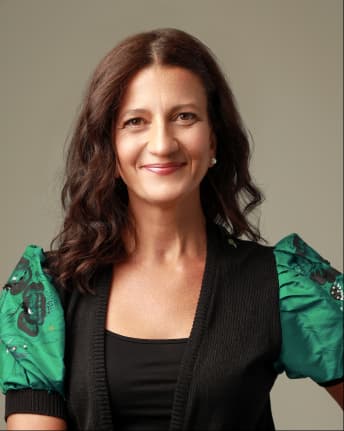
The face of a founder who keeps a camera in her bag and a hypothesis in her pocket.
Founder · Behavioral Scientist · Washington, DC

Sema Sgaier

She fate-mapped neurons before she fate-mapped populations. Now she builds AI that asks the question medicine keeps skipping: why do people do what they do?
CEO, Surgo Health Ex-Gates Foundation Neuroscientist
3
Surgos founded
60+
Papers published
12 yrs
At the Gates Foundation
$5M
Seed for Surgo Health
The Dispatch

She runs a company named after a Latin verb. It means "I rise."

A patient leaves the pharmacy with a prescription and never fills it. A mother skips the prenatal visit. A community waves off a vaccine. Medicine logs all of it as a failure of compliance. Sema Sgaier logs it as a question. Her whole career is the pursuit of the answer that sits behind the chart: not what people do, but why.

Today she is co-founder and CEO of Surgo Health, a public benefit corporation in Washington, DC that points artificial intelligence and behavioral science at the most stubbornly human part of healthcare. The platform tries to figure out why patients don't access the treatments they need, why they sit out clinical trials, why they disappear from the system. The clinical data, she argues, was never the missing piece. The human data was.

Surgo Health is the third organization she has launched under the same banner. First came the Surgo Foundation, co-founded with investor Mala Gaonkar and author Malcolm Gladwell. Then Surgo Ventures in 2020, a nonprofit that fused behavioral science and machine learning during the pandemic. Then, in 2022, Surgo Health, the for-profit built to take those ideas to scale. Three names, one idea, repeated until it stuck.

The word "Surgo" is not branding fluff. It is Latin for "I rise." For someone who has rebuilt her professional identity at least three times, the choice feels less like marketing and more like a personal motto.

What we're really obsessed with is how do we reveal the human side of health care?
- Sema Sgaier, The Commonwealth Fund, 2025
Origin Story

Born in Tripoli. First in her class in Istanbul. A passport with stamps from four sciences.

Sema K. Sgaier was born in 1975 in Tripoli, Libya, to a Libyan father and a Turkish mother. She studied molecular biology and genetics at Boğaziçi University in Istanbul and graduated ranked first in her class. Then she kept collecting disciplines the way other people collect stamps.

A master's in neuroscience at Brown. A PhD in cellular and molecular biology, with a focus on developmental genetics, at New York University. A postdoctoral fellowship in human genomics at Harvard Medical School, working under the geneticist Christopher Walsh. In that lab she helped co-discover mutations in the WDR62 gene linked to microcephaly, and she was among the first to apply a technique called Genetic Inducible Fate Mapping to study how the cerebellum develops.

It is a deeply technical resume. And then, almost as a footnote, there is this: she also trained in documentary photography at the International Center of Photography. The same instinct that makes a good documentary photographer - the patience to watch real people and the discipline to record what is actually there rather than what you expected - turns out to be the same instinct that powers her data work.

The Pivot

A dozen years at the Gates Foundation taught her that the hardest problem in health isn't the molecule.

In 2008 Sgaier left the bench. She joined the Bill & Melinda Gates Foundation and spent roughly a dozen years leading large-scale public health programs. She ran voluntary medical male circumcision initiatives across eastern and southern Africa for HIV prevention. She helped scale Avahan, the foundation's sprawling HIV-prevention effort in India, and managed its handover to the Indian government and the national AIDS control program.

This is where the worldview crystallized. You can have the right intervention, the right funding, the right logistics, and still watch a program stall because of something messier: trust, habit, fear, identity, the texture of a real human life. The molecule was rarely the bottleneck. The behavior was.

She carried academic credentials alongside the operational ones, holding appointments as an assistant adjunct professor at the Harvard T.H. Chan School of Public Health and as an affiliate assistant professor of global health at the University of Washington. By the time she left the foundation, she had a thesis worth building a company on: public health needed the precision of data science and the humility of behavioral science, working together.

The Arc

From the lab bench to the boardroom, one obsession the whole way.

2005-2008

Genomics at Harvard

Postdoctoral research under Christopher Walsh; co-discovers WDR62 mutations linked to microcephaly and applies fate-mapping to cerebellum development.

2008-2020

Gates Foundation

Leads HIV-prevention programs at scale - male circumcision across Africa, the Avahan program in India - and learns that behavior, not biology, is the bottleneck.

2017

Surgo Foundation

Co-founds the foundation with Mala Gaonkar and Malcolm Gladwell to apply behavioral science and data to public health.

2020

Surgo Ventures

Co-founds the nonprofit; during COVID-19 builds the open-source Community Vulnerability Index and the U.S. Maternal Vulnerability Index.

2022-2023

Surgo Health

Founds the public benefit corporation, raises a $5M seed round, and steps in as CEO to commercialize the behavioral-data platform.

Proof Of Concept

When the pandemic hit, her team mapped the vulnerability of every county in America.

2020

The COVID-19 Community Vulnerability Index

Surgo Ventures combined roughly 40 indicators across seven themes into a single map of which US communities - state, county, even census tract - were most exposed to the health, economic, and social fallout of the pandemic. It became a tool for precision policy at a moment of national improvisation.

Ongoing

The Maternal Vulnerability Index

The first county-level, national-scale, open-source tool to identify where and why mothers in the United States are vulnerable to poor outcomes. It turns a vague sense of "the system is failing women" into a map you can act on.

If I don't see myself as part of a clinical trial when a drug is being tested, I'm not going to trust that drug. I'm not going to believe it's been tested on my community.
- Sema Sgaier, on the trust gap in medicine
The Quirks

What you won't find on the org chart.

The North Star

The bet she's making.

Sgaier's wager is simple to state and hard to execute: the data medicine has been missing was never clinical. It was human. If AI and behavioral science can finally model why patients trust, hesitate, engage, or vanish, then health systems stop guessing and start designing for the people they actually serve.

That is the thread connecting the neuroscientist who once tracked single cells, the program officer who scaled HIV prevention across continents, and the founder building a company in Washington today. Different scales, one question. She has spent a career refusing to accept "the patient didn't comply" as an answer - and building the tools to replace it with something truer.

The Rolodex

Find her work.