At two in the morning in Colombo, a sales call is either an act of discipline or a confession. For Sehan Sanjula, it was both. He and Thimasha Pathirana had two laptops, a young design service and, by his telling, three months of doors closing in their faces. The United States was awake. Sri Lanka was not. So they dialed into the dark.
Then a woman answered. Her name was Upeka, and when Sanjula realized she was Sri Lankan, the temperature of the call changed. She was with DianaHR, a Y Combinator-backed startup. Conversation became opportunity. One client became an introduction to a world of venture-backed companies that needed design yesterday and did not particularly want to become experts in procuring it.
Founder stories often sand down the awkward interval between idea and evidence. Sanjula does the opposite. His public version includes the empty months, the midnight cold calls and the mistakes in client management, communication and timelines. That candor reveals the central fact of Zyner: the company was shaped less by a flash of aesthetic inspiration than by the chronic irritation of creative work arriving badly.
The brief is only the beginning
Sanjula came to the problem as a maker. His early public portfolio describes a Colombo-based photographer, cinematographer, graphic designer and motion-graphics artist. The list has the eager breadth of someone who likes opening the software and making the thing. Before Zyner, he was also CEO and co-founder of Notch Digital, a creative agency he built with Pathirana.
The craft mattered. So did all the dreary material around it. A client can hire a talented designer and still lose hours writing briefs, explaining preferences, finding yesterday’s file, nudging a deadline and discovering that the person who made the landing page is quite hopeless at a product animation. “Access to a designer” sounds efficient until the client becomes that designer’s unpaid project manager.
“A system of great people, trained well, obsessed with one thing: making the client’s life easier.”Sehan Sanjula
Zyner’s answer is to put an operating layer around the work. Its current offer combines a fractional creative director, senior specialists and a dedicated project manager. Calls are recorded. Preferences and brand rules go into a Notion database. Designers read that memory before opening Figma. The subscription includes requests and revisions, but the more consequential promise is continuity: the client should not have to teach the service who they are every Monday.
The overnight relay
Geography supplies the rhythm. Sanjula has described most of the team as being in Sri Lanka, hours ahead of US clients. A request left at the end of an American workday can move while the client sleeps. This is the romantic version of asynchronous work, the baton passed cleanly through the night. The prosaic version requires excellent notes, decisive handoffs and somebody accountable for the clock. Time zones create the opening; process decides whether it is an advantage.
A service dressed like software
Zyner launched in 2024 with the familiar vocabulary of subscription software: a monthly rate, flexible capacity, the ability to pause or cancel. Sanjula wrote that the launch made $7,500 in its first 24 hours. Product Hunt classifies it among landing-page builders, graphic-design tools and design resources, although the company emphatically sells a service rather than a tool.
That distinction is useful. Software typically asks the customer to operate it. Zyner asks the customer to submit a request and let other people operate the machinery. The interface is Slack, meetings and the occasional Loom. Behind it sit judgment, specialization and management. A pitch deck may pass through different hands from a launch video, but the client is meant to experience one team.
The first two figures describe Sanjula and Pathirana’s origin story. The current client and team counts are figures Sanjula reported publicly in 2026.
Sanjula says the company has moved well beyond $1 million in annual recurring revenue. More revealing than the number is how he says it happened: hire carefully, train people closely, explain the reason behind a standard and give them enough context to make good decisions when he is absent. The founder’s route out of every decision is to manufacture judgment in other people. It is slower than adding names to an org chart and far more difficult to photograph.
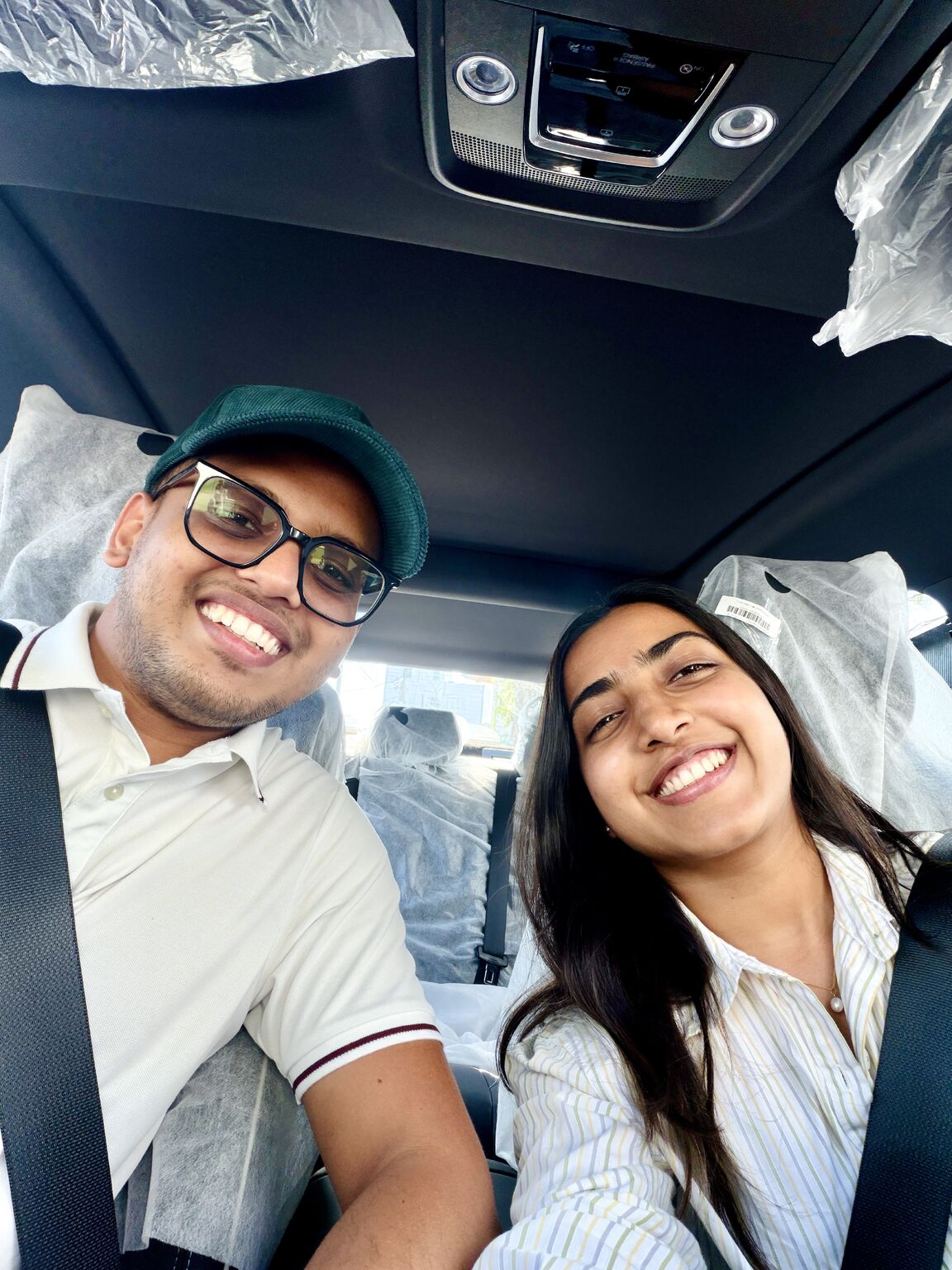
The co-founder in the passenger seat
Pathirana is not a footnote in Sanjula’s telling. She appears at the beginning, beside the second laptop, through late nights, early mornings and pivots. He calls her his best friend and the person he thinks out loud with. Their partnership predates Zyner’s present scale: Notch Digital also lists them as co-founders.
This matters because a service business absorbs emotion with alarming efficiency. Every late task and dissatisfied client can route itself toward the founder’s nervous system. Sanjula has written that the supposed freedom of agency life initially meant a transfer of responsibility. The release arrived later, after work could move without his follow-ups and the team could decide without him.
He nevertheless remains close to the traffic. In describing Zyner’s evolution, he said he was still active in every client Slack thread. That detail sits in productive tension with his desire for a company that functions independently. He wants a system that does not need him constantly, yet his public voice remains intensely present: reviewing, selling, explaining and turning operating lessons into posts.
The visible deliverable
A brand, landing page, pitch deck, interface, campaign asset or launch video.
The invisible deliverable
A remembered preference, a useful brief, a clean handoff and one fewer follow-up for the client.
Clarity before decoration
Sanjula’s design advice sounds like his operations advice wearing nicer shoes. A website has only a few seconds to explain itself, he argues. A pitch deck should guide an investor’s eye rather than display the founder’s ability to export a wall of text. A brand should establish clarity, consistency and trust before it worries about being cool.
This is not an ascetic dislike of beauty. Zyner’s portfolio is full of polished motion, dark interfaces, vivid identities and startup landing pages. It is a theory of sequence. First make the meaning legible. Then earn the flourish. Sanjula’s compact formulation, “Pretty is vanity. Clarity is revenue,” is deliberately severe, but it tells a founder where to begin on a Tuesday morning.
The newer Zyner Sprint pushes that sequence into nine days: brand strategy, visual identity, copywriting, a landing page, Framer development and animation. It is aimed at founders moving toward launches or investor meetings. The short clock makes the promise easy to repeat. The real challenge is compressing decisions without converting haste into confusion.
The portfolio shows where that discipline has to travel. Zyner has presented work for Metal, a private-markets operating system backed by Y Combinator and a16z speedrun, with editorial type and a restrained interface intended to make a complex product easier to enter. It produced a founder-led launch video for biotech startup B-12 and another for Novoflow, translating technical products into visual narratives. Sanjula has also written about work created in Sri Lanka reaching a Nasdaq billboard through a client relationship. A deck, a website and a giant public screen do not ask the same thing of a designer. The common job is deciding what the audience must grasp first.
This range makes “unlimited design” a slightly mischievous label. Capacity always has limits; the craft changes from request to request; revisions consume real hours. Zyner’s starter plan makes the constraint explicit by moving one active request at a time, with added bandwidth available. The useful promise is not infinity. It is a queue with an owner, a standard and fewer mysteries about who is doing what next.
A life inside the company
Sanjula’s public world stretches between Sri Lanka, San Francisco clients and time spent in Dubai. He writes of Sri Lanka as grounding and Dubai as a lesson in scale and fast execution. The places supply different tempos. His task, as he frames it, is to choose a rhythm rather than allow the business to choose one for him.
“You don’t build a business instead of a life. You build it inside one.”Sehan Sanjula
There is a pleasing contradiction here. Zyner sells speed, yet Sanjula describes the company itself as slow, deliberate building. He prizes quick delivery but says he did not hire quickly. He wants clients to see work in the morning because the team spent years learning what must happen overnight. Urgency at the edge depends on patience at the center.
The black T-shirt and MacBook in his origin story make a neat founder still life. Colleagues even tease him about the shirt. But the enduring image is the relay: a request crosses an ocean, someone turns vagueness into direction, another person makes, another reviews, and morning arrives with something useful. Design is the artifact. Trust is the compound interest.
Sanjula started by making calls while his city slept. Now he is building a company around what can happen before somebody else wakes up.