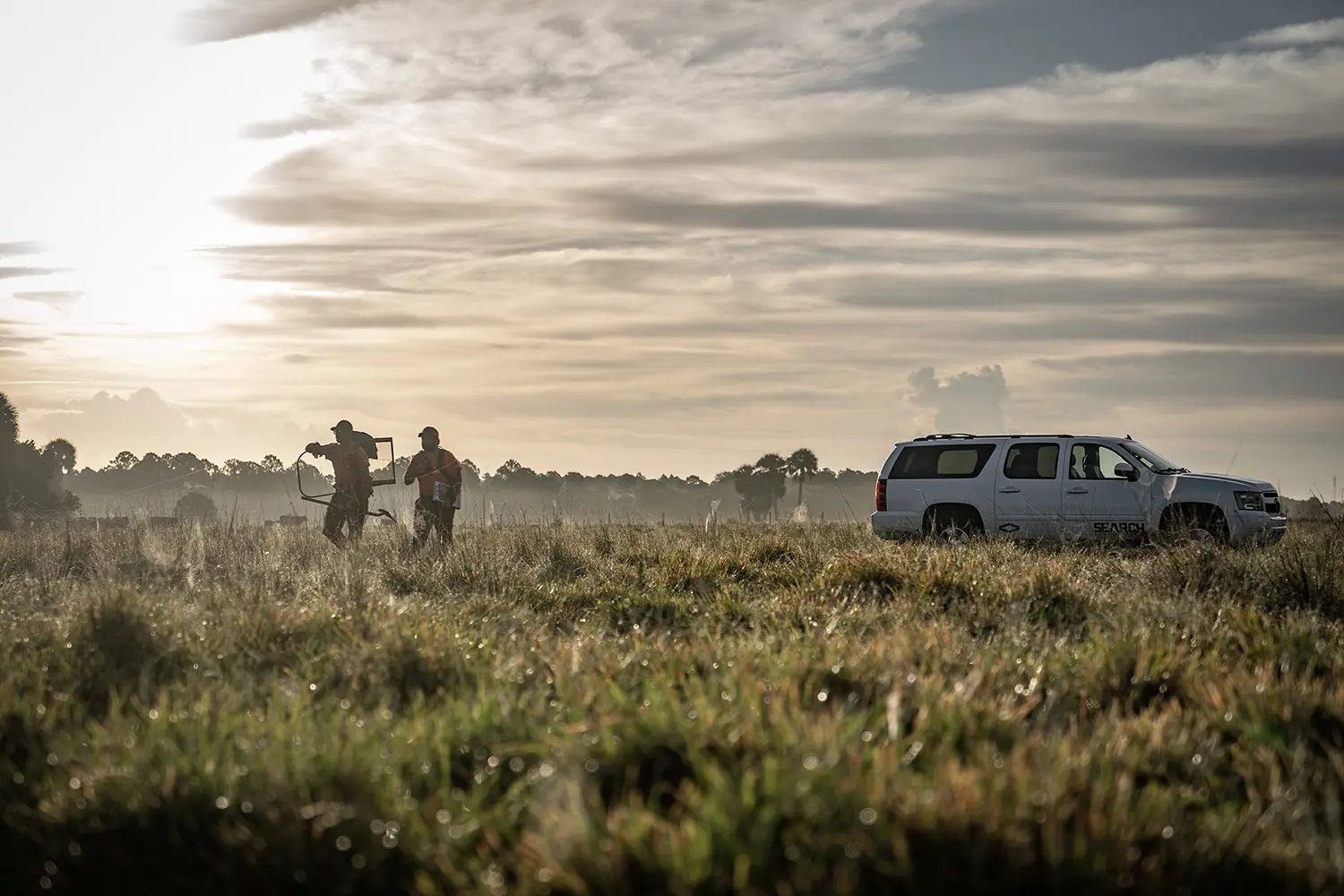
There is a step in almost every wind farm, pipeline, highway, and offshore lease that most people never see. Before a single shovel or drill touches the ground, someone has to prove the project is not about to destroy a burial ground, a shipwreck, or a coastline that drowned ten thousand years ago. That work is required by federal law. It is unglamorous, technical, and easy to get wrong. And in the United States, the biggest name doing it is a company from Orlando, Florida called SEARCH.
SEARCH began in 1993 as Southeastern Archaeological Research, Inc. - the acronym outgrew the mouthful. Founded by Dr. Anne V. Stokes, who still runs it as CEO, it has become the largest cultural-resource management (CRM) firm in the country, with roughly 390 archaeologists, scientists, and specialists. It describes itself, plausibly, as holding the largest concentration of archaeology talent in the industry. Since 1993 it has completed more than 5,000 commercial and government projects across 48 US states, 6 territories, and 39 countries, on all seven continents and in all four oceans.
01 / The businessThe compliance step that became a company
The engine underneath SEARCH is a piece of American law: Section 106 of the National Historic Preservation Act, backed by NEPA and a stack of state rules. If a project uses federal money, permits, or land - and most large infrastructure does - it has to identify and account for historic and archaeological resources first. That means surveys, testing, excavation where needed, laboratory analysis, monitoring, and a lot of documentation.
Developers do not do this themselves. They hire specialists. SEARCH turned that recurring, mandatory need into a national professional-services business, billing government agencies and commercial clients across roughly 45 market and research sectors. The model is closer to enterprise consulting than to a museum: scope a project, deploy the right archaeologists and geophysicists, deliver a compliant report that lets the build proceed.
The unsexy, mandatory first step in a megaproject is a genuinely good business - if you are the best in the world at it.
02 / The customersWho calls, and why they cannot skip it
SEARCH's clients are the people who build big things: federal and state agencies, the Department of Defense, offshore wind and renewable-energy developers, oil and gas operators, ports, transportation departments, and infrastructure programs. It also works with Tribal Nations, museums, and descendant communities, and it has advised international bodies on heritage standards.
The clearest example of its position is offshore wind. Before turbines go into the seabed, the ocean floor has to be surveyed for shipwrecks and submerged sites. SEARCH has worked the majority of US offshore wind lease areas - which makes an archaeology firm one of the quieter, load-bearing vendors in the American clean-energy build-out. It has also stepped in during disasters, leading the submerged cultural-resource response after the BP Deepwater Horizon oil spill and Superstorm Sandy.
Where the work lives
Illustrative mix of SEARCH's project domains - directional, not audited
There is also a quieter reason clients stick around: continuity. A cultural-resources finding can stall a project for months, so the value is not only in doing the survey but in doing it defensibly - reports that hold up to agency review, tribal consultation that is handled with care, and specialists who can testify if a decision is challenged. Dr. Stokes is a certified expert witness; that credibility is part of the product.
03 / The stackWhat SEARCH actually sells
Underneath the two headline arms - terrestrial CRM and maritime SEARCH2O - is a wide bench of services that most clients buy in combination. Archaeological survey and excavation sit alongside architectural history, historic-preservation planning, geospatial and remote-sensing analysis, 3D modeling, and paleolandscape reconstruction. Recovered materials flow into museum-grade collections management, archives, and public exhibits and interpretation. Around all of it sits the softer, essential work: tribal and stakeholder engagement, ethnographic study, and forensic archaeology.
The through-line is that SEARCH sells a full compliance pathway, not a single deliverable. A developer can hand over a project that touches land, water, and history and get back one coordinated team - which is why the firm frames itself around roughly 45 market, regional, and research sectors rather than a short menu of services.
04 / The haloSEARCH2O and the famous wrecks
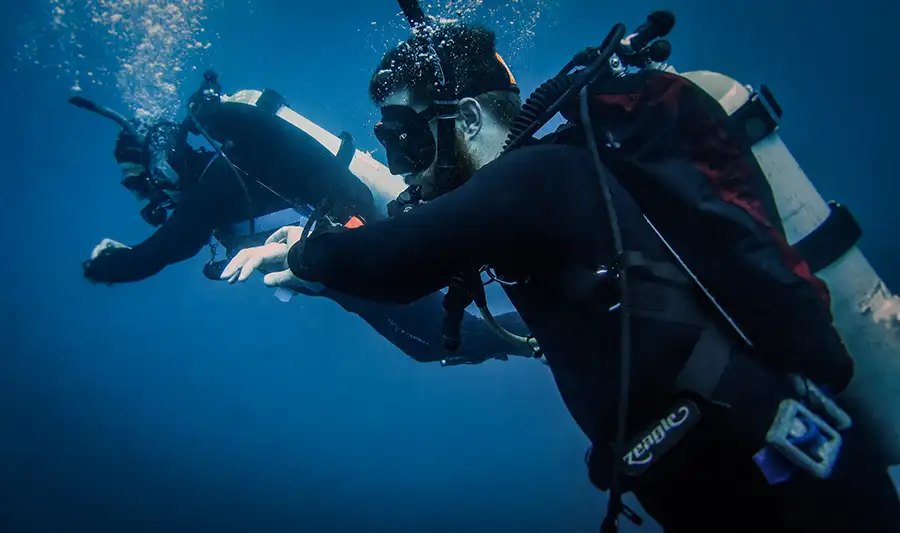
If the compliance work is the business, the shipwrecks are the marketing. SEARCH's maritime division, SEARCH2O - a pun on the formula for water - is described as the largest maritime archaeology program in the world. It runs geophysical and geospatial surveys, remote sensing, scientific diving, and deep-water robotics, and it keeps turning up in the credits of headline discoveries.
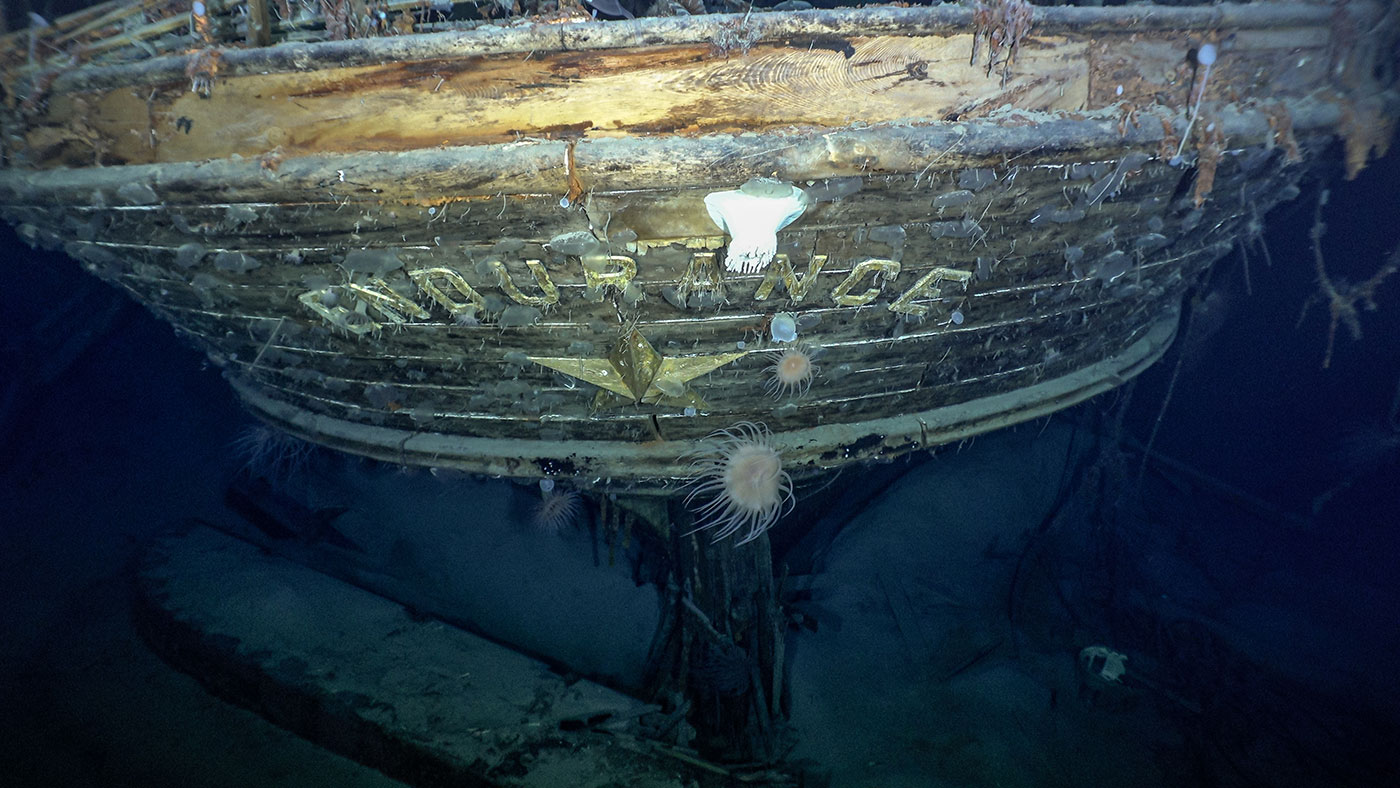
In 2022, SEARCH joined the Endurance22 expedition that located Sir Ernest Shackleton's ship nearly 10,000 feet down in the Weddell Sea, almost a century after it was crushed by Antarctic ice. Its team helped conclusively identify the Clotilda, the last known ship to bring enslaved Africans to the United States, found in an Alabama river near Africatown. In October 2024, weeks after the company was sold, SEARCH2O helped locate the USS Stewart - the "Ghost Ship of the Pacific" - sitting largely intact on the seafloor off California.
As archaeologists, we are often asked why the work we do matters. The story of Clotilda is a powerful testament to how cultural heritage can impact a community.Dr. Anne V. Stokes, Founder & CEO
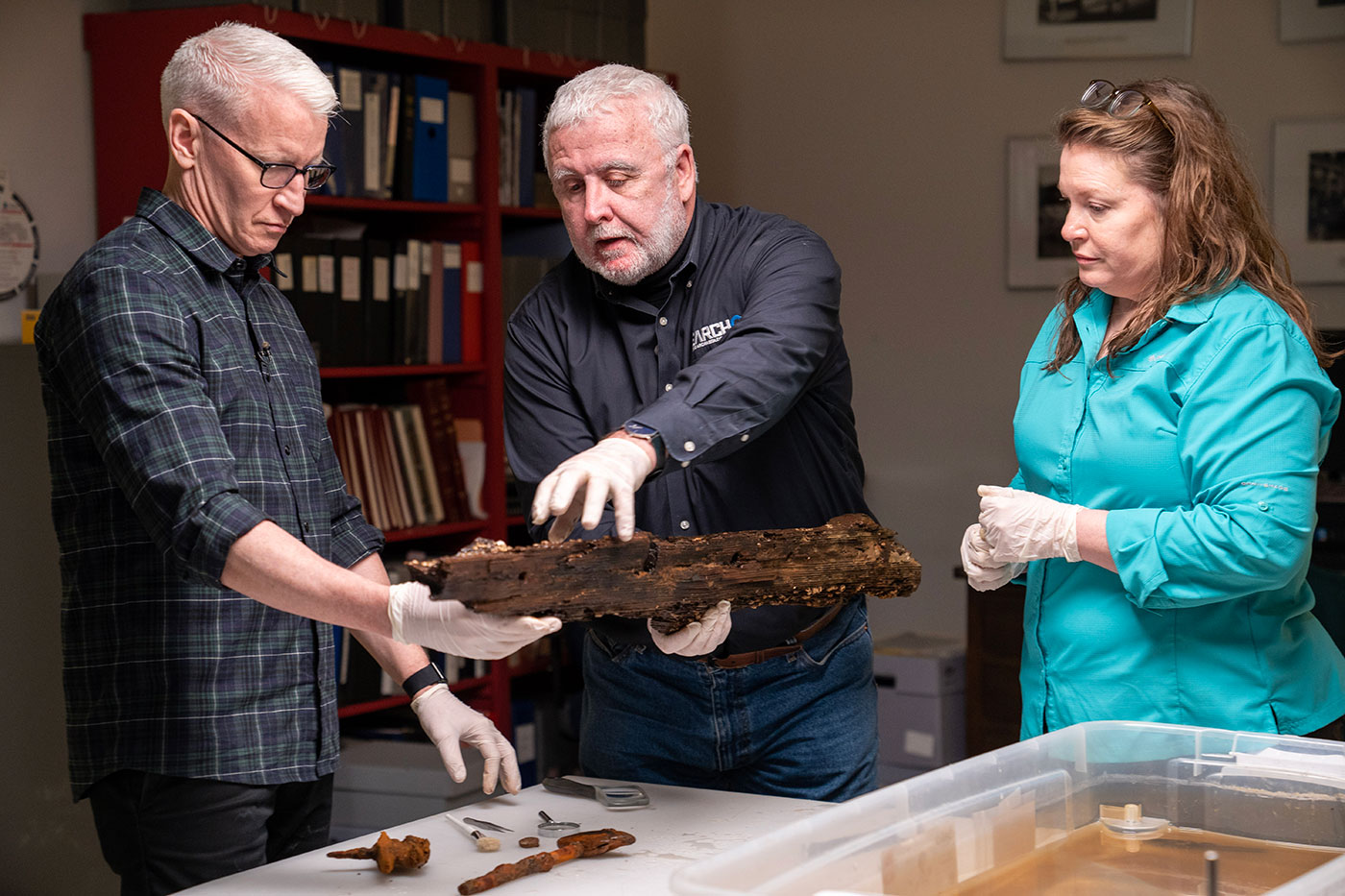
The maritime work is anchored by Dr. James P. Delgado, a maritime archaeologist and author who ran maritime heritage for NOAA before joining SEARCH as Senior Vice President in 2017. It is a useful piece of the puzzle: the same skills that find a lost battleship - reading the seabed, mapping paleolandscapes, interpreting sonar - are exactly what an offshore wind developer needs before installing a foundation.
05 / The footprintLand, sea, and everything drowned in between
- US states worked48
- US territories6
- Countries39
- Oceans4
- Projects since 19935,000+
That spread - overland surveys in one office, deep-sea robotics in another - is the differentiator. Most competitors specialize on land. SEARCH pairs a national terrestrial CRM practice with a world-class maritime arm, plus architectural history, museum collections, geospatial and remote sensing, tribal engagement, and preservation planning under one roof. For a client running a project that crosses a beach, a river, and a shipwreck field, that is one vendor instead of four.
06 / The competitionWho else you would call
SEARCH is not alone in the field. On land, it competes with large environmental and engineering consultancies - SWCA Environmental Consultants, TRC, Stantec, WSP, ERM - and with specialist CRM shops like Gray & Pape and the 106 Group. In the water, the peer set is smaller: dedicated marine survey and archaeology outfits. What sets SEARCH apart is scale plus range: few rivals can staff a Section 106 survey in the morning and a 10,000-foot deep-sea search in the afternoon.
07 / The dealJoining the land-services giants
In September 2024, SEARCH was acquired by Contract Land Staff (CLS), described as the largest group of land-service companies in the US and a portfolio company of Sentinel Capital Partners. The boutique investment bank 1858 Capital Partners advised SEARCH on the sale; terms were not disclosed. The logic is straightforward - CLS handles land and right-of-way services for infrastructure and energy projects, exactly the projects that also need cultural-resource work. Folding SEARCH in puts the archaeology and the land services on the same team.
We are proud to have been part of the mission that discovered this epic ship.James Pochurek, on locating Shackleton's Endurance
08 / What you can copyThe takeaway for builders
SEARCH is a case study in a specific move: find the mandatory, low-glamour step buried in a big industry's workflow, become the best in the world at it, and scale it nationally before anyone treats it as a real market. The archaeology is genuinely hard and genuinely meaningful - but the reason there is a 390-person company here at all is that the work is required, recurring, and hard to fake. The famous wrecks are what get people to open the email. The compliance reports are what pay for the boat.
Where would the model strain? It leans on regulation staying in place; loosen Section 106 or the offshore-permitting rules and the floor moves. It is people-heavy, so margins live and die on utilization and hiring. And the moonshot discoveries, while great brand fuel, are not a reliable revenue line. Still, for anyone eyeing an unglamorous corner of a regulated industry, the SEARCH playbook is right there to borrow.