A wind turbine has an awkward first job: getting to work. Before it can generate electricity offshore, its components must survive loading, transport and installation. There are vessels to inspect, procedures to review and equipment to check. ABL earns its place in the project by asking whether those moving parts actually fit together.
That is a less photogenic business than building the turbine, but an instructive one. The energy and marine consultancy works around the moments when a technical assumption becomes a physical consequence. Its assignments stretch from offshore construction and vessel assurance to damaged ships, disputed claims and the emissions produced inside a busy port.
The range can make ABL difficult to describe in a sentence. It is easier to picture the customer’s question: can we proceed, what needs fixing, or what happened here? ABL supplies engineers, naval architects, surveyors and experienced mariners to help answer it.
The voyage is part of the power plant
In April 2025, Inch Cape Offshore Wind Farm appointed ABL as marine warranty surveyor for the transport and installation campaigns of its 1.1-gigawatt Scottish project. The brief covered wind turbines, jacket and monopile foundations, the offshore substation, and export and inter-array cables. That is a long checklist before anyone starts counting electricity.
ABL’s Aberdeen office was assigned to manage the work, supported by London, Newcastle and Rotterdam. The company had already been involved in early planning and development since 2019. Its construction scope includes reviewing documentation, inspecting vessels and certifying components and vessel equipment. This is what a continuing advisory relationship looks like when the project leaves the drawing board.
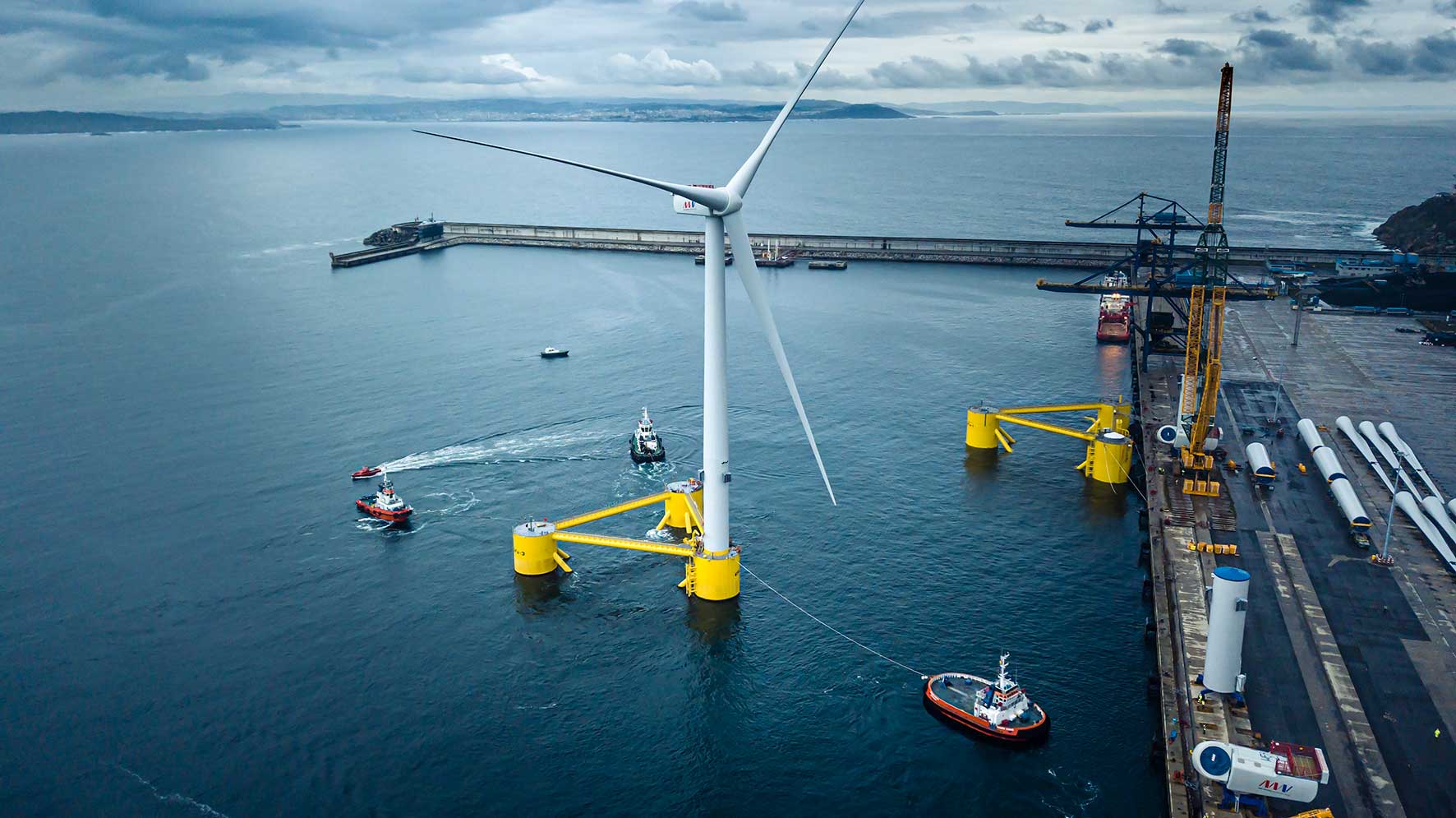
A marine warranty survey is an independent technical review of a defined operation. ABL acts for parties including insurers, insured clients and contractors, checking plans and execution within the agreed scope. Its vessel assurance work asks whether a ship and its equipment suit the actual assignment, including propulsion, lifting systems and dynamic positioning.
That last discipline concerns a vessel’s ability to hold position. ABL’s teams assess and test such systems on assets including drilling rigs, construction vessels and diving-support ships. A vessel can be impressive in the brochure and still need a specific assessment for the job waiting outside the harbour.
- 01ReviewDocuments, design assumptions and operating procedures.
- 02InspectThe vessel, its equipment and suitability for the task.
- 03ResolveTrack findings and close them with the project team.
Before the loss, after the loss
Wind developers are only one part of the customer base. Shipowners, offshore operators, insurers, contractors and investors have different reasons to hire technical advice. A pre-purchase inspection helps examine an asset before money changes hands. A rig inspection addresses operational condition. A casualty investigation works backward from an incident.
At ports, ABL combines maritime studies with civil engineering and operational advice. Its work includes ship manoeuvring simulations, mooring analysis, feasibility studies and technical due diligence. The team draws on former harbour masters, pilots and seafarers as well as engineers. That mix matters when a drawing must accommodate the way vessels and people really behave.
Once something has gone wrong, the assignments become more forensic: damage assessment, salvage advice, wreck removal consultancy and expert evidence. ABL offers round-the-clock casualty response through its network. Investigating the sequence of a failure is a different service from moving the wreck, even when the two need close coordination.
For buyers, the attraction is access to several connected disciplines. DNV’s Noble Denton marine services competes directly in marine warranty work, bringing its own standards expertise and network. ABL’s case rests on the combination of operational experience, local response and related engineering capability. A buyer still needs to compare the people and scope assigned to a particular project.

A family tree with a new nameplate
ABL’s heritage runs back to the Salvage Association, founded in 1856. That date describes a lineage. The present business was assembled much later through transactions involving Aqualis, Braemar’s technical businesses and London Offshore Consultants, which was founded in 1979.
The LOC acquisition closed in December 2020. The announced purchase consideration was $20.2 million in cash plus two million conditional warrants. A separate private placement raised approximately NOK135 million, then about $15 million, partly to finance the transaction and for general corporate purposes. These were concrete purchases of an existing consultancy business, with teams and client relationships already in place.
Further deals widened the family. Add Energy joined in 2022 and AGR in 2023. The adjusting business was sold in 2022, a useful reminder that an old service keyword can outlive the business it describes.
In June 2026, the listed parent changed its name from ABL Group ASA to Aqualis ASA. The company explicitly blamed confusion caused by using ABL for both the parent and its operating consultancy. Aqualis now sits above four principal brands: ABL, renewable adviser OWC, engineering firm Longitude and energy and software consultancy AGR.
The distinction keeps the story honest. AGR’s wells expertise and Longitude’s design work belong to the wider group. So do the group’s consolidated revenue and workforce figures. ABL is the marine and energy consultancy inside that structure, with its own commercial identity.
A carbon inventory with salt on its boots
ABL also has a software business worth understanding on its own terms. Developed with Shoreham Port, emiTr builds an inventory of emissions from maritime and energy operations. Users enter fuel and electricity consumption; the system applies emissions factors and displays the results. Vessel movement data can help estimate emissions within port boundaries.
The complication is ownership. A port’s footprint includes equipment it controls, purchased electricity and activity associated with tenants and visiting ships. emiTr separates those sources and allows users to filter the results. It also translates carbon quantities into indicative monetary values to inform decisions.
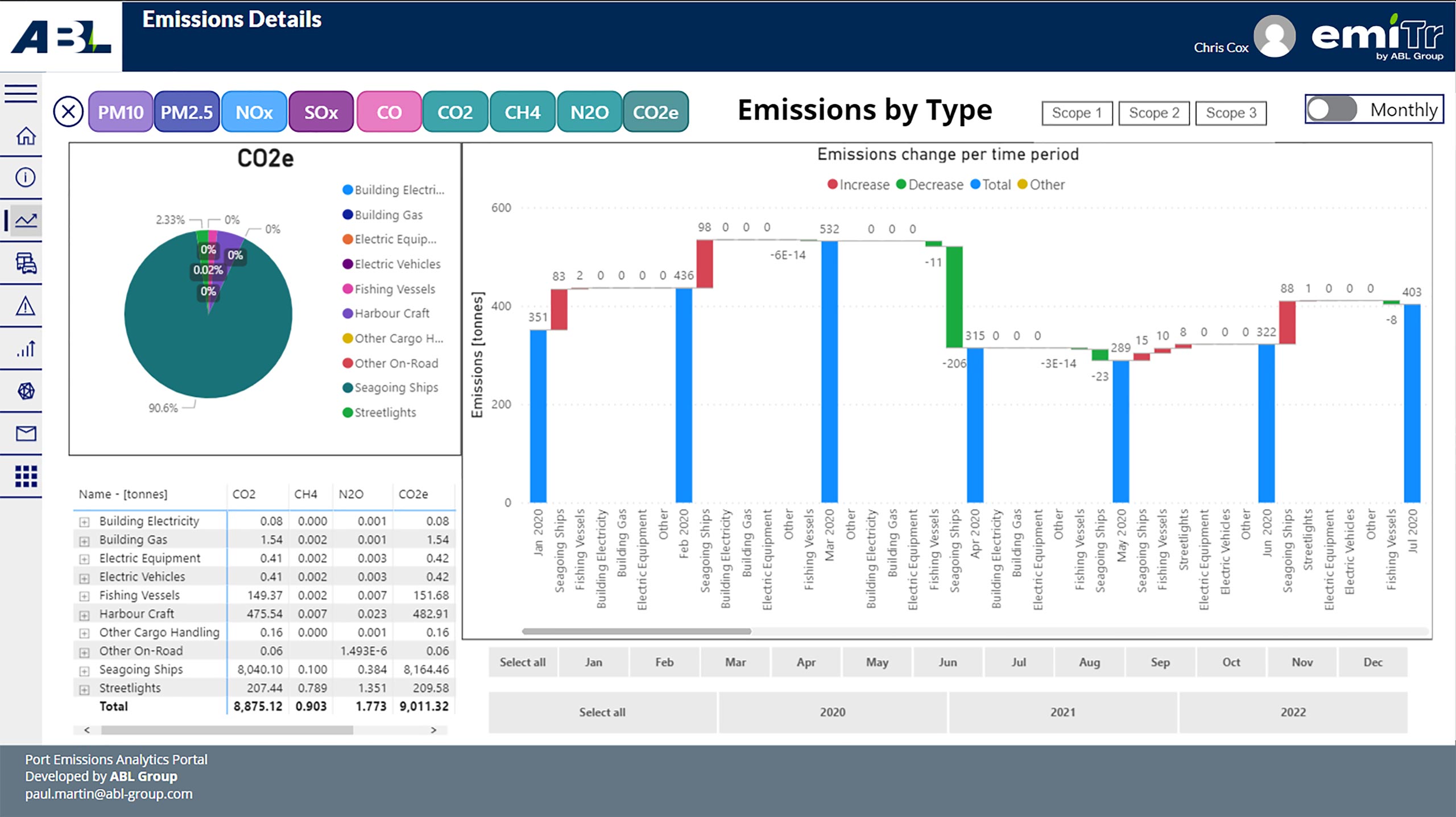
The useful question is what gets changed after the chart appears. An inventory can help a port choose where to investigate efficiency improvements and then track what follows. The software’s practical value depends on the input data and the decisions attached to it.
A June 2026 assignment gives that approach a public-sector setting. The Danish Maritime Authority commissioned a study of energy efficiency across Kenya’s maritime sector. ABL is delivering it with Proximity Management and the Maritime Technology Cooperation Centre for Africa, working alongside Kenyan and Danish institutions.
The work combines research, stakeholder engagement and scenario modelling. emiTr will help visualise baseline energy use and emissions at Mombasa and, where possible, other ports. The study considers energy prices, infrastructure, technology readiness and institutional capacity. Cleaner equipment has to make sense in the place where it will operate.
The numbers have their own weather
The commercial model is mainly professional services: operational call-outs and contracts tied to particular projects. Some work arrives because an asset needs attention today; other assignments follow construction programmes over years. For a consultancy, the central operating challenge is keeping the right expertise available and productively employed.
The parent’s 2025 results show why growth alone is an incomplete scorecard. Revenue reached $354.4 million, compared with $309.6 million in 2024, while operating profit fell to $3.1 million from $10.4 million. Adjusted EBIT was $13.5 million. The gap includes items such as impairment and restructuring costs.
The disclosed fault line was offshore wind. Delayed project starts and a slower-than-expected recovery reduced demand for OWC’s early-stage consulting. The group wrote off $4.4 million of goodwill attributed to OWC. Management cut costs and adjusted the organisation to market conditions; OWC also pursued work beyond offshore wind.
More revenue. Less operating profit.
Each metric has its own zero-based scale. Figures cover the parent group, then named ABL Group ASA.
By the second quarter of 2026, ABL itself reported segment revenue of $40.6 million, up about 6 percent year on year. Parent revenue was $90.8 million and adjusted EBIT $5.3 million. The combination of a growing ABL segment and lower group revenue illustrates how differently the four businesses can move.
The habit worth borrowing
The group puts “To Seek the Truth” among its guiding principles. Its published values also emphasise safety, technical excellence, collaboration and innovation, supported by commitments to training and STEM outreach. Those are stated ambitions; the working test is whether unwelcome findings receive the same attention as convenient ones.
“To Seek the Truth”
ABL’s group guiding principle
There is a practical habit here that other businesses can copy: define the operation, examine the evidence and keep tracking the findings until somebody resolves them. ABL’s vessel assurance process uses tailored checklists, technical reporting and collaborative closure. The method is understandable even if the engineering requires specialists.
It also has conditions. A review needs a clear scope, useful records and access to the relevant equipment and people. Emissions calculations need credible activity data. Advice must reach a decision-maker willing to change the plan. And a consultancy serving future construction cannot bill indefinitely for projects that keep postponing their start.
For a prospective customer, the sensible starting point is the actual problem: a transport campaign, an asset inspection, a casualty or an emissions baseline. Bring the timetable, available records and the decision that needs support. That makes it easier to identify which expertise belongs in the room.
ABL’s place in the market is between industrial ambition and the details that determine whether it works. The turbines, ships and ports get the photograph. The survey report deserves a look, too.