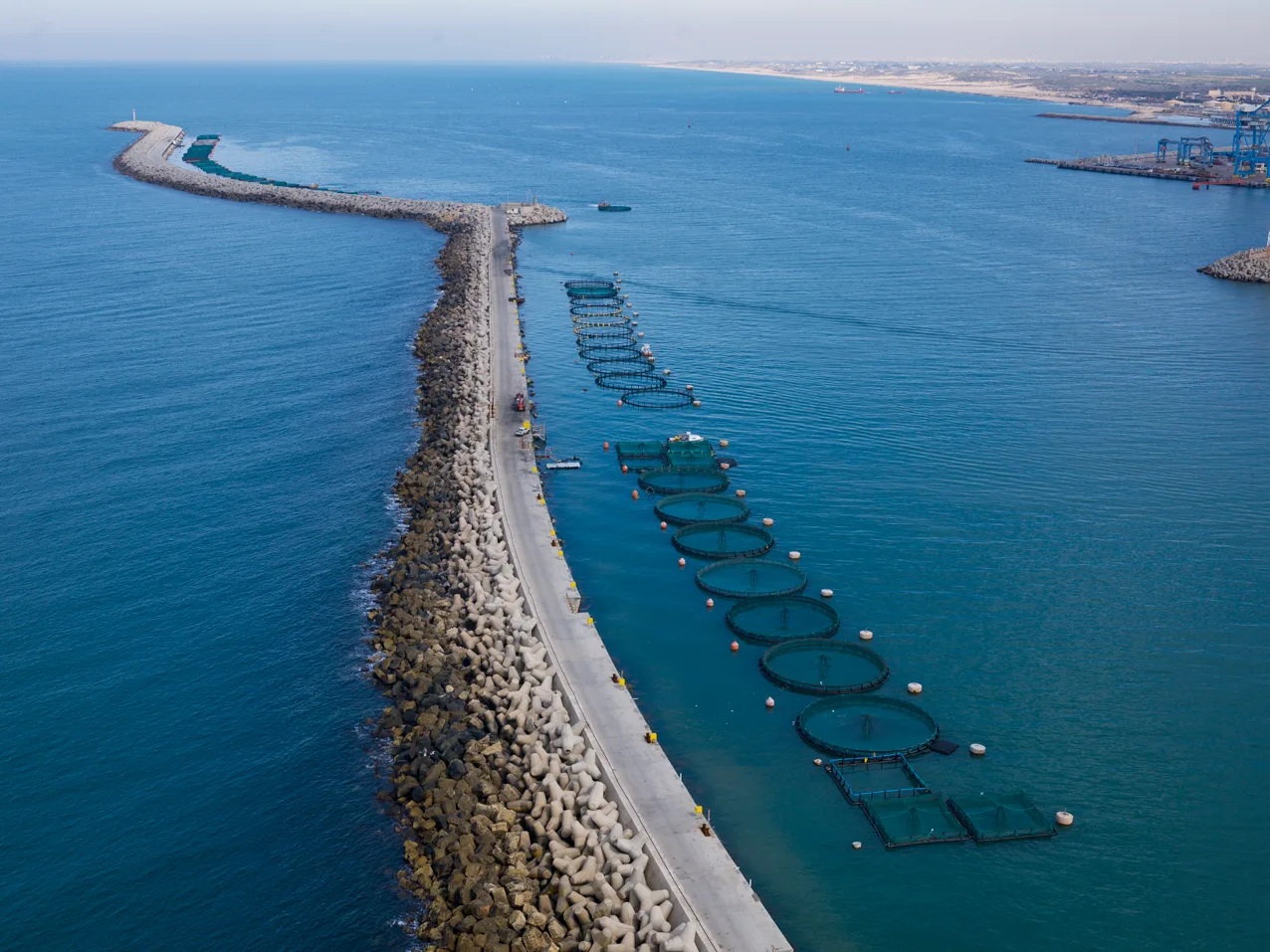
A pitch deck has a useful property: it does not have to get wet. A technology intended for fish farms, however, eventually does. Somewhere between the investor meeting and the working installation, a founder needs access to water, equipment and people who know what can go wrong. SeaNovation has built its proposition around that awkward stretch of the journey.
- Marine, desert and climate-tech founders get mentoring, business support and connections for pilots.
- Research institutions and regional industry sit inside the founding consortium.
- The launch allocation paired venture programs with workforce training.
The Eilat-Eilot innovation center links startups with the region’s science and industry. Its useful distinction is geographical specificity. Aquaculture, marine biotechnology, water and desert agriculture have operators and researchers nearby. The center’s job is to bring those assets within reach of a venture that might otherwise spend months making introductions.
A pitch deck cannot swim
Consider WaveUp, the accelerator advertised for entrepreneurs in aquaculture, marine biotechnology and marine sciences. Its offer ran four to six months: tailored support, practical workshops, mentoring, investor connections, fundraising assistance and proof-of-concept planning. That last item gives the rest a purpose. A founder needs to decide what evidence would make a prospective customer take the technology seriously.
In one published WaveUp example, Ron Murnik and Dr. Yuri Arshavski were developing AI software for underwater robots. The proposed application was autonomy: making machines perform underwater tasks with greater independence. SeaNovation described possible uses across aquaculture, offshore energy and other industries. This was a development project, with several potential markets, rather than a declared commercial victory.
AquaBoost’s documented activities also included a storytelling workshop with Ori Luzia. Pitching still matters here. The interesting combination is commercial preparation alongside technical validation. A machine can work and remain difficult to sell; a story can sell before the machine is ready. An accelerator has to pay attention to both.
The budget has two jobs
SeaNovation was inaugurated on March 27, 2024. Eilat’s municipality described a ₪15 million public allocation: ₪10 million for entrepreneurship, incubation and acceleration over five years, plus ₪5 million for workforce training. Those are allocations, not a tally of money already spent. The split makes the center’s regional purpose unusually legible.
The founding shareholders brought different pieces of the machinery: the Israel Innovation Institute; Ben-Gurion University’s Eilat branch through BGN Technologies; Ardom; Ardag; and Israel Oceanographic and Limnological Research. Local authorities and major infrastructure organizations joined as strategic partners. The arrangement puts research, commercialization and operating experience around the same table.
For a region seeking more employment options, training is part of the business case. SeaNovation documented advanced algae farming instruction in November 2024. A later DeepTech Executive Program, developed with Tel Aviv University’s Lahav Executive Education and Eilat Municipality, ran for ten sessions. Its closing meeting brought executives together with BOOST founders to discuss ventures and decisions.
The fishmeal detour
A more tangible example arrived at Kibbutz Lotan. In August 2025, SeaNovation reported the opening of Advance IP’s fermentation and research facility there, saying it had provided strategic support. Advance IP was developing an alternative to fishmeal, an aquaculture feed ingredient connected to traditional fishing. The startup’s product and the center’s service are distinct: one develops an ingredient; the other helps a venture find support and a regional foothold.
That distinction explains SeaNovation’s place in the market. It operates between a research institution, a sector accelerator and a regional development organization. Founders use the support; industrial partners bring problems and potential trial settings; residents and executives enter through training. A university commercialization office or another accelerator can cover parts of this journey. SeaNovation’s pitch is the local combination.
Let the operator write the brief
PortsBoost extends the approach to ports and marine operations. SeaNovation, Israel Ports Company and CAMERI advertised the first cohort’s launch for July 1, 2026. The program connects startups with industry challenges, guidance and opportunities for pilots. The prospective user is close enough to help define what an implementation would require.
September’s Challenge Week made that logic explicit. Four sessions covered maritime cybersecurity, energy, agriculture and water. SeaNovation reported nearly 500 people engaged and followed the event with calls for solutions. Mekorot’s water session addressed nutrient reduction in desalination brine and fouling or blockages in Red Sea intake systems. These are much more useful starting points than a general invitation to invent something sustainable.
“The work starts now.”
SeaNovation, after September 2026 Challenge Week
The center’s financing also belongs to this regional picture. Public program support and institutional shareholders underpin the launch model. Treating the allocation as a startup fundraising round would miss what it finances: assistance, skills and connections that individual young ventures can use. The commercial question for each venture remains whether a successful trial can lead to adoption.
For a founder choosing between support programs, the practical comparison starts with the next unresolved task. Someone needing a general introduction to entrepreneurship may value workshops most. A researcher with a marine prototype may care more about access to an experienced operator. A company approaching deployment needs to know who will evaluate the trial and what happens afterward. SeaNovation’s mix of services makes those questions worth asking early. The relevant advantage depends on the venture’s needs, rather than the number of partners on a presentation slide.
Borrow the sequence, respect the conditions
The sequence others can copy is straightforward: ask an operator for a specific problem, bring relevant technical expertise into the discussion, and design a test around a decision the operator needs to make. That is an interpretation of SeaNovation’s public activity, rather than a promise that every pilot produces a customer.
- 01 / AskDefine the operator’s problem.
- 02 / ConnectMatch the technical expertise.
- 03 / TestGather evidence for a decision.
It depends on access, participation and a measurable outcome. A site must accommodate the test; the operator must have time for it; and the parties need workable arrangements for safety, data and commercial use. Desert conditions can expose weaknesses, but passing one local test does not establish suitability everywhere. The attractive part of SeaNovation is the opportunity to ask a better question in a real setting, then let the answer complicate the business plan.