At the opening of Clarity’s new headquarters in Madison, Connecticut, Sean Rotermund had a short explanation for the location. “It’s my homecoming,” he said. The company had started with three employees. By that June afternoon in 2013, it had almost sixty. Bringing a business home evidently required rather more room than bringing a suitcase.
His family was there. So was his father, Ralph, whom he credited with advice and help on making the headquarters deal work. The opening gathered the people who belonged to different parts of his life in the same place. A founder’s title appeared on the business; the occasion made room for the people behind it.
Rotermund’s career offers the familiar markers of an expanding software company: investment, growth rankings, a leadership change and an eventual acquisition. But the personal thread is geographical and social. Again and again, the story returns to a town, a college and people who knew him before the next milestone arrived.
A homecoming with a payroll
Madison gave that thread an address. Clarity’s arrival brought colleagues into the routines of a Connecticut shoreline community. Rotermund’s explanation for the move was affectionate and plain. The company could be growing nationally while its founder remained attached to somewhere particular.
That attachment had a practical expression before the headquarters opening. In 2011, he launched Clarity for Charity. The program supported causes and nonprofit organizations in Connecticut, giving the company’s community commitments a name and a place within its working life.
The distinction matters when considering what a founder chooses to build. A company needs customers and a viable product; it also becomes a collection of people with shared habits. Rotermund’s public emphasis on community placed obligations alongside the more easily advertised measures of expansion. Giving back was part of the organization while it was still young.
“It’s my homecoming.”
Sean Rotermund, Madison headquarters opening, 2013
Rotermund also had a portable reminder about perseverance. At the Madison opening, he described a card he had carried since he was young, with a pun about getting one’s excuses out of the way. Its message was cheerfully blunt. The anecdote adds a small, personal object to a story otherwise documented in organizational milestones: something to carry when the next setback arrived.
The early scorecard
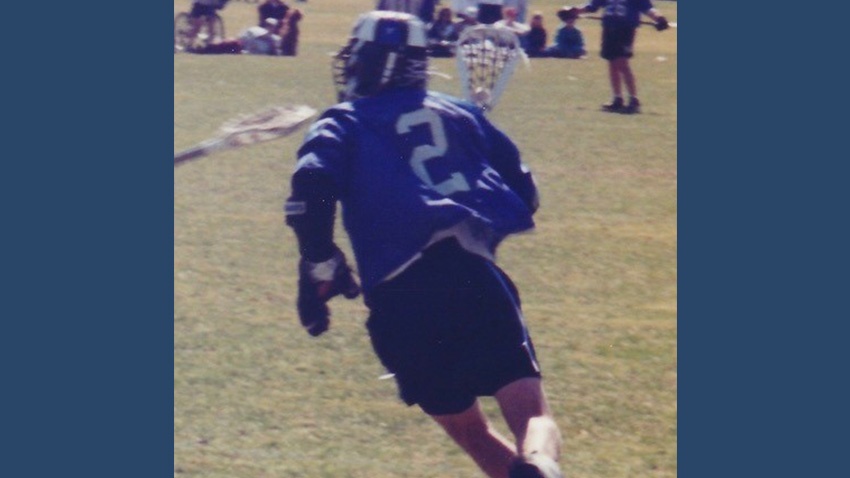
Long before the software company, there was Bentley lacrosse. Rotermund played on the university’s first four varsity men’s teams, beginning with the program’s elevation from club status for the 1993 season. He graduated in 1996. His time there coincided with the work of establishing a varsity program and the pleasure of winning together.
The collective record was 41 wins and 14 losses, with a 20-0 mark against conference opponents. Bentley won the first two Northeast-10 championship games, beating Quinnipiac in 1995 and again in 1996. These were early varsity teams with very little interest in behaving like beginners.

Rotermund supplied plenty of the scoring. On April 11, 1994, he scored nine goals in a 26-15 victory over Merrimack. Across his final three seasons, he earned first-team All-Northeast-10 recognition each year. He left Bentley as the program’s career scoring leader.
The season totals are a useful corrective to the single spectacular game. He scored 45 goals in 1994, 46 in 1995 and 45 in 1996. Nine goals make an excellent anecdote. Three consecutive seasons at that level tell a longer story about repeated contribution.
One player’s contribution, inside a team’s early varsity years.
There is no need to claim that an accurate lacrosse shot explains a software company. The connection is more human than that. Both chapters put him inside organizations being built, and the college chapter left him with relationships that remained important decades later.
A business built around the everyday
Rotermund founded Clarity in 2007. Its work concerned document management and communications delivery: helping organizations prepare and distribute the information they needed to send. It was a business built around recurring tasks, the kind customers have to complete whether or not anybody finds them glamorous.
That choice of work gave the company a practical proposition. Customers needed control over communications and ways to deliver them through different formats. Clarity offered software to support that work. The opportunity lay in making ordinary operations easier to manage, repeatedly, for organizations with continuing needs.
Growth became visible outside the customer base. Clarity ranked No. 107 on the 2012 Inc. list. In February 2014, it received backing from North Bridge, with plans to add executive experience, invest in sales and marketing, and expand its products. Those priorities describe the next stage of building: more people, more reach and more to offer existing customers.
The growth showed up in another register in 2014. Deloitte’s Technology Fast 500 placed Clarity at No. 120, listing 995 percent growth and Rotermund as CEO. Beside the company name were Madison and Connecticut. The entry compressed a growing enterprise into a few columns, with its hometown still occupying a place next to the numbers.
In January 2019, Morgan Stanley Capital Partners invested in Clarity. Rotermund remained CEO, leading a management team that would continue working on organic growth and product development. The transaction brought a new financial partner into an operating business whose founder was still at the helm.
- 2007Rotermund founds Clarity.
- 2014North Bridge supplies growth backing.
- 2019Morgan Stanley Capital Partners invests.
- 2020Steve Mongelli becomes CEO.
- 2025mPulse acquires the business.
The people inside the growth chart
Recognition arrived for Rotermund personally in 2018, when he became a finalist for EY’s Entrepreneur Of The Year award in the New York region. It was a finalist place, a distinction worth keeping precise. His response directed attention toward the organization rather than allowing the nomination to become a solitary founder portrait.
He singled out customer service and technology, then credited the team and client relationships. “It’s the people and the client relationships that sit at the heart of our organization,” he said. The vocabulary was consistent with the business he described: growth depended on maintaining relationships while delivering the work customers expected.
There is a useful tension in that outlook. Expansion asks an organization to change; customers often depend on it being dependable. Rotermund’s public biography emphasizes holding growth, customer expectations and company values together. The task is continuous. A bigger company has more relationships to maintain and more people responsible for maintaining them.
The language of teams can become ceremonial in business. Here it also describes an identifiable set of decisions: supporting a local charity program, crediting colleagues when an individual nomination arrived, and eventually giving a longtime colleague responsibility for the next phase.
Passing the job to someone who knew it
On July 1, 2020, Clarity changed CEOs. Steve Mongelli, previously chief operating officer, became president and chief executive. Rotermund moved to founder and vice chairman, with a focus on strategic initiatives. Mongelli had been with the company since its inception.
That last detail makes the transition personal as well as organizational. The incoming CEO had worked beside the founder through the company’s development. He already belonged to its history. For employees and customers, the change put a different person in charge while retaining experience accumulated inside the business.
Rotermund acknowledged that leaving the chief executive role required careful consideration. He wanted to concentrate on areas where he felt he could contribute most. The announcement described a change in responsibility and attention, with the founder remaining involved in the company’s direction.
The business continued beyond his CEO tenure. In August 2025, Morgan Stanley Capital Partners announced Clarity’s sale to mPulse. Financial terms were undisclosed. The company now carries the Clarity by mPulse name, another chapter in the life of the organization he started.
A founder biography benefits from following that handover. Otherwise, it can leave the misleading impression that the company’s story freezes when its original CEO changes jobs. Clarity’s subsequent ownership change belongs to the longer record, alongside the people who led it after him.
The team still on his calendar
At Bentley, another sort of continuity remained. Rotermund was celebrated at the university’s Athletic Hall of Fame ceremony in February 2023. Former teammates joined the occasion. In 2024, Bentley featured his gift to the lacrosse program, returning the story to a team he had helped establish as a student.
His early working life had included selling checks and banking forms. A Bentley class in marketing services helped interest him in a business career, and sales gave him work with people that he enjoyed. The route toward founding a company ran through those ordinary experiences.
His advice to students was equally practical: use the resources around you, make connections and get to know professors. For the lacrosse program, he had a specific ambition. “I’d love to see Bentley get back into the spotlight as a lacrosse powerhouse,” he said.
It is an appealing place to leave him: a former player still interested in the next team. The records remain in the book; the gift is directed toward people who will play after him. As with the company’s return to Madison, his attachment to a place produces something other people can use. Home-field advantage, in this story, includes helping keep the field available.