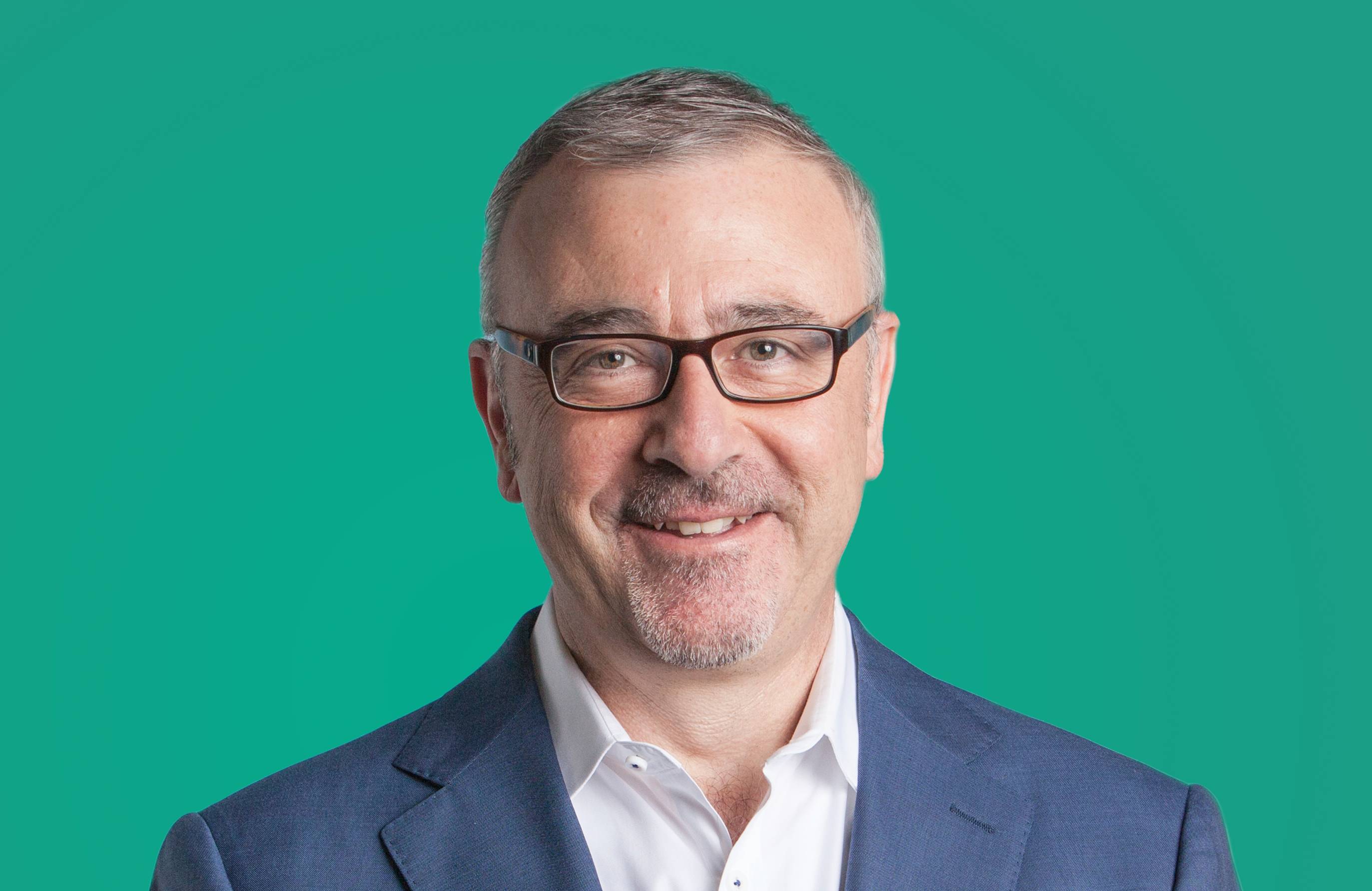
Walk past 151 Oyster Point Boulevard in South San Francisco and you will not see the work. You will see a building. Inside that building, a clinical-stage company called CytomX Therapeutics ships colorectal-cancer data to investors, ships antibodies to clinical sites, and ships press releases to the wire. The person who has been signing those press releases since August 2011 is Sean A. McCarthy, D.Phil., MBA - the chairman, president and chief executive of the place.
McCarthy runs CytomX on a single, stubborn idea. A cancer drug should be loud in the cancer and quiet everywhere else. The platform that delivers on that idea is called Probody - therapeutic antibodies fitted with a peptide mask that obstructs the binding region until tumor-resident proteases snip the leash. Healthy tissue, broadly speaking, lacks the enzymes that do the snipping. The drug travels through the body asleep. It wakes up at the address.
That is the pitch. It is also the science. McCarthy is one of the rare biotech CEOs who can defend both. He earned his D.Phil. in cancer biology at St. John's College, University of Oxford, took an MBA from the Rady School of Management at UC San Diego, and reads his own data before anyone briefs him on it. There is a kind of biotech leader who is fluent in capital markets and a kind who is fluent in pharmacology. He is rarer because he is fluent in both.
The long second act
McCarthy did not start in a C-suite. He started at the bench. Post-doctoral training at the Schering-Plough DNAX Research Institute pushed him toward applied biologics. Millennium Pharmaceuticals gave him the management muscle, where he led biologics discovery programs in the era when the industry was still arguing about whether monoclonal antibodies would ever cross the chasm from curiosity to revenue. They crossed.
At SGX Pharmaceuticals he stepped into business development, then ran it, and helped re-aim a structural-biology platform company into a product-focused oncology shop. SGX went public in 2006 and was acquired by Eli Lilly a year later. The lesson stuck: a platform is a story; a product is a transaction. CytomX would later have to make the same pivot, and McCarthy would be the one making it.
From 2006 to 2010 he sat on the other side of the table at Pappas Ventures, writing checks into therapeutics, devices and diagnostics. He met CytomX in that capacity, found the science irresistible, and joined the company in December 2010 as Chief Business Officer. Eight months later, the board promoted him. On January 1, 2019, he picked up the chairman title as well. The job description is hard to lose when you keep it that long.
What Probody actually does
If you want to understand the rest of the McCarthy story, you have to understand the molecule. Antibody-drug conjugates are powerful and indiscriminate. T-cell engagers are powerful and indiscriminate. Cytokines like interferon-alpha-2b and IL-2 are powerful and indiscriminate. The blunt power is the asset. The indiscrimination is the bill - and oncology has been paying it for thirty years in the form of dose-limiting toxicities, narrow therapeutic windows and patients who cannot tolerate enough drug to be cured.
Probody therapeutics try to widen that window. A masking peptide is tethered to the antibody by a linker. The linker is cut by proteases that are abundant in tumors but largely inactive systemically. The mask falls off. The drug binds. The patient gets the benefit of full-strength biology in the place that benefits and a much quieter version of it everywhere else. It is, in McCarthy's house phrasing, an attempt at safer, more effective therapies.
The lead conditional-activation programs reach across modalities. Varseta-M, the company's EpCAM Probody ADC, is the readiest argument that the masking idea translates - a target so widely expressed in healthy epithelium that conventional anti-EpCAM ADCs simply cannot be tolerated. CytomX has presented data on that drug in colorectal cancer and intends to push into earlier lines and additional EpCAM-expressing tumors. Other programs run through T-cell engagers, cytokines, and partnered candidates with names like CX-2051 and CX-2029. The masking story is no longer one trick. It is a chassis.
The art of the deal
CytomX has done what most platform biotechs only manage to talk about. It has converted its platform into pharma cash. Over McCarthy's tenure the company has built collaborations with Bristol Myers Squibb, AbbVie, Amgen, Astellas, Moderna and Regeneron - some still active, some unwound, all instructive. The Astellas T-cell-engager pact that began in 2017 carried up to $1.6 billion in potential biobucks and ran six years before being returned. The AbbVie tie-up around CX-2029 brought a CD71 ADC to the clinic. Big pharma's willingness to write the same check repeatedly, to different partners, is the closest thing biotech has to a peer review of a CEO.
Deal-making is also where McCarthy's two careers fuse. He came up in business development at a time when biologics partnerships were drafted around discovery economics, not commercial. He sat at a venture firm long enough to see, from the inside, what investors actually buy when they say they are buying a platform. He has been, in turn, the seller, the buyer, and the founder-operator. It would be hard to design a more useful resume for what CytomX requires.
Where the work goes next
The next chapter is straightforward to write and difficult to live. CytomX is positioning Varseta-M for broader colorectal use and additional EpCAM-expressing solid tumors. The IFN-alpha-2b Probody program is testing whether masking can rescue a cytokine that physicians long ago gave up trying to dose safely. The partnered pipeline keeps moving on someone else's timeline, which is its own management problem. And every quarter, public-market CytomX has to do what no private biotech ever has to do: explain itself in plain English to people who do not have time for the science.
McCarthy seems built for that part too. He is not a hype CEO. He is, in his own description, a cancer researcher who happens to run the company. He sits on the Dean's Advisory Council at Rady, which is the closest thing to a hobby visible in his public record. He has held the same email address for over a decade. He has, by the standards of an industry that churns its leadership on a four-year clock, refused to leave.
That refusal is the story. Conditional activation is a twenty-year scientific arc. You cannot run it in five-year increments. You need a CEO who is still in the chair when the protease finally cuts the linker in the tumor and the patient gets the dose. Sean McCarthy is still in the chair.