The chemical engineer from Mexico City who bet on cars, insurance, and code - and landed at the table where Silicon Valley decides what comes next.
There is a specific kind of investor who makes private equity veterans uncomfortable and startup romantics equally nervous. Santiago Rodriguez Lebrija is that investor. He arrives at the table with a Stanford chemical engineering degree, three years at Bain Capital pricing out multi-billion-dollar industrials, and a memory of sitting in PEMEX offices watching how state-owned complexity actually runs. He is not a tech-bro VC. He is something rarer: a deal partner who reads the operational footnotes.
At Andreessen Horowitz's Growth team since August 2022, Santiago has staked out a lane that suits him: businesses that look messy from the outside and inevitable from the inside. Used-car marketplaces rebuilding around AI. Insurance pricing platforms dragging actuaries into the twenty-first century. Prediction market infrastructure that turns crowd intelligence into something a trader would actually respect.
He grew up in Mexico City - a detail that isn't incidental to how he invests. Latin American market dynamics, cross-border capital flows, and the specific friction that makes emerging-market consumer businesses hard to copy are not abstractions for him. They are lived experience, encoded into the underwriting. When a16z put money into Kavak in early 2026, Santiago was in the room.
The chemical engineering degree keeps surfacing in conversations about his approach. It is a discipline that treats every system - however messy - as something that can be balanced, optimized, and ultimately resolved. It's an odd credential for Sand Hill Road. That's exactly the point.
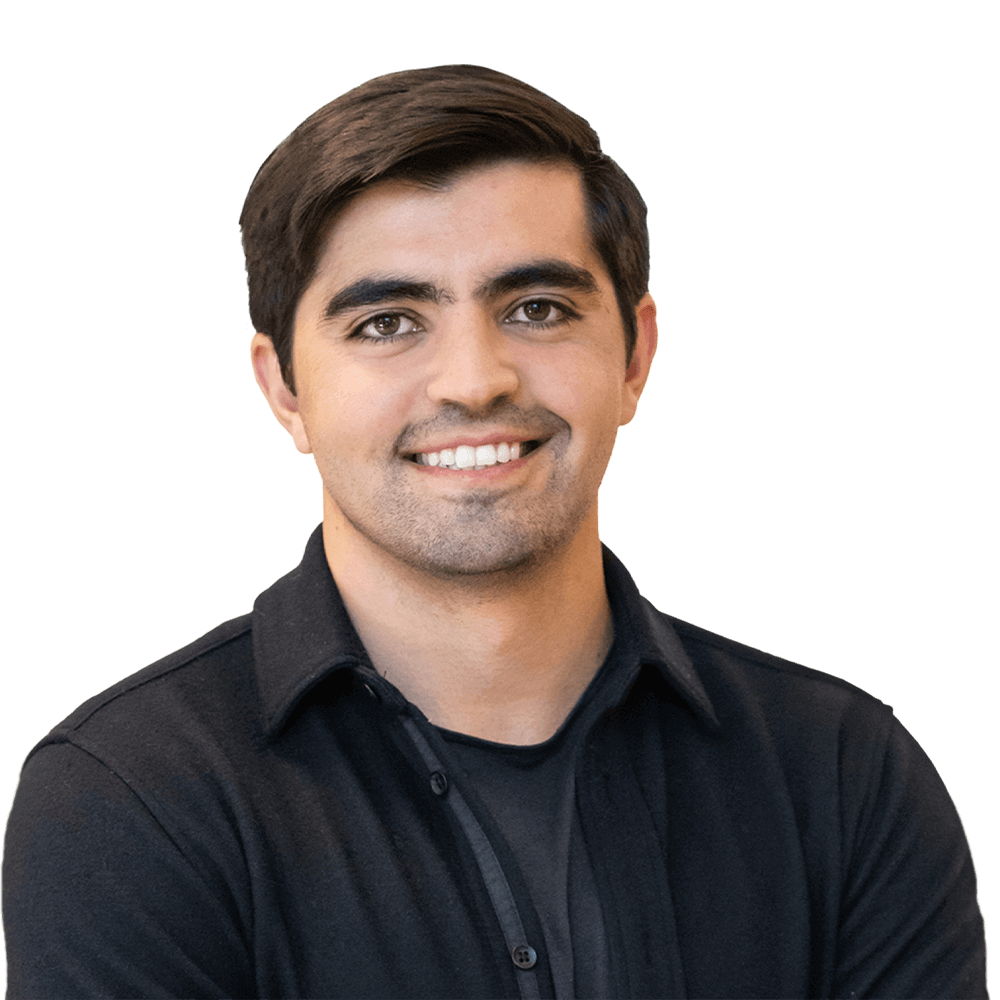
Santiago Rodriguez Lebrija's path looks deliberate in hindsight - the kind of career that reads as inevitable only after the fact. Start in Mexico City. Arrive at Stanford. Study something rigorous and unfashionable (chemical engineering). Add German for reasons that become clear only later. Work at your university's endowment as an undergrad. Intern at BCG. Join Bain Capital's global PE division. Then - and only then - make the jump to venture.
The Bain Capital years were the crucible. Three years investing in later-stage consumer brands, traditional financial services businesses, and large industrial enterprises. This is not where you learn to romanticize disruption. This is where you learn what a broken process actually costs, what good unit economics look like after the noise strips away, and why most businesses that look like they're growing are actually just spending their way forward. It's an education in sobriety.
He arrived at a16z in August 2022 as the market was beginning its long recalibration. The easy-money era was closing. Growth investing was getting harder. The firms that thrived in that environment were ones that could spot companies where fundamentals were structurally sound - not just TAM stories, but businesses where the operational complexity itself was the competitive moat. That is Santiago's wheelhouse.
The Kavak investment tells the story cleanly. Latin America's largest used-car marketplace - an operationally brutal business, combining physical vehicles, financing, inspection infrastructure, and cross-border logistics - had re-architected everything around AI as the foundational layer. Not AI as a feature. AI as the operating system. The deal frame, as co-authored in the announcement, was pointed: "Every new problem is faced with the question: can I solve this with electrons, or do I need blood?" That is a question Santiago knows how to ask.
The hyperexponential bet landed earlier, in January 2024. A London-based insurtech enabling actuaries to build pricing models in hours instead of days, and underwriters to bind policies in minutes. The insurance industry - a $7 trillion global sector - still priced risk on spreadsheets and institutional memory. Hyperexponential was selling the infrastructure upgrade. Santiago joined Angela Strange and Joe Schmidt in leading the $73M Series B. Three different backgrounds, one consistent thesis: find the industry where the operational gap between what is and what's possible is enormous, then back the team that understands both sides of that gap.
"Every new problem is faced with the question: 'can I solve this with electrons, or do I need blood?'"- Kavak investment thesis, co-authored by Santiago Rodriguez at a16z, February 2026
Santiago's investment range at a16z runs from $500K to $40M, with a sweet spot around $20M - squarely in the growth-stage zone where companies have proven the model and are scaling the infrastructure. He evaluates deals across Web3/Blockchain, Consumer Internet, and FinTech, often at Seed through Series A stages.
His co-authored research work at a16z extends beyond individual deals. He and Alex Immerman have written on prediction market evolution and the compounding dynamics that favor top-performing private tech companies. The academic reflex - the Stanford endowment analyst instinct - never fully left.
The through-line across everything Santiago touches is operational complexity as competitive moat. The companies that interest him most are the ones where the hard part is not the product but the execution - where the ten-year incumbent advantage comes from having survived the logistics, the regulatory maze, or the cross-border capital structure. Used cars in Mexico. Insurance pricing in London. Prediction market infrastructure globally.
Stanford's chemical engineering program is among the most rigorous undergraduate degrees in the US. Adding a minor in German Studies - a language and culture program at the opposite end of the academic spectrum - is an unusual pairing. It signals an early comfort with cognitive code-switching that serves him well across geographies and deal types.
Kavak operates in a market where it controls less than 1% of total used-vehicle transactions - despite being the dominant player. That gap is the investment thesis in one statistic.
At a16z, he works closely with Alex Immerman, Angela Strange, and David George - three of the firm's sharpest thinkers on market dynamics, fintech, and growth-stage operations. The collaboration shows in the writing: his investment announcements read like arguments, not press releases.
Despite being the regional leader, Kavak handles less than 1% of used-vehicle transactions. The runway is the story.- a16z Kavak investment announcement, Feb 2026