In December 2020, a chip-measuring machine arrived in South Korea in pieces. Nearfield Instruments had shipped its first QUADRA system to Samsung Semiconductor. The Dutch engineers who would assemble it arrived, too. Then they had to spend two weeks in quarantine. Even a machine built to examine unimaginably small structures could be held up by something as ordinary as waiting for people to leave a room.
- Samsung Ventures invests in technology companies and helps open conversations with Samsung businesses.
- Nearfield shows the long journey from an equity check to production use.
- For founders, the useful question is which industrial problem a corporate partner can help solve.
There is a useful lesson in that delivery. We tend to describe innovation as a moment: the discovery, the demonstration, the funding announcement. Industrial technology has a less photogenic middle. Someone must build the equipment, ship it, install it, test it and persuade a factory to depend on it. Samsung Ventures operates around that middle.
The check buys time.
The connection buys a chance.
Established in 1999, Samsung Ventures is a corporate venture capital firm investing globally. Its offering combines equity capital with opportunities to connect to Samsung businesses. Samsung’s own corporate profile describes guiding portfolio companies toward appropriate business units for partnerships and collaboration. That is a specific proposition for a founder whose next obstacle is access to an industrial buyer.
The business model has two ambitions: financial returns from equity investments and strategic value for Samsung. For startups, the service is financing and potential collaboration. For Samsung businesses, it is access to outside innovation. The resulting relationship can serve both sides, provided a useful technology meets a real operating need. Neither side can manufacture that fit simply by signing an investment agreement.
Consider Nearfield. In September 2017, Samsung Venture Investment and the Dutch fund Innovation Industries announced a combined €10 million investment. Nearfield, a TNO research spin-off, was developing equipment for measuring advanced chips. The engineering problem was awkward: existing approaches could be too slow or damage the structures they were supposed to inspect.
Nearfield’s approach used miniaturized scanning probes working in parallel. By December 2020, the first QUADRA was ready for shipment. In 2024, trade publication Bits&Chips reported its adoption in Samsung’s high-volume memory-chip manufacturing. Nearfield’s own July announcement described QUADRA as validated and deployed in high-volume production.
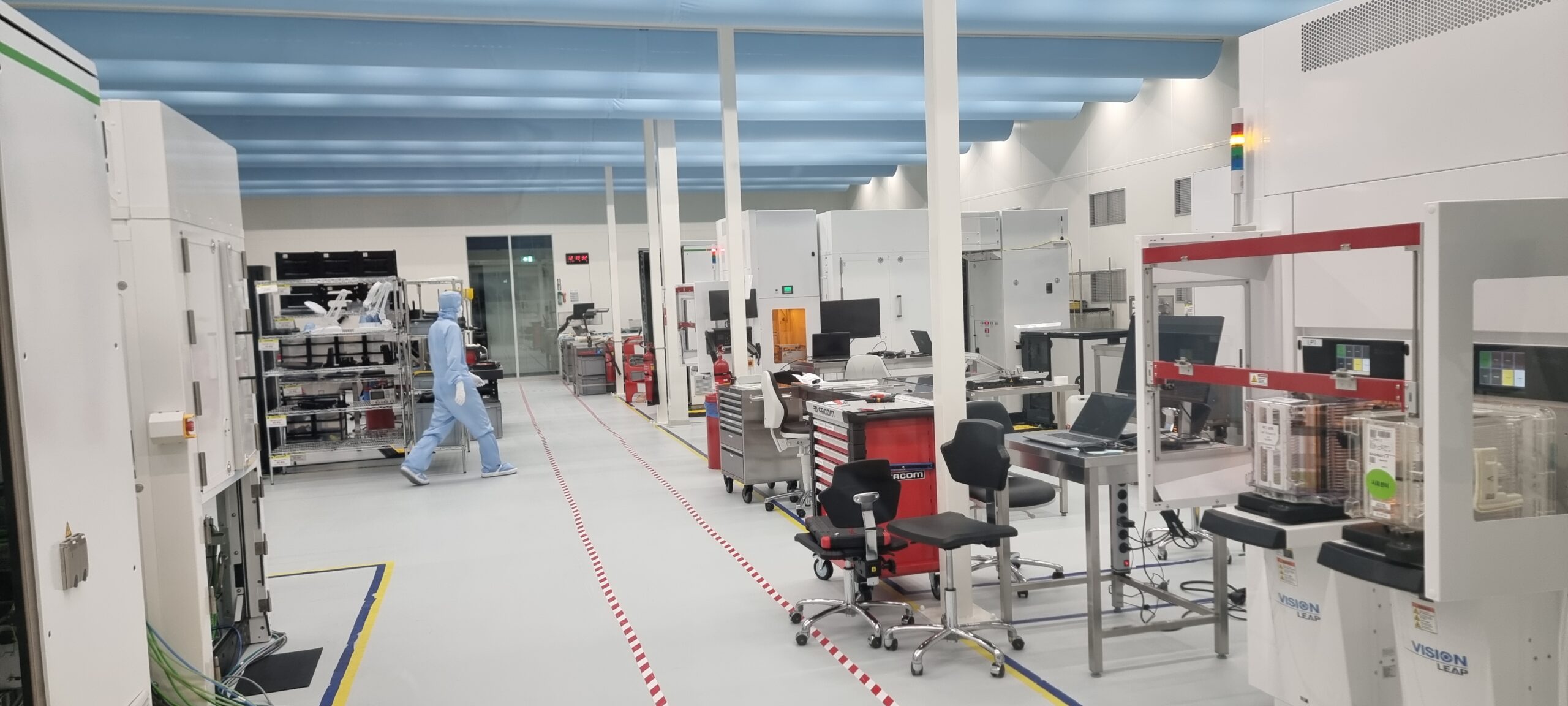
The sequence matters. The investment helped finance development; the factory later provided evidence of industrial acceptance. Those are separate accomplishments. A place in an investor’s portfolio does not automatically produce a purchase order, and an introduction does not settle a technical evaluation.
- 2017€10m joint
investment - 2020First Samsung
shipment - 2024Production use
reported
A fast charge meets a slow industry
Battery company StoreDot offers another view of the distance. Its 2014 phone-charging demonstration attracted attention, but TIME reported some inconvenient details: the prototype battery was larger than the phone’s existing battery and held less energy. The handset also needed modification. Speed had arrived before the rest of the product was ready.
In August 2015, StoreDot announced $18 million for its electric-vehicle business, led by Samsung Ventures. The company described the move as an extension of technology originally developed for smartphones. It planned to fund battery development, charging infrastructure and a battery-management system. Moving into cars meant expanding the engineering assignment considerably.
Read those numbers carefully. The $18 million was the financing round’s total, just as Nearfield’s €10 million was a joint investment. Neither figure tells us the size of Samsung Ventures’ individual check. For a founder, the cost of equity capital also depends on ownership and negotiated terms. A funding headline cannot answer that question.
The practical lesson is to budget for the entire product. A faster battery still needs capacity, compatible equipment and manufacturing. A strategic investor can help finance the work and introduce relevant people. Physics, safety testing and the buyer’s timetable remain part of the assignment.
Follow the factory, then follow its electricity
Samsung Ventures’ interests stretch across AI, robotics, device technology, healthcare, energy, security, enterprise software and consumer businesses. Its website reports $2.8 billion under management and 1,188 companies invested in. Those figures describe investment scale. They do not describe sales, a valuation or a promise about future returns.
The breadth becomes easier to understand through individual deals. In May 2022, Samsung Ventures joined Carbon Clean’s $150 million Series C, led by Chevron. Carbon Clean planned to expand modular carbon-capture equipment for heavy industry. The shared subject was the physical business of making things, with emissions added to the engineering brief.
In March 2026, GridBeyond announced Samsung Ventures’ participation in a €12 million equity round. Its platform coordinates energy assets, including batteries, generation and demand. GridBeyond said the companies would explore trading, asset optimization and energy services. Here, the proposed collaboration was explicit, while the commercial outcomes still lay ahead.
Then, on October 12, 2026, Flexcompute announced investment from Samsung Ventures and Applied Ventures. Flexcompute is developing a Physics World Model intended to predict how designs behave. The company said the money would support research, computing capacity and expansion across physical disciplines.
“AI is changing how products are designed, but those products still have to obey the laws of physics.”
Samsung Ventures representative
Flexcompute announcement, October 2026
Bring the test, not just the pitch
What can a founder copy? Start with a problem a potential corporate buyer already recognizes. Show how the technology could improve a measurable constraint: inspection speed, energy use or charging performance. Then propose a test with a clear result. This is an inference from the investment stories, rather than a published Samsung Ventures application formula.
Compared with an independent investor, a corporate investor brings a particular industrial context. That context is valuable when the startup’s needs overlap with the corporation’s capabilities. If the overlap is weak, or the startup needs customers in unrelated markets, the connection may be less useful. Founders should evaluate the proposed relationship as carefully as the money.
Ask who will own that test inside the larger company, what evidence counts as success, and what follows a successful result. Keep the investment decision and the purchasing decision visible as separate steps. A startup needs enough time and resources to survive both. The distinction is especially useful in hardware, where a promising demonstration may precede an operational deployment by years.
Nearfield’s story supplies a sensible closing image: a machine, its builders and a factory waiting to see whether it works. Samsung Ventures can help a company reach that encounter. The encounter itself is where the invention earns its place.