Samir Ounzain’s introduction to molecular biology came with dinosaurs. In 1993, his mother took him to see Jurassic Park. He remembers the film as an encounter with what DNA might make possible. A child could watch the same picture and leave wanting to direct films, draw creatures or avoid islands. Ounzain carried away an interest in the underlying science. The dinosaurs had done their recruiting.
The attraction lasted beyond the cinema. He went on to study biochemistry, complete a doctorate and build a research career. Eventually, he co-founded HAYA Therapeutics. The route from that seat in the audience to a chief executive’s job took decades, with university laboratories occupying much of the intervening territory.
It is a pleasing origin story because it begins with something familiar: a parent, a child, a film. Its consequences are less familiar. The curiosity that makes a researcher linger over a question can eventually put that researcher in charge of budgets, hiring and colleagues in another time zone. At that point, fascination needs company. Ounzain’s working life has become an account of how to provide it.
The cinema ticket
His own life had already crossed borders before the film appeared. Ounzain was born in Koléa, Algeria, in 1983 and spent his early childhood in Bousmail. His father was Algerian; his mother came from Bradford. The family moved to Britain in 1986 so his father could finish a doctorate. Education, geography and family were entangled from the beginning.
He finished secondary school in Essex in 2001, then studied at Leeds and Leicester. London followed. In 2011, aged 28, he moved to Lausanne. Later, he spoke of visiting relatives in Algeria almost every year and wanting to help develop biotechnology there. That account keeps the places in his story connected. Leaving a country had not ended his interest in it.
There is an echo of that connection in the company name. He has explained HAYA through the Arabic word for life. A business name often arrives carrying a consultant’s invoice and an ambition to be easily searchable. This one also carries a language from his family’s world.
A question with a long apprenticeship
Ounzain’s personal academic profile lists a BSc in biochemistry at the University of Leeds and a PhD in molecular biology at the University of Leicester. It also records postdoctoral work at Imperial College London and University College London. These were successive stretches of training, a reminder that the cinema supplied a spark rather than a qualification.
His enduring research interest became the non-coding parts of the genome and the RNA produced from them. The word “non-coding” describes sequences that do not encode proteins. It leaves open another question: what do those sequences do? For Ounzain, that question provided years of work. The terminology itself invites attention to the difference between naming something and understanding it.
A label can make a complicated subject feel settled. Calling something by what it does not produce gives a reader a quick foothold, but scarcely a complete account. Ounzain’s career developed in the space left by that incomplete description. It is an appealing place for a curious person to work: there is a question to pursue before there is a neat explanation to repeat.
Before HAYA, he was a project leader and research fellow at Lausanne University Hospital, working on long non-coding RNAs. The academic years gave him experience in forming questions and testing ideas. A company would add a different requirement. Colleagues and investors needed to understand which parts of the work could support an organization, and what resources that organization would require.
- LeedsUndergraduate study
- LeicesterDoctoral research
- LondonPostdoctoral work
- LausanneResearch and founding
- San DiegoUS company operations
A company needs more than a founder
HAYA’s official chronology puts its founding in 2019. Ounzain’s co-founder is Daniel Blessing. Their names belong together in the account of the company, as they do on the award they later received. The founding story has two people in it, even when one of them is the subject of the photograph or interview.
The chronology also records a $25 million seed-financing milestone in 2021. In his February 2022 account, Ounzain described an extension that brought the seed total to almost that amount. Those entries catch different moments in an unfolding financing story. More plainly, there was now money with which to assemble a company around the work.
Funding changes the scale of a founder’s responsibility. Scientific expertise remains useful, but it cannot decide every appointment or answer every operational question. Building an organization requires people who know things the founder does not. The more capable the team becomes, the less sensible it is to have every decision return to the same desk.
“Build the data.”Samir Ounzain
Ounzain has emphasized evidence when explaining how HAYA earned credibility. The phrase is short enough to fit on a laboratory wall. It also places a limit on the charm of a founding story. A childhood fascination can explain why someone cares about a question. Evidence has to carry the argument for what comes next.
Two places to do the work
In 2022, HAYA established its US presence at JLABS in San Diego. Ounzain described access to scientists, collaborators and the local business community as reasons for choosing the location. Lausanne remained the headquarters. The arrangement put the company within two working environments rather than requiring one place to supply every kind of expertise.
The choice also gives the founder’s story an organizational geography. A second location means another set of people to recruit, another workplace to establish and another conversation about what the company is trying to accomplish. A shared idea has to survive ordinary working conditions. The Atlantic supplies rather a lot of distance for an ordinary working condition.
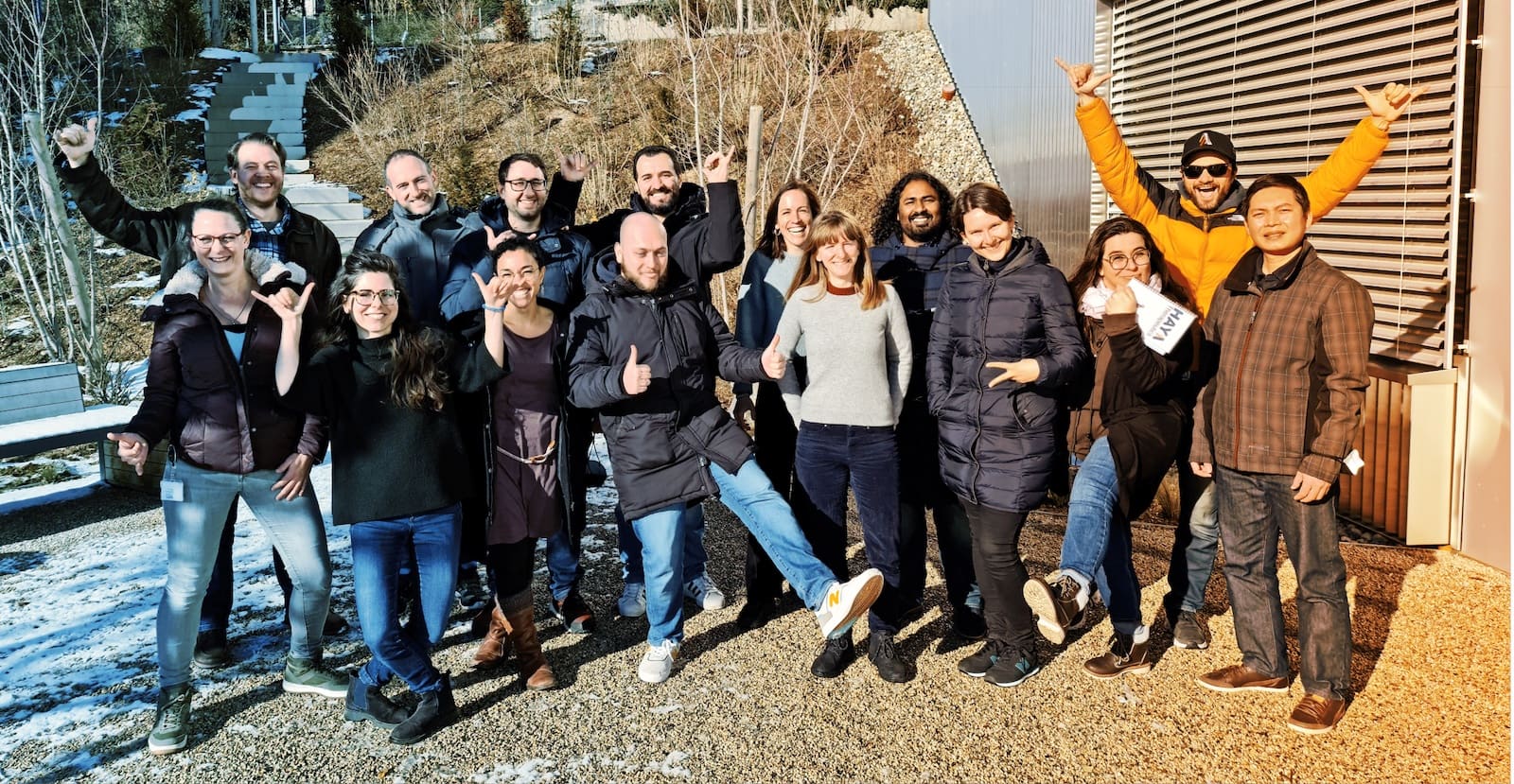
In June 2025, the San Diego operation moved to Lilly Gateway Labs. Ounzain described the relocation as part of scaling the US site. The announcement connected the new setting to infrastructure and collaboration. It was a practical expression of the same argument he had made when opening in California: proximity to people and facilities can help a company do its work.
A location announcement is easy to skim. In a founder’s life, it marks a change in what must be managed. There are now more relationships around the original idea, with more opportunities to learn from people outside the founding team. The science remains central, while the surroundings become increasingly consequential.
The spotlight is shared
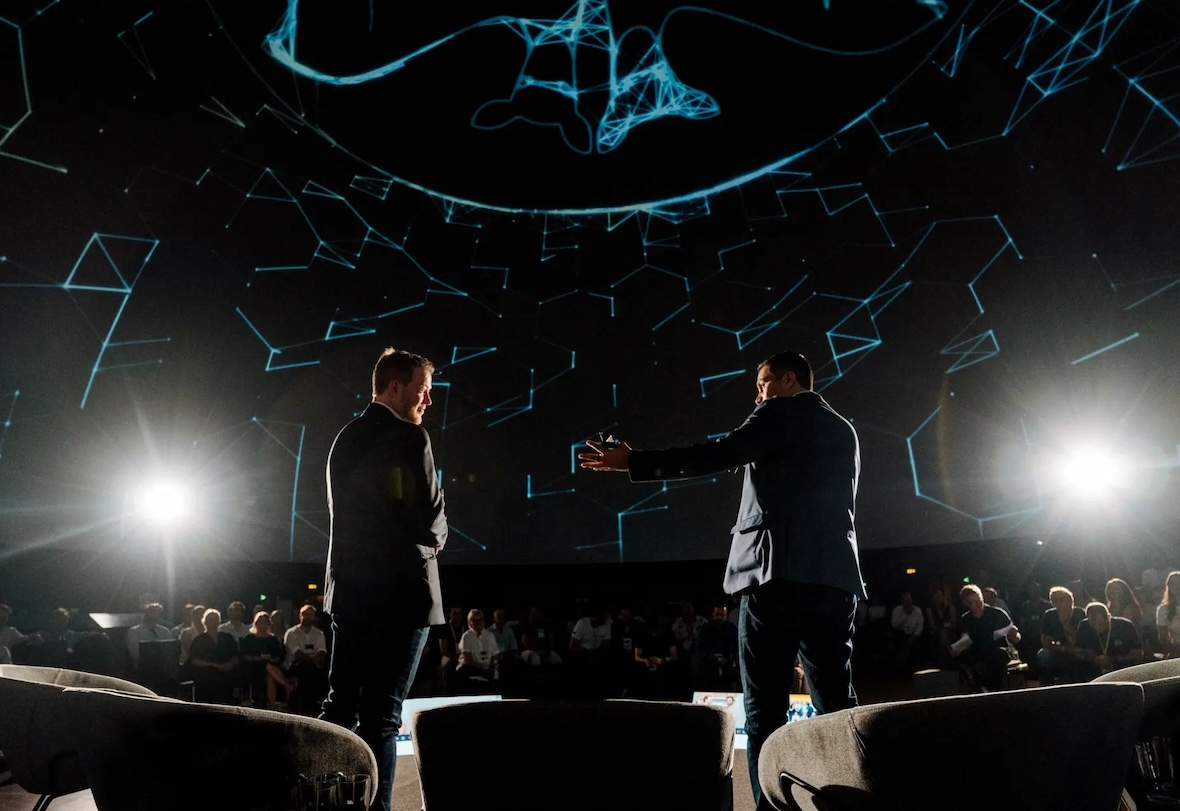
On June 28, 2024, Ounzain and Blessing received the inaugural Andreas & Thomas Strüngmann Award at the Festival of the Future in Munich. They shared a €100,000 prize. The award recognized scientific entrepreneurship in the German-speaking region, bringing their company-building work onto a public stage.
The event photograph captures them together under a ceiling of projected lines. It is a suitable image for a shared achievement: two founders in the same frame, an audience beyond them, years of less photogenic work somewhere outside the crop. Laboratories are excellent places to develop an idea. Ceremonies are rather better at arranging the lighting.
The next year brought another business milestone. HAYA announced a $65 million Series A on May 8, 2025, co-led by Sofinnova Partners and Earlybird Venture Capital. The investment group included Eli Lilly and Company. A financing round gives a company resources; it also gathers more people around the question of how those resources should be used.
Co-led by Sofinnova Partners and Earlybird Venture Capital.
That March, Richard Law had joined HAYA as chief business officer after working at Exscientia. His appointment added experience in business development and partnerships. Such hires matter in a personal profile because they show the CEO’s job changing. The founder’s expertise becomes one part of a larger collection, with people taking responsibility for work that demands their own training.
Learning to let other people decide
By August 2026, Ounzain was talking publicly about the move from scientific executor to facilitator. Academic work had allowed more open-ended exploration. Company work demanded deliverables and the coordination of different disciplines. The transition required a change in how he used his own knowledge.
His discussion returned to “context over control” and a team that is “highly aligned but loosely coupled.” These are compact phrases for a demanding arrangement: make the purpose clear, then allow decisions to happen among the people with the relevant information. The founder must remain useful without becoming the place where everyone waits.
It also requires conviction that stays responsive to evidence. An idea needs enough belief behind it to attract people and resources. Once it has those things, belief can become expensive if it refuses to learn. Ounzain’s leadership account gives the original scientific habit a new setting. The willingness to question assumptions has to extend to the organization itself.
In April 2026, he was named among In Vivo’s Rising Leaders. The public recognition sits alongside a less ceremonial task: helping a growing team act with a shared understanding of its work. That task offers no tidy final photograph. It continues as the company changes.
The boy who watched dinosaurs has become a founder whose work depends on other people’s expertise. The curiosity survives, but its daily expression has widened. It now includes questions about colleagues, judgment and responsibility. A film helped him imagine a life in science. Building HAYA has given him a second subject to study: how an idea travels when its originator can no longer carry it alone.