Consider the Taco Bell as a financial instrument. Someone orders lunch. Someone makes it. Someone else owns the building and collects rent. In 1969, William and Joan Clark bought a Taco Bell property in Northridge, California, directly from founder Glen Bell. Realty Income began with a useful separation: the restaurant needed premises, but its operator did not necessarily need to own them.
- The trade: companies release money from property; Realty Income receives long-term rent.
- The promise: monthly dividends, supported by a diversified commercial portfolio.
- The catch: a signed lease still needs a tenant capable of paying.
01 / THE ORIGINAL EXCHANGEThe building was the financing
The early opportunity involved a financing gap. As former CEO John Case later explained, banks were uncomfortable financing emerging fast-food concepts. The Clarks raised money to buy properties those businesses could occupy. The arrangement joined two different appetites: operators wanted growth capital; investors wanted recurring income. Neither party had to learn the other’s job.
Today, Realty Income calls itself a real estate capital provider. In a sale-leaseback, a company sells its property and signs a lease to remain there. It gets cash to deploy elsewhere, while accepting years of rent payments. Realty Income also buys buildings with leases already attached, funds development and manages properties. The service is money organized around an address.
Receives capital
Receives rent
The triple-net lease helps explain the economics. Tenants generally cover taxes, insurance and maintenance, reducing the landlord’s exposure to those operating costs. Contracts typically run beyond ten years. Long duration gives management something to plan around, although contractual rent increases and financing costs still determine how attractive the arrangement becomes.
02 / WHO PAYS MATTERSThe rent check has a business attached
Look through the storefronts and the customer list becomes familiar: convenience stores, discount retailers, grocers, fitness operators and industrial businesses. Investors are a separate constituency. They buy shares in the landlord, ticker O, rather than deeds to individual buildings. A household can receive property-backed corporate income without negotiating leases or finding replacement tenants itself.
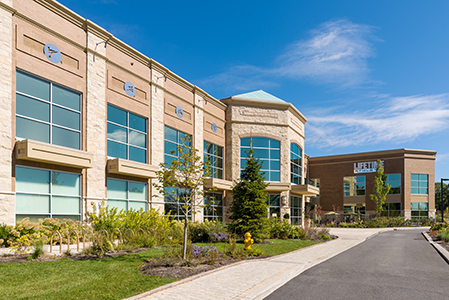
Tenant selection changed as the world changed. By 2019, Realty Income had reduced casual dining from 20% of its portfolio in 2009 to 3%. Its retail thinking favored services, necessities and low prices. In a later interview, CEO Sumit Roy connected the move into industrial buildings to e-commerce: warehouses were becoming part of how retail reached the customer.
That requires expertise beyond property shopping. Management monitors tenant finances, industry prospects, locations and what a building could become after its occupant leaves. Its asset team handles renewals, vacancies and selective sales. Client services extend to lighting, HVAC and racking. There is little glamour in a more efficient warehouse light, but a healthier tenant helps the landlord too.
03 / THE STRESS TESTWhen the doors stopped opening
The pandemic exposed the distance between an enforceable-looking contract and collectible cash. At the end of 2020, theaters represented 5.6% of Realty Income’s annualized contractual rent. Disrupted operations led it to assess individual cinemas and move affected properties to cash-basis accounting. Theater receivable reserves reached $23.7 million. The lease could survive on paper while the economics underneath it deteriorated.
A specialized building adds another problem: replacing its occupant may require substantial work. This is why diversification and location matter together. Many tenants can soften one failure; a reusable property can soften the next vacancy. Neither tool abolishes risk. The company reported 98.8% occupancy in June 2026, a strong operating measure that still leaves room for empty buildings.
A measure of use, not a guarantee of payment.
04 / EXPANDING THE TABLEBigger checks, more people at the table
Scale distinguishes Realty Income within a field that includes Agree Realty, NNN REIT and W. P. Carey. Large transactions require funding capacity and relationships. Its first international acquisition, twelve Sainsbury’s properties in 2019, cost £429 million. The Spirit transaction, completed in January 2024, carried an announced enterprise value of about $9.3 billion. It was an all-stock deal, not a cash shopping bill.

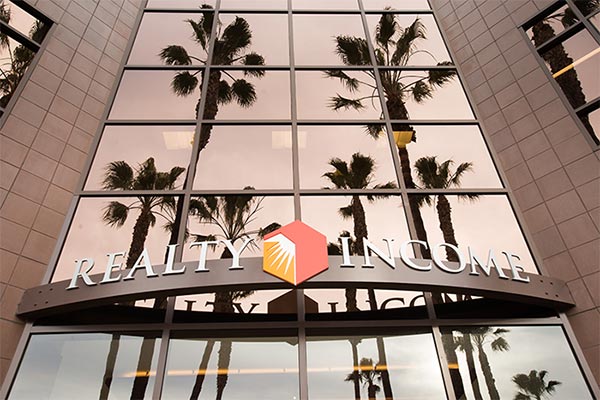
The funding menu keeps expanding. In March 2026, Apollo and Realty Income announced a proposed $1 billion investment for 49% of a venture holding existing U.S. retail assets. September brought an announced KKR arrangement involving European properties. These structures bring in outside equity while keeping Realty Income involved in management. They also share the economics with another investor.
Then there are data centers. A June 2026 venture with Cloud Capital and an institutional investor envisioned seed assets valued above $6 billion. Realty Income expected to invest up to $1.4 billion for a 45% equity stake. Some assets were under development. Asset value, equity commitment and completed investment are different numbers. The distinction matters when the headlines get large.
The underlying arithmetic remains plain. A property must earn enough to cover the capital used to buy it and the company’s other obligations. Cheaper financing can make an acquisition more attractive, which is why credit quality matters on both sides of the lease. Growing the property count alone tells shareholders little about whether their own slice of income is growing.
05 / THE USEFUL LESSONCopy the questions before the calendar
“Crawl, walk, run.”SUMIT ROY / ON INTERNATIONAL EXPANSION, INSIDE THE ICE HOUSE
Roy’s description of international expansion offers a transferable habit: understand the law, choose an initial transaction and learn before accelerating. For a business owner, the sale-leaseback question is whether released capital earns enough elsewhere to justify future rent. For an investor, the questions concern tenant durability, debt costs, payout coverage and the price paid for the shares.
The model becomes less forgiving when funding gets expensive, rent increases lag costs or occupants fail. Construction introduces timing risk; overseas investing adds legal and currency complications. Realty Income’s stated culture emphasizes ownership and long relationships. The practical test is whether those habits improve decisions when an apparently dependable tenant stops looking dependable.
On October 13, 2026, Realty Income declared monthly dividend number 676. The calendar makes the business memorable. The work is making sure the rent arrives.