Sam Lessin wanted the future to make a dinner reservation. A modest demand, you might think, from someone who had already sold a company to Facebook and become one of its product executives. Computers could move photographs around the planet. Surely they could organize an evening out. Yet the apparently little task contained a remarkable amount of human life: whose evening, which restaurant, what time, what price, and what to do when the place was full.
In 2015, Lessin and Andrew Kortina, a co-founder of Venmo, started Fin to work on that gap. Their assistant combined people with software. Customers handed over tasks; a team equipped with shared context and specialized tools carried them out. The service was an attempt to deliver the convenience promised by conversational computing before the computers were ready to supply it alone.
There was a pleasing honesty in calling this approach “artificial artificial intelligence,” or AAI. Behind the seemingly effortless answer was somebody doing the work. A restaurant still had to answer its telephone. Calendars still had to agree. The future, it turned out, had a substantial administrative department.
Fin's consumer assistant ran from 2015 to 2019. Its afterlife has proved useful to Lessin. As AI companies return to the promise of software that will act on a customer's behalf, he has an unusually practical question to ask: when something goes wrong, who pays? A decade of better computing does not automatically settle the bill.
A small private corner of the internet
Before he tried to delegate the chores, Lessin tried to give people somewhere private to put their files. He graduated from Harvard in 2005, having studied social studies, and worked at Bain & Company before founding Drop.io. His training combined history and economics rather than a computer science degree. Technology interested him as a way to organize human behavior as much as a technical discipline.
Drop.io launched in 2007. In an internet becoming increasingly public, it offered small sharing spaces that did not require registration. A user could upload a document or a photograph, protect the space with a password, and give it an expiration date. The drops were not indexed by search engines. A file could have an audience without acquiring a public career.
In 2008, Lessin was living in Tribeca and walking over the Brooklyn Bridge to his office. Talking about the prospect of an entirely searchable life, he described an ambition to change how the internet worked as a communication tool. It was an expansive goal for a file-sharing service. It also placed control, rather than publicity, at the center of the product.
Facebook acquired Drop.io in 2010, and Lessin joined the company. Through 2014, his product responsibilities included profiles, privacy, events, and identity. Those jobs put him inside a much larger version of the problem that had interested him in Brooklyn: how people present themselves online, and how other people decide what to believe about them.
I'm going to change the power of the Internet as a tool for communication.Sam Lessin · 2008
The assistant had a back office
Fin brought that concern with context down to the scale of a personal request. Delegation depends on knowledge that people rarely include in a sentence. A colleague knows which meeting can move. A longtime assistant knows which preferences are flexible. A service accepting requests from thousands of different lives has to make that knowledge available to whoever picks up the next task.
Kortina described the ambition as “Uber for executive assistants.” Full-time help was expensive; Fin offered access by the minute. The appeal was easy to grasp. You could hand off the small obligations that interrupt a working day without hiring someone for an entire working week. The difficulty was making the economics fit the convenience.
The team built tools for remembering preferences, routing work, and guiding execution. Behind a short customer request sat a sequence of decisions. Which information was missing? Which step should happen first? When should the assistant ask a question? Every clarification could improve the result while also returning a piece of the chore to the customer.
For Lessin, a particularly attractive possibility was shared knowledge about services. If the assistant repeatedly arranged things for people, it could learn who actually delivered. The resulting directory would draw its value from completed work and accumulated experience. His interest went beyond saving a few clicks: he wanted a better way to find someone worth hiring.
The business imposed its own verdict. Kortina's retrospective says the assistant was efficient and enjoyable to use, but did not grow fast enough to meet venture-return expectations. Even simple scheduling and booking tasks took longer than people imagined. Fin moved toward analytics for operations teams, turning attention to the work happening behind the request.
That turn matters when judging Lessin's career. An exploration produced a business different from the one its founders first described. The instruments built to understand an assistant team's performance had an application beyond that team. Fin's consumer service ended; the problem of making human work visible remained.
One sentence. Several jobs.
- 01RememberPreferences & context
- 02ArrangePeople & services
- 03CheckResults & feedback
The bill arrives after the demo
Lessin's later account of Fin gives the assistant debate a useful dose of friction. Better language models can help interpret a request and organize preferences. But an assistant also relies on airlines, restaurants, drivers, and other businesses whose performance it cannot guarantee. The customer remembers the service they asked to arrange everything.
There is a difference between producing an answer and arranging an outcome. A suggested itinerary leaves a traveler with decisions to make. A booked itinerary moves money and commits time. That second service may be more valuable, but it also creates more occasions for an expensive argument. Fin gave Lessin a way to examine that argument from the operator's chair.
His skepticism has a specific target: the assumption that a useful new capability necessarily produces an attractive independent business. In his 2025 venture-capital presentation, he argued that the industry's capital “factory” model was broken. His writing asks investors to look at the structure underneath a convincing story. What is the customer buying? Who keeps the margin? What makes them stay?
By October 2026, he was still pursuing the subject in his newsletter, discussing trust and negotiated access between agents. He also described building an app with Aaron Sittig that does nothing. The joke fits the moment rather well. Software is becoming easier to produce; deciding what deserves production remains stubbornly human.
A creator is a business with a face
At Slow Ventures, where he is a founding partner, Lessin works in an early-stage generalist firm. Its investment interests range across software, consumer businesses, crypto, and the creator economy. His earlier angel investing included Venmo. The connections between operating, investing, and friendship recur throughout his work: Kortina was an entrepreneur he backed before becoming his co-founder.
Creators offer another test of how a business gets recognized. In February 2025, Slow announced a dedicated creator fund of more than $60 million. The strategy focused on people with authority in specific subjects, including automotive and gardening, rather than celebrity alone. A knowledgeable audience could be the beginning of several businesses.
The financing structure matters. The fund would take a stake in a holding company with interests in the creator's new ventures. That arrangement makes room for a business to develop beyond advertising revenue or a single product. The person remains recognizable even when the commercial activity changes.
There is a family resemblance to Fin's original question. Both begin with something people already value, then ask whether a different structure could make it work for more of them. In Fin's case, the useful thing was an assistant. With creators, it is expertise and the audience's willingness to return. The structure still has to survive contact with the accounts.
Dedicated creator fund announced by Slow Ventures in February 2025.
The investor who keeps the intern title
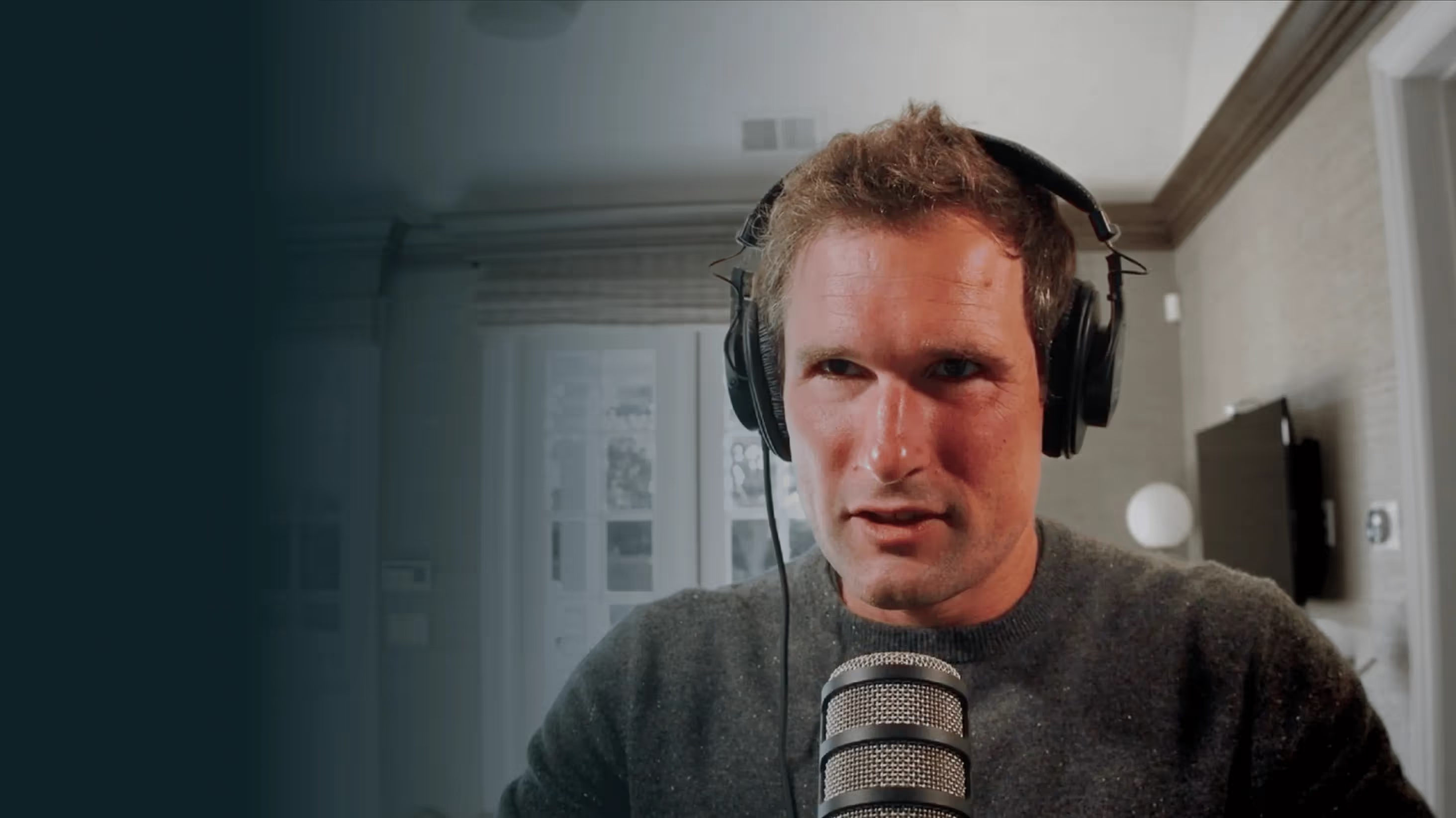
Lessin also writes at The Information, the publication founded by his wife, Jessica Lessin. His preferred description of that role is “intern.” It is a neatly economical title for someone whose other job involves deciding where capital should go. On More or Less, he joins Jessica, Dave Morin, and Brit Morin for a weekly conversation about technology and venture investing.
The titles allow different kinds of participation: investor, founder, writer, and someone willing to have an opinion challenged aloud. His personal site links essays, presentations, experiments, and a weekly newsletter. Lessin Technology Company gathers projects including an AI chat trained on the podcast and a tool for requesting short video introductions. His public output includes arguments and small working experiments.
His attachment to Harvard has acquired a similar practical form. After a campaign to join the Board of Overseers, the effort developed into 1636 Forum, an alumni initiative concerned with academic mission, governance, and campus culture. Its activities include briefings, newsletters, and conversations with university figures. Lessin has described the university as an institution he wants to help repair.
In a 2026 interview about etiquette, he turned to another old technology for coordinating people: manners. Introductions, meals, and meetings can all go more smoothly when participants understand the conventions. The subject sits comfortably beside his interest in identity and trust. An introduction is a small piece of social infrastructure, even when nobody has raised a seed round for it.
Skiing supplies a final clue. Discussing it with Michael Eisenberg, Lessin distinguished what feels unsafe from what is unsafe. He described himself as less instinctively drawn to risk than his public image might suggest. Preparation and a clear view of one's abilities make room for the adventure. The distinction is useful for anyone trying to build ahead of the market.
Fin belongs in that account without being polished into a victory lap. Lessin and Kortina wanted to make delegation available on demand. They learned how much context it required, how much labor it consumed, and how awkwardly responsibility could travel. The dinner reservation was a small request. Learning what it meant to promise one has kept Lessin occupied for years.