THE FIRST CUSTOMER
Forty-five minutes after Nitro’s website went live, somebody bought the software. For Sam Chandler, that first purchase was evidence that the idea had a customer. It would take another eighteen years for his time running the company to end. The difference between those two clocks explains rather more about entrepreneurship than the usual photograph of somebody ringing a stock-exchange bell.
Nitro began in Melbourne in 2005. Chandler and his fellow founders were taking on a familiar office irritation: people could read a PDF, but doing useful things with one often required software their employer had not bought for them. There was room for an alternative. It was a modest-sounding proposition with a considerable amount of daily inconvenience behind it. Office paperwork rarely gets a standing ovation. It does get a budget.
By 2019, Chandler had taken Nitro onto the Australian Securities Exchange. In 2023, the company was acquired in a transaction valued at A$561 million. Those are the tidy milestones. Between them sit the decisions that interest him: finding people who know things he does not, keeping the bills paid, and working out when a small business needs a much larger stage.
Then comes the pleasingly awkward detail for anyone trying to file him under software executive. His current work includes a specialty coffee company. After years of helping people get documents through an office, he is helping another founder get coffee to the people outside it.
A teenager, an office, a different idea
Chandler grew up in Tasmania and started his first business at sixteen, while still at school. A second followed at twenty-one, during university. He studied business at RMIT. The sequence puts his education and enterprise alongside each other: he was already trying to sell things while learning how businesses were supposed to work.
His earlier ventures included Web Logic Interactive and Aliqua. Before Nitro, he was working on email marketing in a shared Melbourne workspace. Another business there made plug-ins for Adobe Acrobat. The eventual partnership combined his team’s sales, marketing and web experience with the other team’s knowledge of desktop software and document formats.
They closed their existing startups to concentrate on the new one. That is a less comfortable origin story than the accidental side project that conveniently becomes a fortune. It required people to give up work they already understood and agree on a shared bet. Complementary skills were part of the bargain from the beginning.
They also licensed technology to get the product out faster. Building everything themselves would have delayed the launch; combining existing components shortened the route to a paying customer. There is a practical cast to this early Chandler. The product needed to work, and it needed to arrive. A customer has little reason to admire an elegant development process while waiting for software.
The bills came before the big cheque
The first sale did not furnish Nitro with a limitless bank account. In its early years, the business sold services to help finance the product. Chandler described a company that watched cash closely and aimed to cover its costs from the outset. The daily arithmetic mattered well before venture capital appeared in the story.
An angel round of $1 million arrived in January 2007, led by Hitwise co-founder Andrew Barlow. Chandler credited Barlow’s network with making that financing possible. Australia’s startup infrastructure was thinner then: fewer investors, fewer experienced peers to ask, and fewer obvious doors through which a young founder could walk.
Starfish Ventures subsequently invested about $6.5 million across 2012 and 2013. Battery Ventures supplied a $15 million round in 2014. The sequence is useful because it restores time to the familiar startup tale. The larger cheque arrived years into the work, after the business had already learned to survive on customers and carefully managed cash.
Chandler also had a specific complaint about advice. A young founder could find someone broadly successful in business, yet still struggle to answer a practical hiring question: how do you recognise a capable chief financial officer if you have never worked with one? His concern was expertise close enough to the problem to be useful. Encouragement, however generously supplied, cannot interview your finance team.
NITRO’S EARLY FINANCING · REPORTED DOLLAR AMOUNTS
The CEO leaves town
In 2008, Chandler moved to San Francisco. The headquarters followed in 2009. At the point he went across, he recalled having roughly twelve colleagues back in Melbourne. A company beginning to establish itself suddenly had its chief executive on the other side of the Pacific.
“We basically had to start again,” he said. The attraction was access to people and capital at a scale he had struggled to find at home. Relocation sounds decisive in a retrospective. In the moment, the structure was peculiar: an Australian team continuing its work while the founder tried to establish a new centre of gravity overseas.
Moving away did not end his interest in the Australian startup economy. He argued for better access to investment and for learning openly from other countries’ experience. In 2015, he wanted Australian pension capital to play a more useful role in backing young businesses, and he saw value in attracting experienced overseas venture investors.
His argument extended beyond the money. Investors could bring relationships and operating knowledge along with a cheque. Having crossed the ocean to find those resources himself, he wanted them within reach of more founders at home. His involvement as an investor and mentor at Startmate fits that concern: the next young entrepreneur should have somebody relevant to call.
Documents acquire a bigger signature
Nitro’s public listing in 2019 gave the Melbourne venture another institutional life. The company was now answering to public shareholders as well as customers. Its history cannot be reduced to the first product staying the same while more people bought it. The scope of the work changed too.
In 2021, Nitro announced an agreement to acquire Belgium’s Connective for an enterprise value of €70 million. Connective brought electronic signatures, electronic identity and document automation. Its customers included banks and governments, where signing a document involves considerably more than drawing something vaguely resembling a signature with a mouse.
Chandler’s stated focus was trust, security and regulatory requirements. That gives the acquisition a concrete place in his career. The startup that offered another way to handle PDFs was investing in the machinery that lets organisations complete transactions digitally. The unglamorous office problem had grown into a set of demanding enterprise responsibilities.
On 29 March 2023, Nitro announced Chandler’s immediate departure as chief executive following the change of control to Potentia. Tim Reed would take interim responsibility. Chandler thanked the team and marked the beginning of another chapter. Eighteen years is a substantial stretch of anybody’s working life. The announcement supplied an exact date for the end of his operating tenure, even as Nitro itself continued.
Equal shares, different expertise
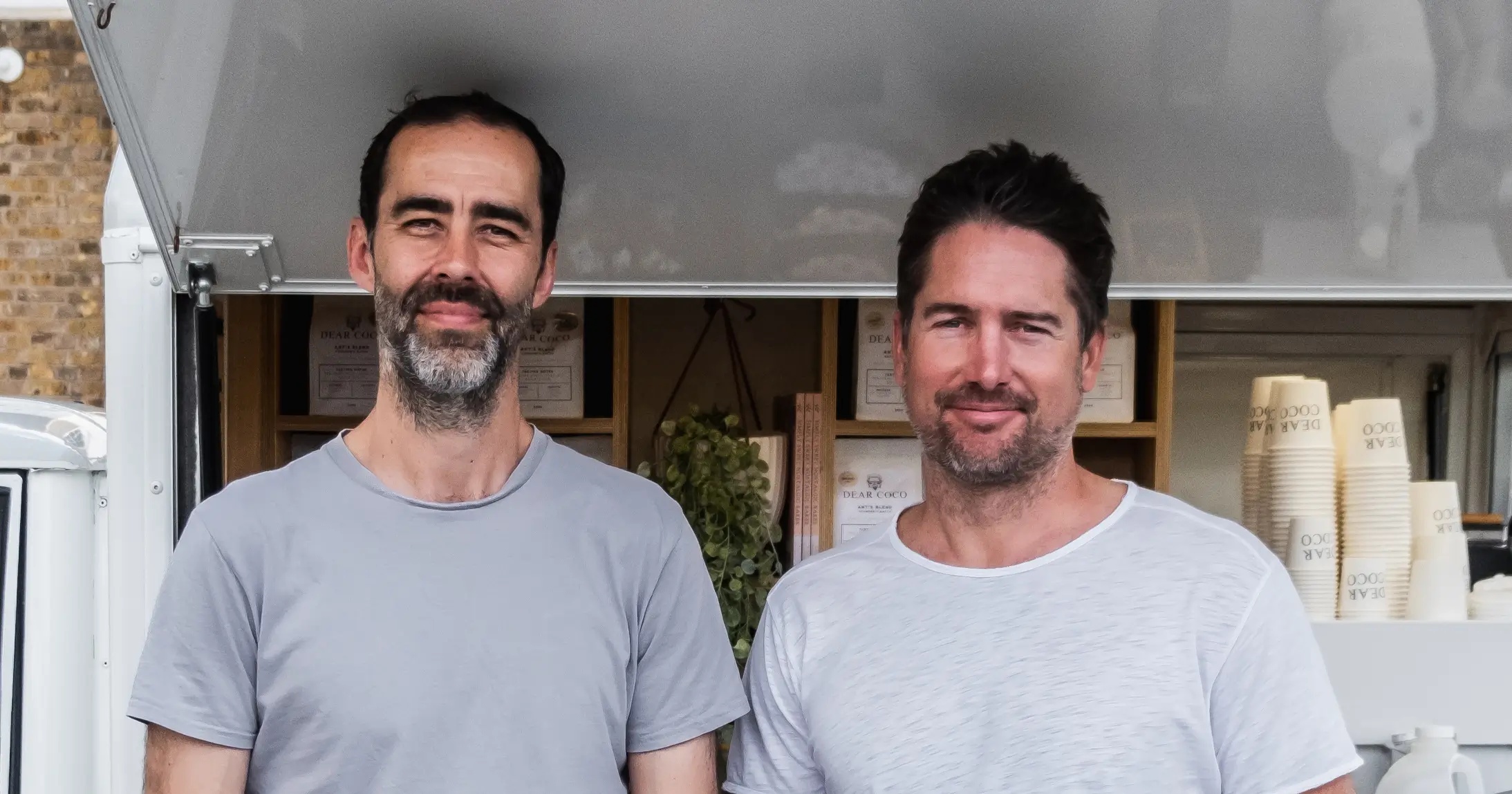
Today, Chandler is founder and managing partner of Laneway Ventures, a family office investing across Europe, the United States and Australia. He is also co-founder and chairman of Dear Coco, working with founder and chief executive Ant Duckworth. The titles describe two related activities: choosing businesses to support, and helping one of them develop at close range.
Dear Coco began with Duckworth’s coffee truck in Chiswick in May 2021, before Chandler joined. The name came from Duckworth’s youngest daughter. Chandler entered the business in 2024. By September 2026, Duckworth described five locations and a team of twenty. The original truck remained part of a business attempting to expand beyond its first familiar patch.
The partners have been unusually explicit about the arrangement. Duckworth explained that Chandler bought half the company, leaving each with equal ownership and voting rights. The invested cash financed expansion and new operating costs. Their respective roles were clear: a chief executive running the business, an active investor and board member working alongside him.
Their explanation also addressed the uncomfortable interval between a profitable small operation and a growing one. Expansion meant temporarily spending more than the business earned, with the aim of bringing revenue back above costs before the capital ran out. Coffee has supplied Chandler with a different product and a recognisable calculation. The cup is considerably easier to explain than enterprise software. The cash still needs counting.
DEAR COCO · THE PARTNERS’ DISCLOSED ARRANGEMENT
Founder & CEO
Co-founder & chairman
Equal ownership. Equal votes. Complementary roles.
“Get a great core team around you.”
Sam Chandler · 2012
A company is also the people in it
Chandler’s early comments about entrepreneurship contain ambition, impatience and a useful sense of proportion. He wanted to attempt unusual things, but he also warned against assuming a founder could do everything alone. Building credibility could take years. His advice gave colleagues and persistence a central role.
“Get a great core team around you.” The brevity suits the record: the shared Melbourne office, Barlow’s network, the overseas recruiting effort and now Duckworth’s hospitality experience. Chandler’s career repeatedly brings him alongside people whose knowledge fills a gap. Partnership is visible in the decisions, well before it becomes a word in an investment firm’s name.
There is evidence of a blunt streak too. He described Nitro’s values in plain language, including performance, honesty and decent behaviour towards colleagues and customers. His approach left little room for elaborate corporate euphemism. A company could write down what it expected people to do, then ask whether their behaviour matched.
The current coffee venture gives the story an open ending. A completed software acquisition can be expressed as a price and a date; a growing hospitality business still has locations to find, people to hire and customers to serve. Chandler has returned to work whose result remains unsettled. Forty-five minutes was enough to discover that somebody wanted Nitro. Learning how far a business can go has always taken him longer.
Keep the conversation going
- Sam Chandler on LinkedIn
- Sam Chandler on X
- Laneway Ventures
- Dear Coco: the founders’ story
- Dear Coco films on YouTube
- The early Nitro years: extended interview
- A decade of Nitro: the funding and the lessons
- The Pacific move
- CEO departure announcement, March 2023
- Ant Duckworth on Dear Coco’s growth, September 2026