The modern product page looks effortless because the effort has been hidden. Before a shopper sees a jar of sauce, a replacement drill bit, or a pair of running shoes, somebody has to locate the correct dimensions, ingredients, warnings, photographs, descriptions, translations, and availability. Then that bundle has to satisfy Amazon, Walmart, Target, a regional grocer, a distributor, the brand's own store, and every country in which the item is sold. Each destination asks for a slightly different answer. Some change their rules more than a hundred times a year.
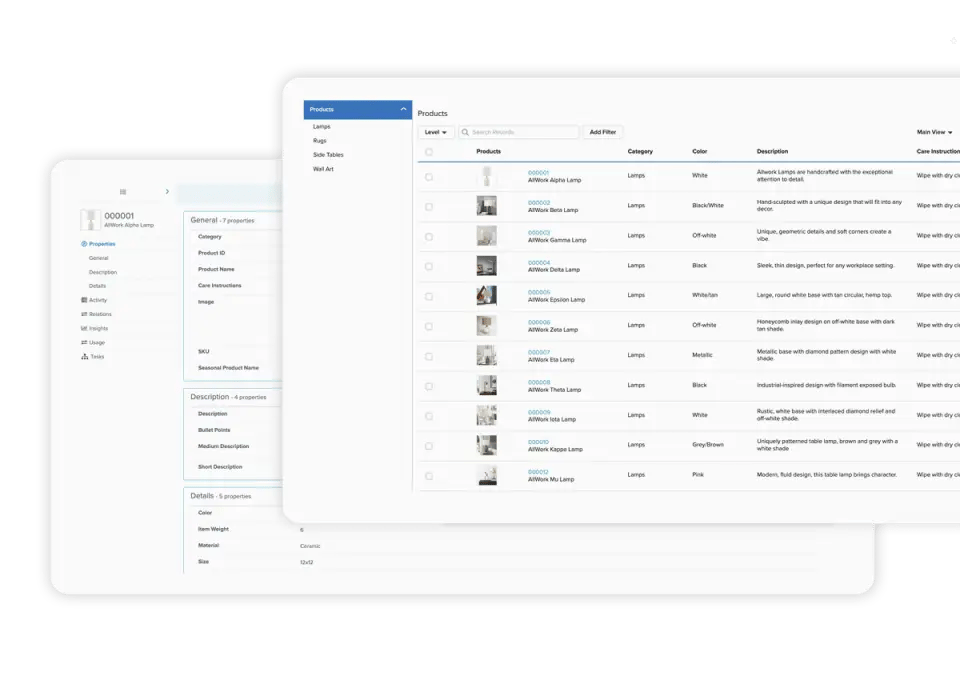
Salsify is the Boston software company built for this bureaucratic maze. Its platform gives manufacturers, brands, distributors, and retailers one home for product content. Teams import raw facts from ERPs, spreadsheets, asset libraries, and other databases; enrich and approve them; then transform and send the right version to each selling destination. A product information manager gets order. An ecommerce lead gets faster launches. A retailer gets fewer half-empty listings. The shopper simply gets a page that makes sense.
A company born between a spreadsheet and a shopping cart
The founders knew enterprise search before they knew product experience management. Jason Purcell, Jeremy Redburn, and Rob Gonzalez had worked together at Endeca, the search-and-data company Oracle bought for $1.1 billion in 2011. Cloud infrastructure had made a startup cheaper to begin, and the trio saw a familiar problem moving into commerce: product facts were scattered across departments while online sellers demanded richer content at greater speed. They wrote Salsify's first line of code on September 4, 2012.
The first sellable product took about six or seven months. Its first paying customer, Gonzalez later recalled, spent $99 a month. There was no instant category coronation. The first two years were a grind because ecommerce was still a side assignment inside many large consumer-goods companies. The person running Amazon might be a junior employee several organizational floors away from the executive agenda. Salsify had found a real job, but not yet a loud budget.
“The first two years were a grind.”Rob Gonzalez, co-founder
What changed minds was pressure from the outside. In the back half of 2014, Gonzalez has said, Macy's, Walmart, Target, and Home Depot released detailed content-quality guidance for suppliers. Images needed to fit house styles. Copy needed to work with site search. Missing or weak content could bring penalties. The brands' untidy internal process had acquired a commercial consequence. The plumbing had become revenue infrastructure.

The product is less a database than a translation bureau
Calling Salsify a PIM, or product information management system, is accurate but incomplete. A PIM keeps the master facts. Salsify stretches downstream. Its digital asset tools connect imagery and documents to those facts. Workflow routes work among marketers, legal reviewers, regional teams, and ecommerce operators. Syndication maps the approved record to each channel. Enhanced Content builds richer sections for product pages. Digital Shelf Analytics checks what actually appeared. Its GDSN data pool handles standardized information exchanged through the GS1 network.
Retailers sit on the other side of the same exchange. Supplier Experience Management helps them onboard vendors, collect complete listings, validate submissions, and enrich content without chasing another attachment called final_v7_REAL.xlsx. Salsify also sells implementation, managed services, training, and last-mile support for the inevitable moment when a retailer portal rejects something that looked perfectly reasonable everywhere else.
The customer result you can feel in your calendar
Salsify's customer list includes Mars, L'Oreal, Coca-Cola, Bosch, ASICS, Nestlé USA, Kraft Heinz, and Kerry, plus retailers and distributors such as DoorDash, Carrefour, E.Leclerc, Metro, and Intermarché. The logos are useful; the operating numbers are better. Mars used Salsify to create what its team called an “internal Google” for product content and connect to 550 retailer channels. The company estimated that the system saved 60,000 hours of content-management work in 2020 while its global ecommerce growth exceeded 200 percent.
Kerry offers a smaller, more legible example. Employees had spent 20 to 30 minutes validating information for each product. With Salsify's Intelligence Suite extracting data from packaging PDFs or photos, that step fell to about five minutes, followed by human review. A product setup that took two or three days could be turned around in one. The machine handled the transcription; the person kept the final say. That division of labor is more persuasive than vague promises about “AI transformation.”
The expensive choice was service
Salsify sells enterprise subscriptions, usually annual or multi-year, with services around setup and operation. It does not publish a menu price. The bill depends on modules, users, catalog size, destinations, implementation, and support. That makes the software a different purchase from a lightweight catalog tool: it is bought when the cost of product-content errors, slow launches, and repeated portal work is already material.
The company funded the climb with six disclosed venture rounds totaling $452.6 million: $8 million in 2013, $16.6 million in 2015, $30 million in 2017, $43 million in 2018, $155 million in 2020, and $200 million in 2022. That final round, led by TPG, valued Salsify at $2 billion. In 2021, the company reported more than $110 million in annual recurring revenue, growth above 50 percent, nearly 1,200 customers, and net dollar retention above 115 percent.
One early decision is particularly copyable. Gonzalez wrote that Salsify over-hired in customer success, accepting unattractive service economics while the product was incomplete. Good support helped customers forgive missing features, renew, expand, and speak publicly. The company was selling organizational change as much as software; a responsive human team lowered the risk. Founders can borrow the principle without copying the spend: put disproportionate attention on the users absorbing the cost of your immature product.
The failures were less cinematic. Salsify waited too long to hire sales managers, recruiters, management trainers, and product-management capacity. Internal communication broke, Gonzalez observed, roughly every time the company doubled. At ten people, everyone overheard customer conversations around one table. At twenty, product and marketing lost ambient context. At forty and eighty, informal contact gave way to layers and travel. The company corrected each break after damage appeared. The useful lesson is to redesign communication before the next doubling, not after Slack starts sounding like an archaeological dig.

A crowded market, with one network-shaped distinction
Salsify competes with Akeneo, Syndigo, inriver, Stibo Systems, Informatica, Pimcore, Pimberly, Contentserv, and Centric PXM. It also competes with the home-grown stack: an ERP, a DAM, shared drives, spreadsheets, retailer portals, and custom connectors held together by patient employees. Its pitch is breadth without assembly. PIM, workflow, rich media, syndication, analytics, supplier onboarding, and services operate on one cloud platform.
The more defensible difference is the destination network and the accumulated knowledge of how each endpoint behaves. A clean internal record is only half the job. A brand still needs to know why a retailer rejected the image, renamed a field, or changed a schema. Salsify has spent years encoding those annoyances. Acquiring Alkemics in 2021 extended its retailer collaboration footprint in Europe; buying SKUvantage later that year added a mature content network and creation services in Australia and New Zealand.
A plain PIM
- Stores product facts
- Controls versions and access
- Enriches catalog records
- Often relies on separate connectors
Salsify's wider bet
- Governs the same core facts
- Adapts them to channel rules
- Publishes and checks the result
- Connects brands and retailers
There is a practical limit. A small merchant with a short catalog and one storefront may get more value from a spreadsheet or the PIM inside its commerce platform. Salsify becomes rational when the multiplication starts: thousands of SKUs, many markets, frequent retailer changes, regulated attributes, and several teams touching the same record. It also needs ownership. Software cannot rescue source data that nobody is accountable for, or a rollout treated as a marketing tool while operations, IT, and sales keep their own truths.
From the digital shelf to the agentic shelf
Salsify's next act assumes that shoppers will ask software to compare, recommend, and eventually purchase products. In May 2026, it launched SalsifyIQ, described as an intelligence layer combining four kinds of context: retailer and GDSN requirements, knowledge about configuring PXM, each customer's brand rules, and outside performance signals. Its conversational assistant, Angie, is being extended across the platform. Other tools generate answer-engine copy, manipulate images, map attributes, and repair syndication errors.
The company is also introducing Model Context Protocol access so a customer's internal agents can retrieve approved product information. The logic is sound even if “agentic commerce” remains a moving target. Search engines rewarded clear titles and attributes; conversational systems need fuller sentences, use cases, compatibility details, and evidence. A shopping bot cannot recommend the right allergy-safe snack or replacement part if the authoritative record is thin, contradictory, or locked in a PDF.
“Product facts are just the starting line.”Julie Marobella, Chief Product Officer
In July 2026, Cinven agreed to acquire Salsify for an undisclosed sum, subject at announcement to regulatory approvals and customary closing conditions. The private equity firm pointed to recurring revenue, customer retention, the two-sided network, international room, and AI. It is a tidy summary of the company Salsify has become: no longer a clever catalog utility, but a piece of daily infrastructure with expansion opportunities attached.
Three Endeca veterans start with the unlovely work between product databases and product pages.
Major sellers tighten content standards, turning a neglected workflow into an urgent brand problem.
Alkemics and SKUvantage bring deeper retailer connections in Europe and Australia.
TPG leads a $200 million Series F after reported ARR passes $110 million.
SalsifyIQ launches in May; Cinven announces its acquisition agreement in July.
The transferable playbook is refreshingly dull. Find a translation task that repeats across organizations. Build the system of record, but do not stop there: follow the work through approval, delivery, and measurement. Let external rule changes create urgency. Support customers heavily while the product grows up. Add the network layer that becomes more useful as more destinations join. And watch the conditions carefully. If the workflow is rare, the catalog is tiny, or nobody owns data quality, the grand platform becomes expensive furniture.
Salsify's enduring insight is that ecommerce is not only a storefront. It is a negotiation over facts, repeated for every item and every shelf. The company made that negotiation programmable. Now it is wagering that the next shopper may be a machine - and that machines, like humans, buy more confidently when the label is complete.