Consider a software company with fewer than twenty employees. Its product tracks fleets: vehicles, maintenance, compliance, costs. The potential buyers are scattered across trucking companies, retailers and distributors. Finding them is a job. Persuading them to take a meeting is another. Doing both while running a small software business is where the calendar starts to look like an enemy.
This unnamed company hired SalesHive. In the agency’s account of the engagement, 564 meetings were booked between October 2023 and October 2026. Of those, 515 came from phone calls, forty from email and nine through the client’s website. The funny detail is the telephone. Behind the AI language sits a person asking another person for a little time.
- Managed prospect research, cold calling, email and meeting booking in one program.
- Human callers use SalesHive’s own software, with AI supporting the surrounding work.
- Custom monthly pricing; judge value by qualified meetings held and opportunities created.
The agency inside the software
SalesHive occupies the space between hiring a sales development team and buying software for one. Clients get people to research prospects, make calls, run email outreach and arrange meetings. Their own salespeople take those conversations forward. The deliverable is an introduction to a potential buyer; closing the business remains the client’s responsibility.
Brendan Burnett and fellow co-founder Phil Benavides started the business in 2016. Burnett’s November 2022 appearance on The Thoughtful Entrepreneur described a bootstrapped company with more than $15 million in annual sales. That is a historical, founder-reported figure, but it establishes something useful: this was already a substantial services operation before today’s enthusiasm for AI agents.
The founding diagnosis concerned the machinery behind outsourced sales. SalesHive says agencies depended on rented tools and restrictive contracts. It built its own outreach platform and CRM, bringing calling, prospect data, email and replies together. The strategic bet was control: the team operating a campaign could also change the system underneath it.

A telephone with a research department
The software matters most before and after the conversation. A prospect list needs the right companies and the right people inside them. A caller needs to understand the offer. A reply needs attention. SalesHive’s Power Dialer, Smart Inbox and personalization tools address those separate chores within the same operating environment.
Its eMod feature personalizes approved email copy; eRep can generate a complete message from campaign context in self-serve sequences. Managed email agents work from approved strategy and instructions. During calls, a teleprompter can suggest a response using the conversation and saved context. The human representative decides what to say.
For a customer already using Salesforce, HubSpot, Pipedrive or Zoho CRM, the integration has a practical wrinkle. Native sync sends contacts and outreach activity from SalesHive into that system; edits made in the outside CRM do not flow back automatically. Someone still has to decide where the authoritative record lives. Shared visibility needs an agreed workflow.
This is also a training business. Its careers material describes certification before client calling, mentors and weekly coaching using recorded calls. The company has worked remotely since 2016, with a US-based core team and a separate Philippines-based option. Its values spell INSPIRE. The more revealing cultural detail is the weekly return to actual conversations: a sales script gets a daily encounter with reality.
“Make sales development simple, scalable and affordable.”SalesHive’s stated mission
The number beneath the number
The fleet campaign makes the mechanics unusually visible. SalesHive began with trucking and transportation, then expanded into other businesses running vehicles. It targeted fleet managers, maintenance directors, fleet executives and operating chiefs. The agency says 472 bookings involved fleet leaders. A big list became a narrower set of people with a reason to care.
The pattern was uneven: eighteen bookings in the opening quarter, 259 in 2024, 218 in 2025 and sixty-nine in 2026 through the reporting cutoff. Those totals describe different stretches of time. They do not establish a growth curve or prove why performance changed. They show why one spectacular month makes a poor forecast.
A second case concerns public-records software sold into local government. SalesHive reports 141 bookings from November 2025 through July 2026, including 138 by phone. The targeting distinguished counties in fifteen priority states from cities in Connecticut and Vermont. The first booking arrived twenty days after kickoff. Specificity, rather than a universal script, is the transferable idea.
of reported bookings came by phone
The invoice buys a program
SalesHive sells managed outbound for a flat monthly fee, with custom quotes based on staffing, location, channels and activity. Starter provides phone coverage; Growth adds email; Crush assigns two representatives. Data, strategy and platform access are bundled. There is no setup fee, and billing starts after launch approval.
Month-to-month still has a clock attached. After launch, written cancellation notice ends outreach and billing at the end of the next billing month. Annual plans offer lower monthly rates with longer commitments. SalesHive also offers platform access for internal teams, per-seat self-serve workspaces and implementation help. Self-serve does not include calling.
The economic test is straightforward: divide total spending by qualified meetings actually held, then follow the opportunities those meetings produce. Bookings alone leave out no-shows, poor fit and deals that never advance. SalesHive does not guarantee a meeting count. A buyer should settle the definition of qualification before celebrating the size of a calendar.
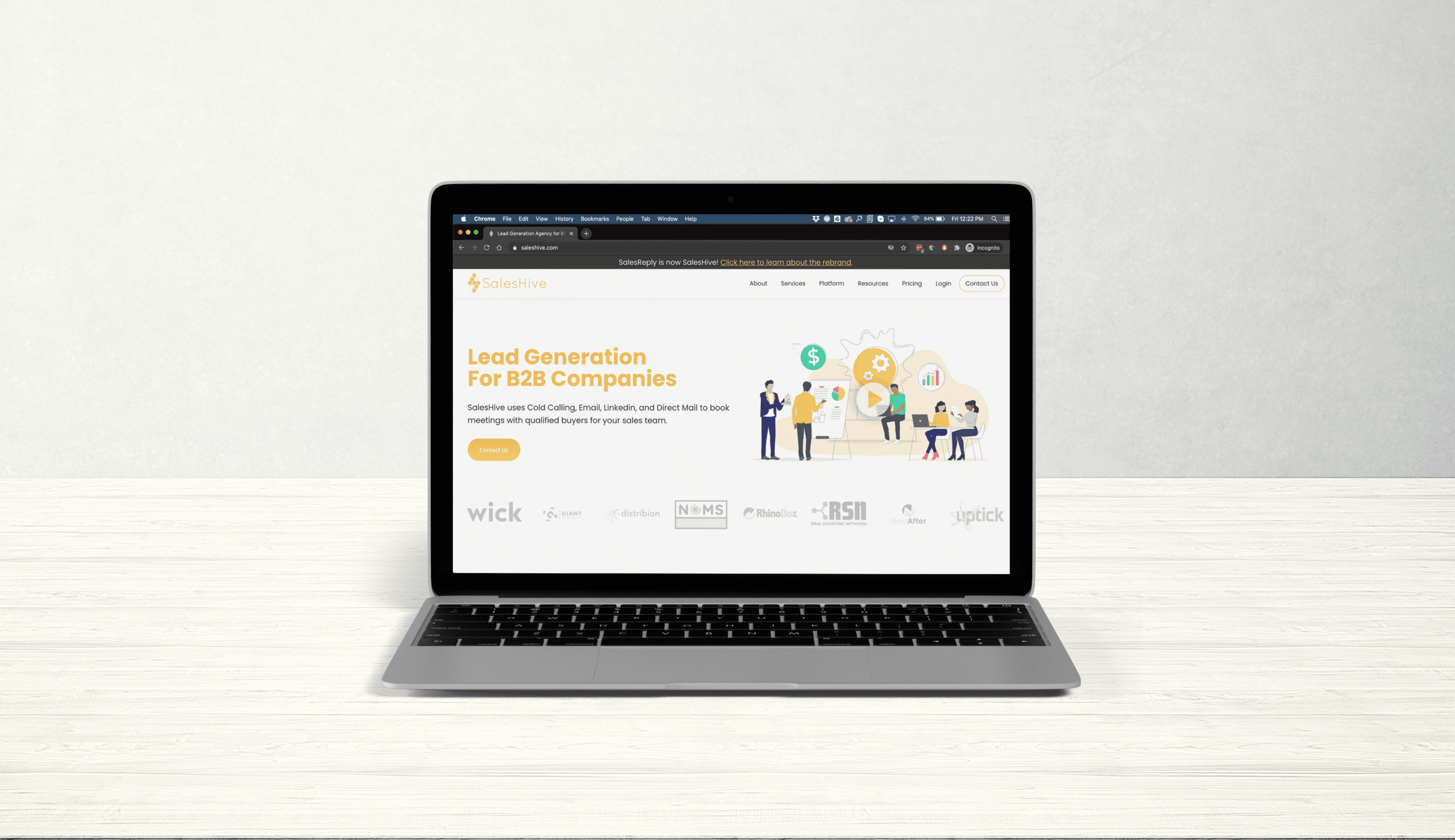
Copy the narrowing, then the dialing
The useful playbook starts before automation: choose a buyer, name the problem, gather evidence and make a test small enough to learn from. Review what prospects actually say. Change the list or message when those conversations expose a mismatch. SalesHive builds a playbook during onboarding and reviews results weekly; those habits are available to an internal team, too.
The limits follow from the economics. If each sale produces little margin, a dedicated outbound program may consume the return. If the customer cannot describe a credible offer, personalization can repeat the confusion faster. If nobody follows up after meetings, extra introductions simply add unattended work. These are practical buying conditions, not reported failures of either featured campaign.
That places SalesHive beside outsourced SDR agencies and the familiar alternative of hiring internally. Its own software gives it control over delivery, while the managed service supplies the labor that a software subscription leaves to the buyer. The sensible comparison is the cost of operating the whole program, including supervision.
Today SalesHive is extending the platform into AI projects for sales, marketing and operations: prepare a call brief, review pipeline, repeat a task on a schedule. That broadens its software ambitions. The fleet case supplies a useful standard for judging them. Ask which work the machine removed, which conversation the person improved, and what happened after the meeting. The calendar is only the beginning.