Oleksii Kratko had a reasonable idea. People buying contact data might appreciate a cheaper way to begin. Snov.io already sold a $20 package of 1,000 enrichment credits. Add a $9 package with 150 credits, he thought, and customers who hesitated at the larger purchase would have somewhere to go. A smaller first step. A friendlier price. The sort of suggestion that gets approving nods around a meeting table.
Then the customers arrived and spoiled the theory. In the test he described publicly, 61% of purchases went to the new $9 option. The $20 package took the remaining 39%. Total purchases fell 11%, and the financial result was roughly 36% worse. Buyers had found the cheaper door. Too few additional buyers came through it.
Kratko’s explanation was plain: customers could already test the data for free. The extra paid rung on the ladder had solved a hesitation that many of them apparently did not have. He said the company was removing the smaller package. A founder had made a prediction, put money behind it, and published the awkward answer.
A smaller price. A smaller result.
That is an unusually revealing place to meet a chief executive. There is no ceremonial launch photograph, no sweeping declaration about the future of work. There is a price tag and a decision to take it down. Kratko’s public record becomes more interesting when read through these small reversals: what he thought people wanted, what they actually did, and what he changed afterward.
Before the sales pitch, the support queue
The Ukrainian entrepreneur founded Snov.io in 2017. His earlier work included customer care, managing a support team, and email marketing, with responsibility for getting messages delivered. Those jobs sit close to the complaints. A customer who cannot get a message into an inbox tends to have less interest in the elegance of the software that sent it.
The founding problem was equally unromantic. In the autumn of 2016, members of the future team were buying leads for a business where they worked on marketing and lead generation. The information was poor. Records could be irrelevant or out of date. They began researching how the data was collected and decided to build a service themselves. Development took roughly half a year.
There is a useful distinction here between wanting to start a company and wanting a particular irritation to stop. Kratko’s early business grew around the second impulse. A contact list had to be useful when somebody tried to use it. The details that make a presentation look dull - accuracy, freshness, delivery - were the details the buyer would eventually judge.
Snov.io released Email Finder in 2017 and acquired its first paying customer that May. It celebrates May 17 as its birthday. By 2018 it had added Drip Campaigns; Email Tracker followed in 2019. The sequence moved the business from locating an address toward helping customers act on it. Each addition reached farther into the workday of the person who had come looking for a contact.
The experiment that involved a token
Kratko’s early story also includes a more speculative answer to the same problem. In 2017, appearing publicly as Alexis Kratko, he discussed using crowdsourced data collection to improve lead information. The proposed marketplace would let a customer specify the contacts they needed and reward someone for finding them. Blockchain and the SNOV token were part of that design.
A year later came Snovian.Space, a networking platform where users could set a reward for being contacted. Its premise gave the person receiving the approach a price as well as a profile. A company release in 2018 reported that the SNOV offering had raised $2.1 million in 2017. Marketing chief Daria Shevchenko described a system in which users chose what information to share and what to charge.
That chapter complicates any tidy account of a founder proceeding in a straight line from email finder to sales software. Kratko was trying different arrangements for the exchange: who supplies information, who pays, and what makes participation worthwhile. The later $9 test belongs to a much smaller scale, but it asks another question about incentives. Change the terms and watch what people choose.
A conference badge and an unbooked apartment
Kratko has spent time on the conference circuit, including Collision and RISE. His advice for meeting investors is practical: arrive with evidence of users and sales, publish those figures where investors look, and arrange conversations ahead of time. The ambition is international; the preparation is administrative. Someone still has to put the meeting in the calendar.
In a conference survival guide, his contribution to the accommodation question was more entertaining: “Book apartments beforehand. OH BOY, I NEED TO DO IT NOW!” The capital letters do a fine job of puncturing the executive pose. He can explain preparation and still discover, mid-explanation, an item requiring his immediate attention.
His advice about pitching also starts with establishing a connection. That is an instructive detail for someone selling automation. At a booth, another human being can walk away. A feature list delivered at sufficient speed will not necessarily persuade them to stay. The transaction begins with a reason to talk, long before there is a reason to buy.
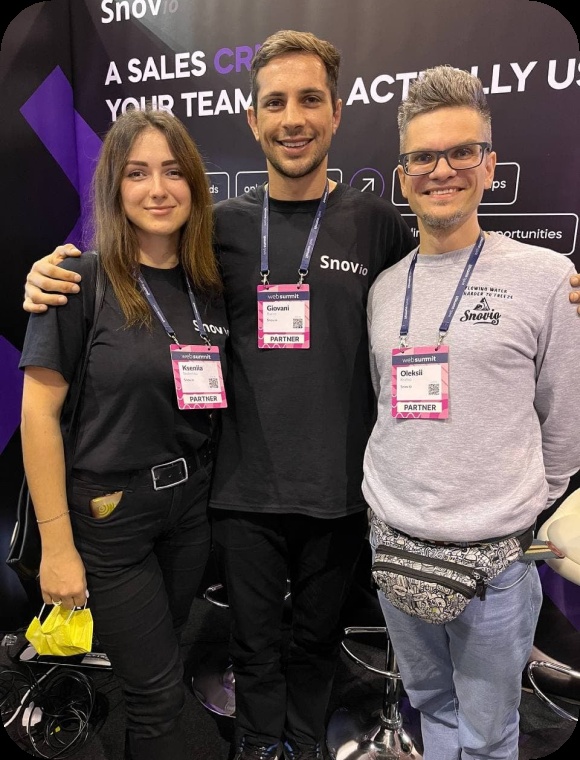
When discussing first customers, he recommends starting search-engine work early, participating in relevant online communities, and using cold outreach. Search rankings can take months to develop. Those recommendations ask a young founder to do several slow, ordinary jobs while waiting for the glamorous part to arrive. They also sound like the work his own business is built to support.
The numbers invite an argument
The price experiment is one example of Kratko making the business legible through numbers. In July 2026, he shared an analysis of subject-line length across 4.3 million emails sent by Snov.io users through Gmail SMTP. Subjects of five to ten words had a 1.82% reply rate. Subjects under five words had a lower bounce rate, but their reply rate was 1.45%.
The useful complication is that a result depends on what you count. A sender trying to reduce bounces and a sender trying to increase replies could look at the same table and prefer different rows. Subjects of ten to thirty words performed worse on both measures in the reported data. Even then, a pattern across customers does not establish what caused any individual recipient to answer.
Replies and bounces tell different stories
Readers pushed back in the comments. One raised list quality as a possible explanation; another pointed to differences between the customers using different sending platforms. These are sensible questions about observational data. They make the post more valuable as a conversation than as a commandment about the correct number of words in a subject line.
Kratko’s interest in that conversation also appears closer to home. In February 2026, he said a Ukrainian Telegram community for salespeople, founders and marketers had passed 200 members and then 300. He described discussions, shared experience and webinars about outreach. The appeal was a place to compare real attempts. A software founder can learn quite a lot from people describing where the software meets their day.
Making his own interface optional
The next experiment reaches into the product itself. In July 2026, Kratko announced that Snov.io’s MCP server was in production. An AI assistant could search for prospects, verify email addresses, manage lists, work with deals and pipeline stages, and handle tasks. His description came with a joke: “Your beautiful app is a database wearing a costume”.
It is a sharp observation from somebody who has spent years building the costume. If customers can reach the underlying work from an assistant, the familiar screens become one way in among several. At launch he also spelled out the unfinished parts: email campaigns were not yet available through the MCP server, and enrichment was not fully in production. The announcement described a working boundary rather than pretending the boundary had disappeared.
“Your beautiful app is a database wearing a costume”Oleksii Kratko, announcing Snov.io’s MCP server
His broader ambition is to automate more of the repetitive sales workflow. In a July 2025 interview, he argued for starting with useful tasks such as lead scoring, data enrichment and basic content generation. He advised founders to use existing AI services where possible and demonstrate a return before expanding their investment. The emphasis was on making the existing product more useful without making the customer’s routine harder.
He also reserved a substantial job for people: listening, negotiating, interpreting unusual situations and building trust. That division gives his automation project a practical limit. Removing a repetitive task can create room for a conversation; it does not decide whether the conversation is worth having. The person sending the message still owes the recipient a reason to care.
The calendar gets the last word
Away from launch announcements, Kratko has a small tradition involving numbers. On January 1, 2025, he ran 11.25 kilometres to echo the date, 1.1.2025. He described using long runs to listen to podcasts about SaaS development. Even leisure, apparently, can arrive with a numerical conceit and something about software queued up in the headphones.
Snov.io’s name has a local reference too: the company says Kratko named it after the Snov river. He coined its motto, “Flowing water is harder to freeze.” The line has a particular resonance alongside his willingness to change the route customers take through the business. A new channel, a discarded price option, an interface that can be bypassed: movement takes several forms.
It would be easy to turn the motto into a theory explaining every decision. The $9 package offers a more exact portrait. He expected one thing, measured another, and chose to remove it. The customer did not need the extra step. Kratko’s next job was to accept the answer. Somewhere between the investor meeting and the apartment booking, that remains work a founder has to do himself.