Sahas Katta had a modest request for the automobile: behave a little more like a computer. He had grown up in Silicon Valley tinkering with the software and entertainment systems in family cars. Engines could keep their mysteries. He was interested in getting audio formats to play and putting video on the screens. A vehicle already contained electronics; surely an outside programmer ought to be able to do something useful with them.
The trouble arrived when he tried to build a car application himself. The familiar machinery of software development was missing. In a 2020 interview, he described looking across manufacturers in America, Europe and Japan and finding that even a developer website could be absent. A programmer accustomed to building for phones or computers was facing an expensive object with remarkably little interest in making introductions.
Katta eventually built Smartcar with his brother, Sanketh. Its job was to give developers a consistent way to communicate with vehicles from different manufacturers. The idea sounds tidy when expressed that way. Its beginnings were considerably more playful: a technology blog, a pair of Google glasses, and the possibility that opening a car door could be a software demonstration.
Before the car, there was the blog
In 2004, while still a teenager, Katta began writing about technology. That work became Skatter Tech, a publication that eventually drew more than a million monthly page views. Other contributors joined him. Before there was a company offering tools to developers, there was a young editor trying products, publishing observations, and maintaining a place where other people could discover what technology could do.
His early work also included a hardware internship at TiVo in 2006 and a marketing internship at Six Apart in 2008. He attended the University of California, Davis, from 2007 to 2010, studying computer science and engineering, then left before completing his studies. Hardware, publishing and software all appear in this early record. A car would give those interests a rather large object to gather around.
The blog remained online as his attention moved elsewhere. In March 2025, he moved its accumulated content from WordPress to Ghost and said he planned to write or share occasionally again. An old website can be a surprisingly useful biographical object. Here was the same person, years later, still attending to the place where his experiments first acquired an audience.
Glasses first. The platform came later.
In 2013, Katta built GlassTesla, connecting Google Glass to a Tesla Model S. It put vehicle information and remote controls into the wearable display. The combination had a certain Silicon Valley specificity: two products that relatively few people possessed, now able to speak to each other. The experiment nevertheless made an ordinary question visible. Why should the software shipped with a car define everything an owner could do with it?
He used a family member’s Model S and reverse-engineered Tesla’s Android application. The available functions included checking charging status, controlling charging, locking doors and finding the car. The device on his face was unusual; the underlying desire was familiar to anyone who had forgotten where they parked. Even an adventurous computer interface occasionally ends up doing the work of a very good memory.
By March 3, 2014, Katta was announcing Smartcar on his blog. The initial proposition was specific: learn a driver’s habits to prepare the cabin temperature before a commute, and choose charging times using local electricity rates. He was starting a crowdfunding campaign, with Model S compatibility planned first and other vehicles to follow. Smartcar’s public beginnings therefore reach back to 2014, before the 2015 founding date used in later company histories.
That early announcement is revealing because it starts with daily routines. There is a departure time. There is a power bill. There is a car sitting outside that could be doing a little more of the thinking. Years before Smartcar’s acquisition by an energy company, Katta was already thinking about the relationship between a vehicle, a household and the price of electricity.
- 2004Technology writing
- 2013GlassTesla
- 2014Smartcar launch post
Two brothers and a parking-lot pitch
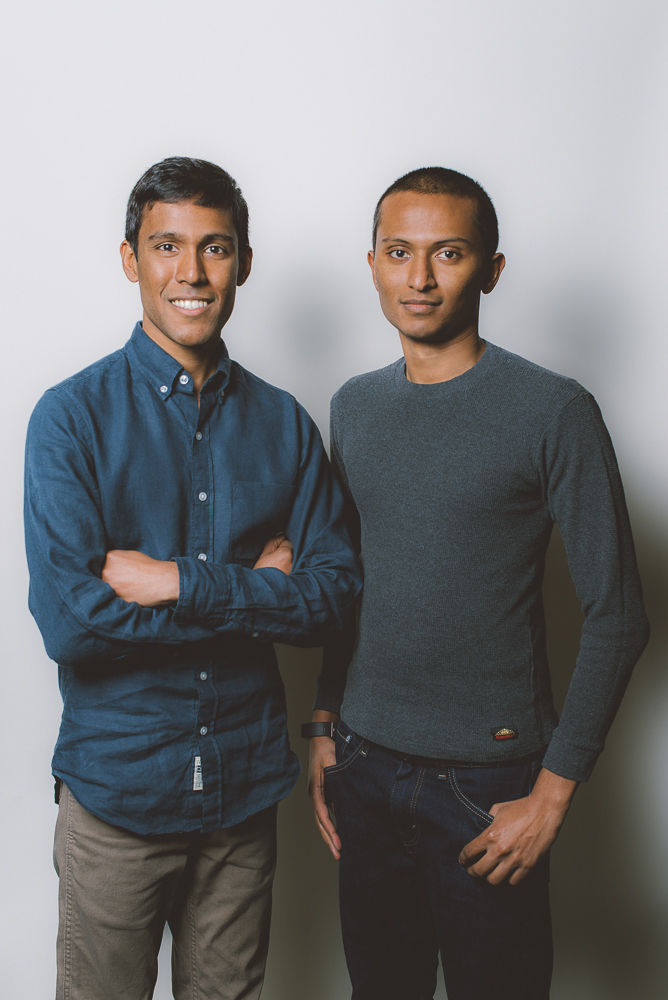
Sanketh did not immediately abandon his job at LinkedIn to join the project. Sahas recalled spending months persuading him, while Sanketh helped prototype during evenings and weekends. Their eventual investor demonstration involved bringing cars to the parking lot at Andreessen Horowitz, then using commands on a computer to retrieve information and unlock doors. The firm invested $2 million. An automobile made a useful prop: nobody had to imagine what the software might eventually touch.
There is persistence in that account, though the brotherly hesitation deserves equal billing. A promising idea can look rather different to the person being asked to resign. Their partnership grew through actual work on a prototype before it became a shared full-time commitment. In that sequence, conviction had to survive contact with another engineer’s judgment.
Katta retained a taste for approachable demonstrations. In 2017, Teslabot let Tesla owners communicate with their cars through Facebook Messenger, including unlocking doors, checking charging and venting the sunroof. The chatbot was named Elon. Some founders spend a fortune explaining their relationship to an industry. Katta managed a serviceable introduction with a first name.
Bring a real car to the hackathon
The larger opportunity lay in helping other people build. Smartcar took vehicles to university hackathons, letting students test applications on a car parked outside the building. Katta described gatherings where around a thousand participants might spend 48 hours creating software. A real Tesla supplied a compelling answer to the question of whether their code did anything.
He wanted the platform in the hands of students, including someone developing an idea in a dorm room. His ambition for mobility included more accessible and affordable transportation, enabled by new services for sharing, renting and insuring cars. That gives his developer focus a practical purpose. The person writing the code might discover a useful service that a vehicle manufacturer had never made a priority.
By 2020, his conversations with the insurance industry were about such unglamorous details as mileage, vehicle identification numbers and where a car was kept. Smartcar offered insurers a way to address those questions through an API without installing additional hardware. These are the administrative details that accompany ownership. They also affect whether a software product can be useful after the novelty of its first demonstration wears off.
“Smartcar is the API for your car.”
Sahas Katta · Vehicle 2.0, 2019
The freedom to choose an app
In January 2022, Katta announced a $24 million Series B led by Energize Ventures, with participation from Andreessen Horowitz and New Enterprise Associates. Smartcar then reported compatibility with 22 vehicle brands in 31 countries. Its platform could potentially connect to more than 112 million compatible cars. Those were compatibility figures, rather than a count of vehicles actively connected to the service.
His explanation of the business centered on fragmentation: internet-connected vehicles existed, but their interfaces differed from one manufacturer to another. Smartcar would standardize that access so an application developer could spend more time on the service itself. Charging, insurance, car sharing and road usage programs were among the uses. The product’s usefulness depended on making a repeated technical problem less demanding for each new customer.
The work also took him into public administration. In March 2022, he presented to a North Carolina transportation committee on road usage charging, explaining embedded telematics and demonstrating vehicle registration through Smartcar. It is a pleasing distance from a chatbot named Elon to a committee discussing how roads get funded. Both appearances belong to the same career, and both depend on getting software to communicate with a physical vehicle.
By February 2025, Katta was writing about a different kind of difficulty: drivers could have connectivity available and still see little reason to use it. He discussed a survey of more than 1,000 drivers in the United States and Europe. Some did not know what their manufacturers offered. Others wanted capabilities that justified paying. “Trust is a work in progress,” he wrote.
His argument was for clear benefits and understandable permission. Drivers should be able to decide what information they share and withdraw that consent. He wanted people to choose services according to their own needs. For a founder who began by making an unexpected app work with a car, this was a larger version of the original question: how much say should the owner have in what happens next?
The car comes home
On October 7, 2026, Energize Capital announced that Smartcar had been acquired by Everyday Electric, formerly Renew Home. Its account put Smartcar’s reach at more than 27,000 application developers, over 45 compatible brands and 33 countries. The buyer’s virtual power plant business was expanding beyond thermostats and home heating and cooling systems to include electric vehicles.
The connection brings the story back to electricity. A car can be transportation and also a substantial household electricity demand. Coordinating when it charges belongs in the same conversation as coordinating other devices in a home. The acquisition gives Katta’s vehicle integration work a place in that broader system. The figures describe the platform’s reach at that moment; the outcome of the combined business remains ahead of it.
Along the way, Katta has also returned to the experience of explaining a young company. In October 2024, he joined Shivani Mitra and Kedar Karkare for an Indiaspora discussion moderated by MR Rangaswami. The conversation covered entrepreneurial beginnings, parental support, fundraising, role models and finding product-market fit. The program placed him among founders comparing the practical work behind their different businesses.
His own path has an unusually consistent starting point. A teenager wanted to understand the gadget. A developer wanted to make an app. A founder wanted other developers to have an easier time doing the same. The objects grew larger, and the number of people involved increased. The request remained disarmingly ordinary: there is something useful this machine could do. Let me try.