Consider the airline passenger who buys a ticket, changes a flight and expects the right miles to appear. To the passenger, this is one relationship. Inside the airline, it can be a conversation among reservations, ticketing, loyalty and marketing systems. The interesting question is who makes sure each participant understands what the others just said. Rythmos built a consulting business around that sort of question.
- The work: connect enterprise data, modernize cloud systems and implement customer loyalty technology.
- The specialty: airline operations and the customer information moving through them.
- The deal: Coforge acquired the company in 2025, paying $30 million upfront with further payments linked to performance.
The passenger has one identity. The software has several.
Rythmos’s airline offering gives this abstract problem a name: Airline Customer Data Exchange, or ACDX. It described an architecture and reusable components that let engineers connect separate data sources through smaller services. Shared event streams carry news of a change to the systems that need it. The ambition is straightforward: make customer information useful while the customer is still doing something.
There is a revealing detail in the design. Rythmos acknowledged the difficulty of imposing one universal data model on an entire airline. Its proposed answer used domain-driven design: give different business areas clear boundaries, then map the relationships between them. A reservation and a loyalty account can belong to the same person without becoming the same kind of record. That distinction is where a surprising amount of engineering lives.
A companion service, the Airline CX Data Warehouse, brought customer activities together for reporting, segmentation and targeting. Reservations, operations and loyalty become inputs to a more complete customer view. Connections to marketing suites make that view actionable. The two offerings reveal Rythmos’s position in the market: the consultancy working between the enterprise’s existing products, its data and its next business decision.
Start with the handoff that hurts.
The company’s historical project accounts make the work tangible. For Southwest’s reservation-system change, Rythmos described building integration services, translating reservation messages and moving information into downstream systems. A change in the booking platform had consequences for customer-facing applications, loyalty and reporting. The visible reservation screen was only one part of the assignment.
Another case concerned Ampersand’s Fiesta Rewards program. Rythmos’s account, describing work by Loyalty Methods, reported batch processing reduced from eight hours to one. It also described removing integration steps that caused redemption-booking timeouts. Here the failure was quite specific: a customer action crossed too many technical handoffs. The repair involved examining the path and simplifying it.
These are historical supplier accounts. Their practical lesson is still useful: define the broken interaction before buying its replacement. For a rewards program, that might mean tracing a redemption from request to response. For an airline, it might mean following a reservation change into the customer record. Both exercises produce a better brief than asking vaguely for digital transformation.
“We measure progress based on results and delivery”
Rythmos’s published company values
The company’s own account of its beginnings names Starbucks, Southwest Airlines and Alaska Airlines among the brands that entrusted it with complex projects. Its stated values included candor, teamwork and personal ownership. Those are sensible ambitions for consultants whose output has to survive contact with other people’s systems.
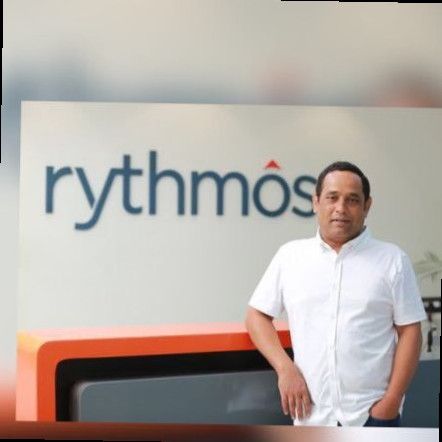
Then the specialist became the acquisition.
Coforge announced its agreement to buy Rythmos in March 2025 and disclosed completion on April 4. The stated rationale paired stronger data and cloud engineering capabilities with airline industry knowledge. That pairing matters. A buyer can hire engineers; acquiring a team also buys an accumulated understanding of where a particular industry’s systems become difficult.
Rythmos’s disclosed revenue was $22.6 million in 2022, $24.4 million in 2023 and $25.3 million in 2024. That is steady growth, about 12% across two years. The strategic appeal appears to lie in the fit of the capability as well as its size. Airline knowledge was explicit in Coforge’s explanation.
The terms were $30 million upfront, subject to adjustments, plus as much as $18.7 million in earnouts. Those later payments depended on revenue and EBITDA targets for 2025 and 2026. The maximum announced consideration was therefore $48.7 million. Calling this funding would obscure the transaction: Coforge was buying shareholders’ stock.
Buy the engineering, then plan for the operating day.
For a prospective customer, Rythmos’s broader service menu covered data and cloud engineering, application support, user experience, quality assurance and DevOps. Its marketing work included Salesforce implementation, Adobe Experience Cloud setup and ReactorCX integration. ReactorCX is a Loyalty Methods platform; Rythmos advertised expertise in implementing and supporting it. Knowing which company supplies the software and which supplies the engineering helps a buyer assign responsibility.
The commercial model is consulting and delivery work for enterprises, with ongoing support alongside implementation. Its archived airline practice offered a free assessment of fit and projected cost. The sensible buying sequence follows from that: establish the systems involved, identify the required change, agree the evidence for success and then scope the engagement.
Its enterprise AI offering followed a similarly broad path, from readiness assessments and use-case selection to custom models, deployment and monitoring. The interesting buying question is where a model’s output enters an existing workflow, who acts on it and how a mistake is caught. Those questions connect AI work to the integration and testing disciplines already in the portfolio.
This approach suits organizations with meaningful system complexity and the staff to govern a sustained implementation. A small business seeking a simple rewards widget has a different purchasing problem. So does an enterprise that cannot agree who owns its customer data. Better plumbing can carry information more reliably; deciding what that information should mean remains a management job.
Rythmos’s story offers a useful place to begin: follow one customer action across the organization. Count the translations. Find the delay. Ask who owns the repair. The humble connection may turn out to be the most valuable thing on the diagram.