Thirty appointments. Thirty days. His own name on the line.
In March 2024, Ryan Young gave himself an assignment with very little room for elegant excuses: book 30 listing appointments in 30 days, using contacts already in his database. He announced it on Instagram. For a software founder who also owned a real estate team, it was an unusually direct way to invite scrutiny. A demonstration has consequences when the demonstrator must pick up the telephone.
He had been away from daily production for several years. Coaching people to make calls and making the calls yourself are neighbouring occupations with a surprisingly long commute between them. Young wanted to show his team what was possible. He also wanted to know whether he could still do it. His own account of the exercise includes the cheerful admission, “I love a good challenge!”
He reached the 30-appointment target. The useful part of that result is its specificity. Appointments are a step towards a sale, rather than completed transactions, and his experiment tested an existing pool of contacts. Young had put a number and a deadline around the proposition that would become his recurring subject: perhaps the next opportunity was already on the books.
Appointments, rather than completed home sales.
The kitchen came first
Real estate ran in the family, but Young initially chose a different kind of service. He graduated from the Culinary Institute of America with an associate’s degree in culinary arts and worked in New York, Chicago and Las Vegas. He was living in Las Vegas when he called his parents about coming home. In 2009, he moved back to Cleveland, got his real estate licence and joined them.
He credits his restaurant training with the discipline he brought to the new profession. The hours had been long; preparation and exacting expectations were familiar. The family connection opened a door, while the kitchen had already supplied a working rhythm. His account of changing careers is practical, with financial opportunity and the realities of restaurant schedules both in view. Even a person who loves cooking may wish to see a weekend.
By 2012, Young was leading The Young Team. The work retained a hospitality element: helping people through a consequential decision, with service that they would remember afterwards. His interests away from the office still include cooking, along with travel, skiing and Cleveland sports. The apron survived the career change, even if it ceased to be the uniform.
A family business with a preference for density
Young is a third-generation real estate professional. That history matters because Fello grew out of an operating business, with customers to serve and agents to support. He continued building The Young Team while developing the software company. Each could expose the other’s weak spots. An idea that sounded persuasive in a product discussion still had to function for people selling houses in Northeast Ohio.
In August 2024, he described a team of 15 active agents selling about 500 homes annually, with roughly 65 percent of its business on the listing side. He preferred a concentrated group of productive agents to simply accumulating headcount. He said a typical agent on the team sold around 30 to 40 homes a year. These were his figures for that period, and they explain the sort of business he wanted to build.
There is an operational question inside that preference. When each agent is busy, what happens to the people who have expressed interest but are not ready today? They still own homes, make plans and eventually choose someone to help them. A successful week can conceal a neglected relationship rather efficiently.
The customer who was already in the database
Young’s complaint about real estate databases is wonderfully mundane: the information inside them often fails to keep up with the people it describes. A buyer enquiry remains labelled as a buyer enquiry, even when that person also owns a house. The record sits still while the customer moves on. Anyone who has received a deeply irrelevant marketing email will recognise the social consequences of this arrangement.
Fello’s approach adds property and ownership information to contact records, then uses it to shape outreach. Young has described finding home addresses during his team’s background checks and realising that those addresses were never being entered into the customer database. The information existed; the workflow had simply left it outside the room.
His ambition reaches beyond locating another name to call. He wants the record to become useful enough that the conversation fits the person. The technology does preparatory work that an attentive professional would like to have done already. Hospitality, in this version, begins before anyone answers the phone.
A change of business, with the agent still in the picture
Fello’s earlier business was FlashHouse, a home-buying operation. Its June 2022 rebrand put a familiar local agent into an experience that also offered the convenience of a cash offer. Young built the venture with Tom Schrader and Stephen London. The underlying concern was the homeowner’s choice: a person might want speed, a traditional listing, or help understanding the difference.
Later that month, Fello announced $25 million in combined debt and equity financing. Javelin Venture Partners led the equity funding, with participation from OpCity founder Ben Rubenstein. The distinction between debt and equity deserves to survive the headline. It describes company financing, rather than Young’s personal fortune.
The subsequent subscription software business carried his agent-focused thinking into a different model. Young dates the move to that model to October 2022. By 2025, Fello appeared at number 23 on the Inc. 5000, after a number 2,536 listing in 2023. The business had changed substantially. Young’s reason for caring about an agent’s daily work was already close at hand.
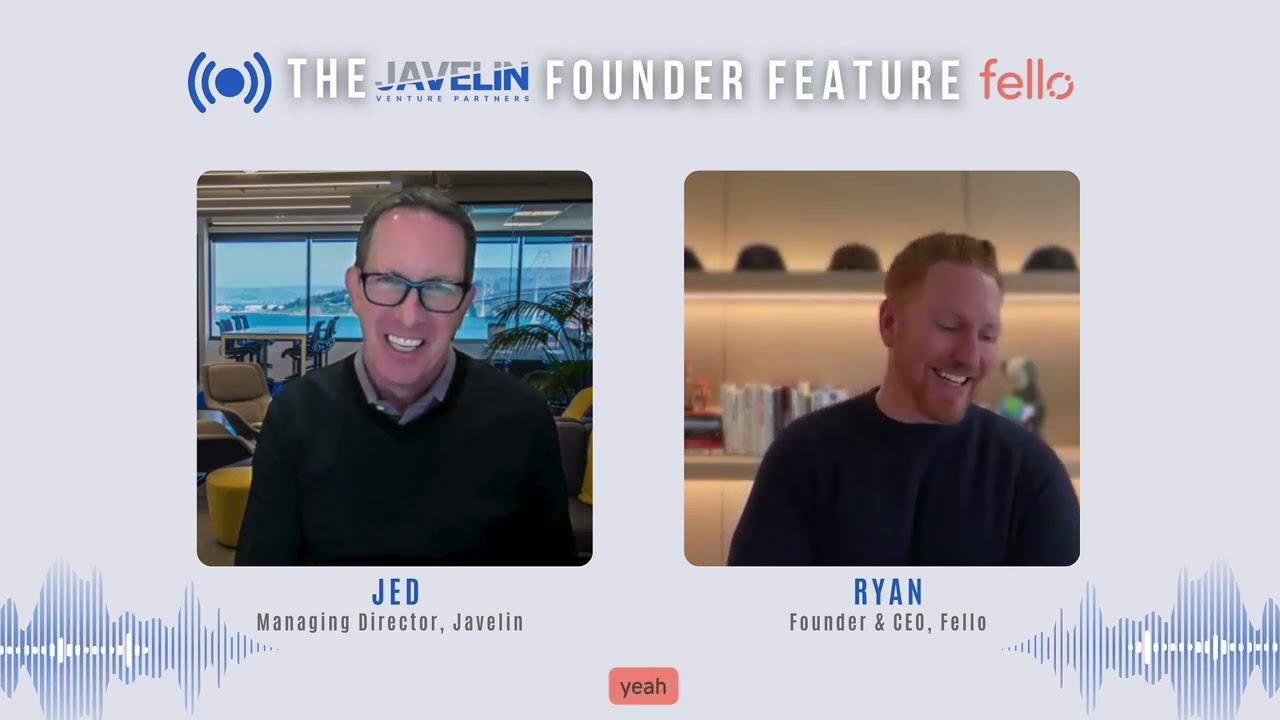
The founder brings a telephone to the demonstration
The appointment challenge gave Young a way to teach without floating above the work. Its early pilot involved about 500 participants. By February 2025, he reported 5,000 people signed up for the next version, with industry leaders contributing daily webinars. A personal experiment had acquired a community and a programme.
His teaching also gets quite granular. A user webinar on follow-up promised to show how The Young Team prioritised outreach using engagement and homeowner information, then address scripts and objections. In advice to solo agents, the emphasis returned to building and maintaining their own contact database. The audience could be a team of one; the practice still mattered.
For 2026, the challenge programme advertised more than 20 webinars, $100,000 in prizes and over 2,000 enrolled teams. Its published schedule ran from March 6 to April 2. Those are team enrolments, a different measure from the participant count Young discussed the previous year. The appeal remained recognisable: take a familiar task, give it a deadline, and make the effort visible.
Now the software makes the call
By May 2026, Young was addressing the next snag. Fello could create engagement, yet a prospect could still choose a competitor if no agent followed up. His team encountered the same problem that its customers reported. An unopened opportunity is a rather expensive form of stationery.
The company’s answer was Felix, an AI product that calls, texts and emails prospects and passes qualified conversations to human agents. At that stage it was in beta with about 20 teams. Young described The Young Team as a place to test and improve it. He reported approximately 60 listing appointments during a 90-day beta period. Those are founder-reported results from his team, rather than a promise of what every customer will achieve.
The handoff is central to the idea: software handles preliminary contact and keeps a prospect engaged while a human agent is brought into the conversation. Young’s ambition is to make follow-up more consistent while allowing agents to spend more of their time selling homes. His role as a customer gives that ambition a daily examination. Someone on his own team still has to take the next call.
- 01Know the contactKeep property information useful.
- 02Start a conversationReach out and qualify interest.
- 03Bring in the agentHand over a live opportunity.
Practise enough to stop sounding practised
For all the software, Young’s advice about conversation is disarmingly human. He encourages repetition and consistent practice. He also warns that a larger team is no automatic route to a better business: individual agents with organic referrals and limited lead expenses can be more profitable. Scale comes with operating responsibilities. A bigger organisation can furnish a person with a more elaborate collection of problems.
His cash-offer guidance starts with understanding the seller’s priorities. Speed and convenience may matter most to one homeowner; another may care more about the eventual proceeds. The offer is one possible route through the decision. Questions about where someone might move and why help an agent understand what would actually serve them.
In July 2026, Young described learning scripts thoroughly enough to remain present in the conversation. He talked about taking prospect calls leaning back at his desk, headphones on, enjoying the exchange. A homeowner curious about value should have room to be curious without being pressed into an immediate sale. It is an approach that allows a future client to have a future.
Asked about moving between industries, Young pointed to recognising his weaknesses as a strength. He connected that outlook to team sports and working in kitchens. That admission suits the story better than a lone-founder pose. His parents, his agents and his co-founders all belong in it. He has built around the work he knows, handed other work to people with different strengths, and kept returning to the customer’s experience. The next move may begin with software. It still needs a welcome.
“My biggest strength is knowing and accepting my weaknesses.”
Ryan Young