The first three years of PropertyPistol were difficult, Ashish Narain Agarwal has recalled. The particular difficulty he named was cash flow. Before there were investment announcements to discuss, there was the less photogenic business of keeping money moving through the company. Even in real estate, a promising pipeline cannot pay a bill until the money reaches the bank.
That recollection is a useful place to meet him. Agarwal runs a business concerned with the journey between wanting a property and completing a transaction. His own entrepreneurial journey began with a similar gap: the distance between wanting to own a company and knowing how to keep one going.
PropertyPistol, which he founded in 2012, puts buyers, builders and brokers into a shared operating system. The broker remains a participant. There are listings and software, but there are also people doing the follow-up. Agarwal’s bet gives the familiar neighbourhood intermediary a place in the digital future of property.
The bills arrived before the investors
In his account of the early years, the work became easier as he developed contacts with developers and buyers. Relationships accumulated slowly. The business matured. Expansion followed. That sequence is less tidy than a founder discovering an idea and immediately finding a market, which makes it more interesting.
Consider what a property advisory business has to arrange. An interested buyer, a suitable property and a willing seller must arrive at the same decision. Along the way, there are questions to answer and documents to handle. A company may be busy well before it is paid. Activity and available cash are different entries in the ledger.
Agarwal’s recollection gives those early years some texture without requiring a legend of overnight success. His first ambition was quite straightforward: he wanted to own a business. The route to it involved learning from other organisations, then developing the connections his own company would need.
“However, I always knew I wanted to own a business.”
Ashish Narain Agarwal
An engineer learns the property business
Agarwal spent his school years in Mathura. IIT Kanpur was an institution he had wanted to attend, and he went there to study mechanical engineering. He then worked at IBM for nearly three years. His education and first employer gave his career a technical beginning; property advisory would become its eventual subject.
He has said that he did not come from an entrepreneurial background. To gain experience, he worked closely with a startup. He subsequently joined PropTiger as a founding-team member and vice president, before setting out to establish PropertyPistol. The sequence places a period of practical apprenticeship between the desire to build and the act of building.
There is a temptation to treat a founder’s previous jobs as a preamble, useful chiefly for decorating the biography. Here they help explain the route. Agarwal encountered property services through operating work before creating his own firm. By the time he founded it, real estate was a business he had worked inside.
The change from engineering to property also gives the story a welcome lack of inevitability. A university degree does not reserve the rest of a person’s working life. Agarwal’s route crossed disciplines and employers before settling on the transaction that would occupy his company: helping someone buy a property.
Three people walk into a property deal
The central cast of Agarwal’s business has three parts: the buyer, the builder and the broker. Each has a different job. Each also needs information from the others. The buyer wants clarity about a purchase. The builder needs a route to customers. The broker needs access to inventory and a way to carry a deal through.
Agarwal has described bringing these participants together as a core ambition. It is an operating problem with a human face. A buyer can have plenty of options and still lack useful guidance. A broker can know a neighbourhood closely and still need support for a transaction outside it.
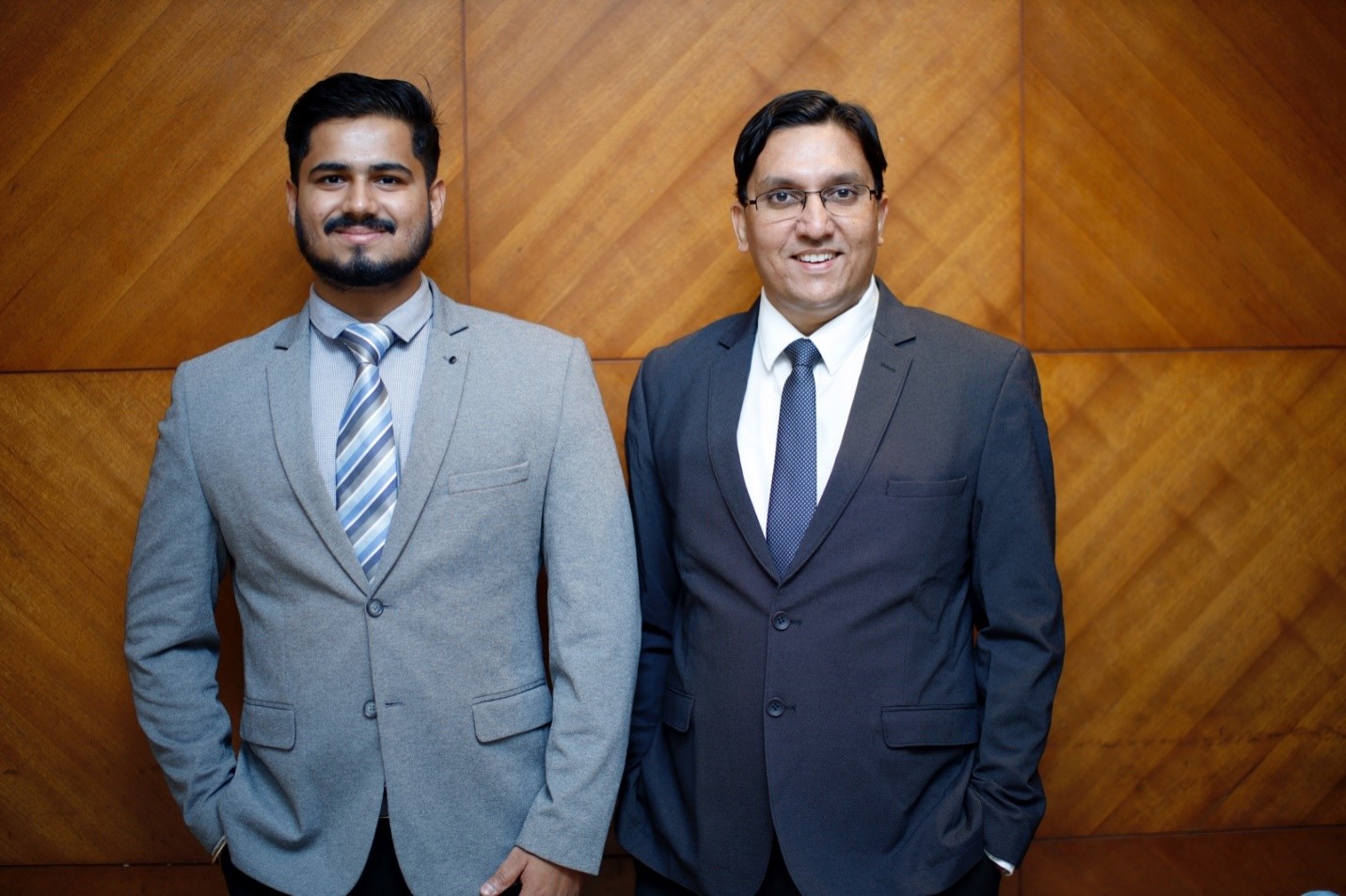
Tushar Shrivastava, an IIT Bombay alumnus, later joined PropertyPistol as co-founder and chief technology officer. The two founders appear together in the company’s public story. Agarwal supplies the business direction; Shrivastava’s role places technology development beside it. Their partnership helps explain why the company’s products address several participants in the same transaction.
Syndicate is the broker-facing platform. Radiate addresses the developer side. The business also offers property advisory and home-loan support. The names describe separate entrances into a process that ultimately has to reach the same destination: a completed transaction.
There is something pleasingly ordinary about that destination. Startup language can make almost any activity sound weightless. Property brings the conversation back to particulars. Someone wants to know which apartment is available. Someone else wants to know what happens next. Software earns its place by helping with those questions.
A wider neighbourhood
By December 2023, Agarwal said more than 20,000 brokers were registered on Syndicate. He described a workflow in which a broker adds a lead and PropertyPistol’s professionals assist with follow-ups, documents and the brokerage payout. He also reported transactions reaching beyond a broker’s own locality.
The significance lies in the division of work. The local broker contributes a relationship. The platform contributes access and support. For someone whose business has been bounded by a particular area, a wider network offers the possibility of serving a client whose next property lies elsewhere.
This gives Agarwal’s approach a distinct character. The intermediary has a continuing job, and the company builds tools around that job. A platform can make room for existing expertise. The useful question is how to organise it so that a customer benefits from the connection.
A schematic of Agarwal’s stated model, not a measure of market share.
Coordination deserves more credit than it usually receives. A transaction contains handoffs, and a handoff is an opportunity for a question to go unanswered. The broker-inclusive model is worth examining at that level: who carries the next task, and can everyone see where the process stands?
That is where a founder’s ambition becomes testable. A large network sounds impressive in an announcement. Its practical value depends on the smaller experience of one participant trying to complete one piece of work. The property business supplies plenty of such examinations.
The screen still needs a room
Personal advice remains part of Agarwal’s approach. In 2023, he described seven Experience Centres across Mumbai, Navi Mumbai and Thane. They extended the company’s online services into places where customers could meet consultants. He also spoke about broker training and meetings in which he heard partners’ difficulties directly.
These choices make the business more tangible. A screen can present options; a conversation can explore why one option might suit a person’s circumstances. For a purchase with many moving parts, being able to ask another question has a value of its own.
A July 2024 company announcement described dedicated human support alongside digital property searches and virtual tours. Local knowledge, consultations and transaction management all had a place in that description. Agarwal’s stated ambition was to combine technological convenience with personal guidance.
It is a useful standard to set for a product. The interface has to help the people using it, and the service has to continue when the interface has finished displaying its results. A property photograph is an invitation to investigate. It cannot attend the rest of the appointment for you.
The Gulf was already on his map
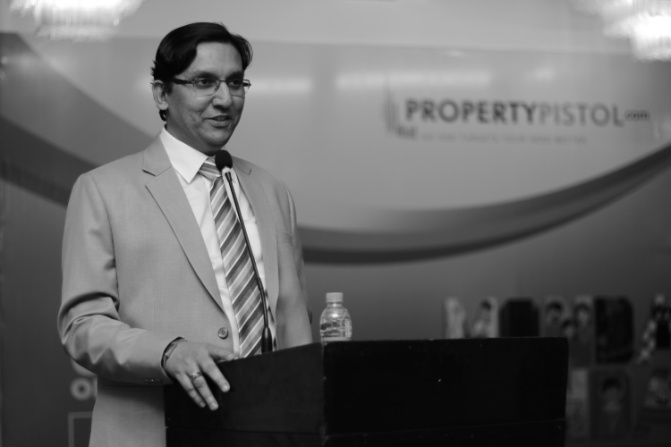
Agarwal’s interest in international property is visible in his own writing. In November 2022, he published a column on luxury real estate in India and Gulf Cooperation Council markets. He discussed Indian buyers’ interest in Dubai and the attractions that overseas property markets held for them.
The column places the Gulf within his public thinking several years before the January 2026 funding announcement. It also shows another part of his working life: interpreting the market for an audience, alongside running a business inside it.
International reach adds questions to a property transaction. A buyer must understand a place that may be unfamiliar. An adviser must make the steps legible across distance. The appeal of a wider market comes with a demand for clearer coordination.
Agarwal’s career makes that development worth following. The founder who has organised a business around connections now has to consider how those connections work farther away. Geography expands the opportunity and the assignment at the same time.
More places, the same promise
PropertyPistol raised ₹45 crore in Series A funding in May 2023 from ICICI Bank and Baring Private Equity Partners India. Product development, hiring and geographic expansion were among the stated uses. In January 2026, another ₹25 crore arrived in a pre-Series B round led by investor Ashish Kacholia, with existing investors participating.
ICICI Bank and Baring Private Equity Partners India
Led by Ashish Kacholia; existing investors participated
The newer round identified Dubai and Delhi-NCR as priorities, alongside the distribution network and technology. Those are plans for the next stage. Funding gives the company resources to pursue them; the work of making the service operate in more places remains an ongoing assignment.
Agarwal’s public advice to aspiring leaders has emphasised persistence, flexibility and remembering their roots. When discussing leadership and technology, he put the responsibility plainly: “A leader’s main duty is to strike the proper balance.” He connected that responsibility with developing people as well as growing the business.
It is an apt place to leave his story for now. His career joins an engineering education to operating experience, relationships to software, and neighbourhood knowledge to a broader network. The company’s next map may be larger. The individual transaction still needs someone to follow it through.
For a founder working in property, that is a concrete ambition. A good deal is eventually measured at close quarters: the questions answered, the paperwork completed, the buyer ready to proceed. Agarwal has built his business around keeping people in that picture. The next chapter will ask how far that arrangement can travel.