At eleven, Ryan Westwood found a promising use for a school day: commerce. He collected baseball and basketball cards, persuaded the owner of Russ Coin in Provo to let him rent a kiosk, and arranged his stock with cases and price tags. Then he left school to attend to business. His father located him four hours later and sent him back.
The takings were about ten dollars. The feeling was considerably larger. Westwood later framed the school report in which he had explained why he wanted to become an entrepreneur. There is something pleasing about a founder whose original business plan was homework, even if his first operating decision involved abandoning the classroom.
Today he leads Fullcast, a company selling software for the less glamorous machinery of revenue: territories, quotas, forecasts and commissions. Before that came Simplus, the Salesforce consulting business he co-founded and led through its acquisition by Infosys. The sums have changed. His tendency to gather people around an enterprise has proved rather durable.
A company with a practical occupation
Westwood attended Utah Valley University and founded the technology-support business PcCareSupport before Simplus. By September 2014, he had exited that earlier company and was chairing the Utah Venture Entrepreneur Forum. His new venture was then called Outbox Systems. The name Simplus followed in 2015.
Its occupation was useful rather than romantic. Businesses buy sophisticated software, then discover that making it work with their existing processes requires people who understand both. Simplus supplied advisory work, implementation, change management and managed services around Salesforce. Its particular expertise included the journey from preparing a price quote to collecting payment.
That unglamorous stretch contains contracts, configuration, billing and ample opportunity for confusion. Helping a customer get through it is a business proposition with the advantage of being comprehensible. The customer wants the machinery to run; somebody must know where the loose parts belong.
Infosys completed its purchase on March 13, 2020. The acquisition brought Salesforce consulting expertise and a client base into a much larger services organization. Simplus had already completed more than 4,500 projects, according to the announcement issued when the deal closed.
Infosys’s disclosed package included $180 million in cash, up to $20 million in contingent consideration, and up to $50 million in employee performance and retention payouts over three years.
The distinction matters. An acquisition headline compresses a negotiated agreement into a handsome number. The underlying terms describe the work still expected after the congratulations. In this case, employee retention and performance were explicitly part of the arrangement. Selling the company and continuing to build it belonged to the same transaction.
The colleagues who kept coming back
Rapid expansion can produce an impressive map and a thoroughly confused workforce. Simplus grew across four continents and made seven acquisitions in three years. Each acquired business brought people with their own habits, loyalties and expectations. A shared logo could be ordered rather more quickly than a shared way of working.
Westwood put culture at the center of his public explanation of the business. Invited to discuss scaling at a Utah economic summit in 2021, he concentrated on inclusion: whether people believed their ideas mattered and whether they felt valued. It was a revealing choice of subject for an occasion that could easily have become a procession of revenue slides.
His argument was practical. Bringing people together, agreeing on a direction and carrying it out were connected activities. If employees disliked the environment, the rest became harder. The office atmosphere was part of the operating model, with consequences beyond the office.
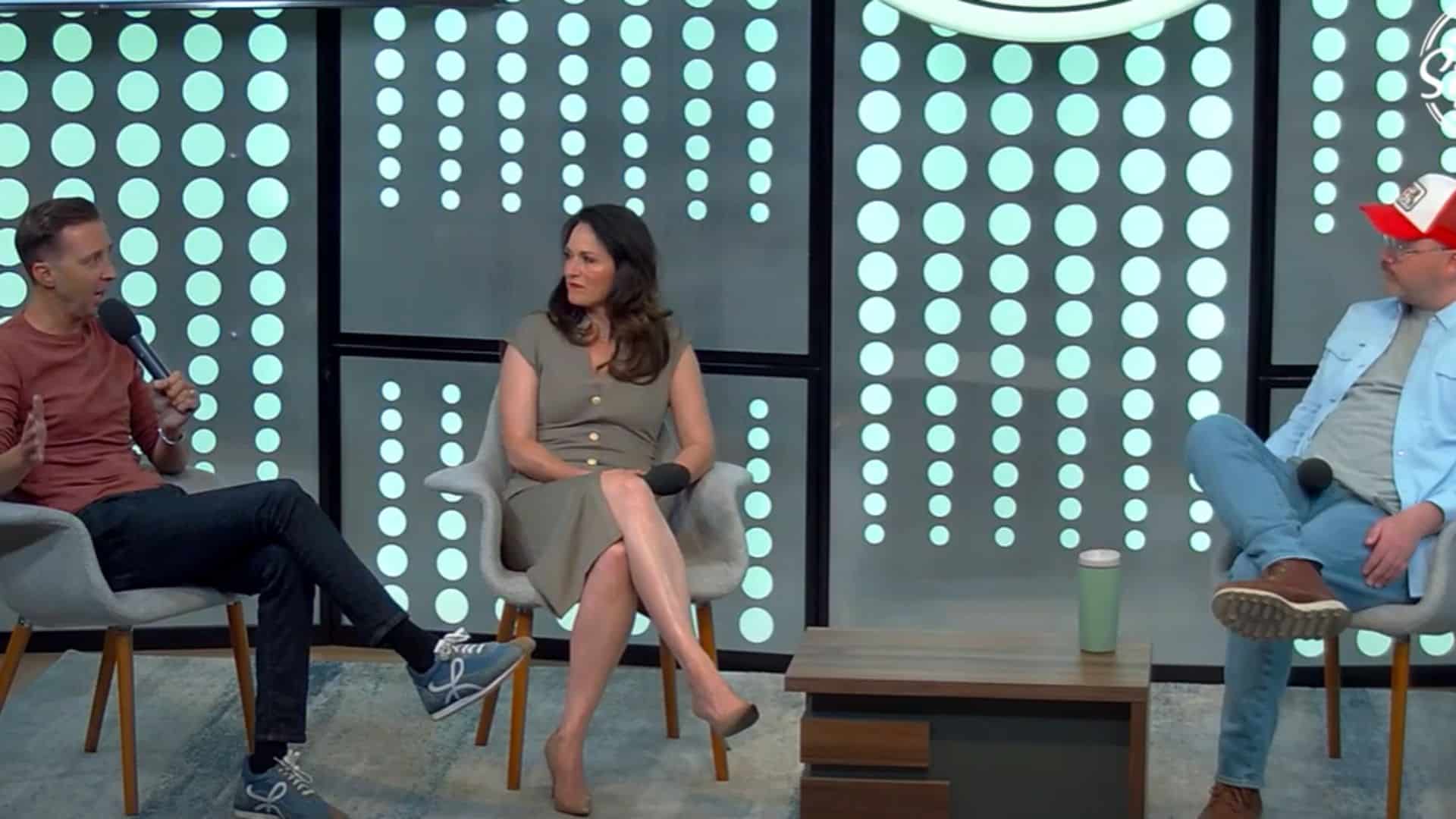
The personnel list for his next venture gives this philosophy some substance. His brother Isaac Westwood, marketer Amy Osmond Cook and commercial leader Lance Evanson joined him at Fullcast after working with him at Simplus. There is a considerable difference between praising teamwork at a conference and persuading colleagues to sign up for another company.
Cook’s association with him reaches back more than a decade. In their 2025 Silicon Slopes conversation, she recalled deciding in 2012 that he would be her business mentor. Their subsequent partnership survived the point at which a mentee becomes a colleague with opinions of her own. A useful team can disagree without applying for a divorce.
The return came with a cheque
Fullcast existed before Westwood’s team acquired it. Dharmesh Singh and Bala Balabaskaran had founded the business after working in Salesforce revenue operations. They knew the labor involved in organizing a growing sales force: assigning territories, setting targets and keeping plans aligned with what people actually did.
Westwood and his colleagues first became investors. The acquisition followed that relationship, rather than a sudden introduction across a conference table. Balabaskaran remained central to the business as its technology leader, bringing knowledge of the problem the software was intended to solve.
The January 2024 announcement paired the acquisition with a $34 million seed round. It also disclosed an $8 million personal investment from the incoming co-founders. Those are the figures announced at the time. They describe a team buying into its own proposition as well as asking outside investors to participate.
The new leadership also retained the original founders in executive roles at the announcement. Continuity had a practical purpose: the incoming operators could work on expansion while the people who knew the product and its customers stayed involved. Experience on each side of the transaction had somewhere useful to go.
There was an old interest beneath the new appointment. Back in 2005, at DirectPointe, Westwood had spent evenings with developer Shelley Warren building sales tools on SugarCRM. Commission tracking and forecasting were already capable of keeping his attention after work. Some people unwind with a detective novel. He appears to have preferred investigating a sales process.
Returning to the CEO role also followed time at home. His wife’s suggestion that he find something to do features in his account of the decision. He considered roughly fifty companies before choosing Fullcast, seeking a business with an established product rather than another prolonged start from zero.
Giving the backstage crew a better desk
Revenue operations is an unfortunate name for work that becomes quite interesting once something goes wrong. A salesperson needs a fair territory. A manager needs a credible forecast. Finance needs commissions calculated correctly. Changes in one part of that arrangement can disturb several others.
Fullcast’s original founders had experienced planning through a mass of spreadsheets at Salesforce. Their response was software built around the operations team. That history helps explain Westwood’s attraction to it: he was buying a product shaped by people who had performed the work themselves.
By October 2025, Fullcast had announced the acquisition of Copy.ai. The transaction added generative AI workflows for sales and marketing to a portfolio that also included Ebsta, Atrium and Commissionly. The company described a connected approach running from planning through execution to compensation.
That is an ambition to connect several jobs which companies often manage separately. Territory design sets the starting conditions; forecasting tracks progress; workflow tools support execution; compensation rewards the result. For Westwood, the acquisition widened the business from planning where effort should go to helping teams carry out the plan.
His publishing followed the same subject. The RevOps Advantage: How to Maximize Your Revenue Teams’ Potential, written with Cook and Balabaskaran, brings their shared business interest into book form. It follows his earlier collaboration with Travis Johnson on Five Characteristics of a Successful Entrepreneur. He has also written a Forbes column about founders and executives.
Who gets a seat at the table?
In March 2026, Westwood described a concrete change to Fullcast’s fundraising: allocating $2 million to women investors who might otherwise have been outside the usual network. More than thirty women had investment stakes in the business. For many, it was their first investment in a venture-backed technology company.
The family version of his thinking is more theatrical. He asked his daughters to draw themselves as superheroes, then commissioned costumes based on the drawings. Personal songs and power poses joined the repertoire. A birthday party is allowed a wardrobe budget that would raise questions at a board meeting.
Behind the costumes is a straightforward parental wish: that his daughters expect to have a voice. His professional version involves access to ownership and authority. An invitation to applaud a company is pleasant; an opportunity to participate in its economics has a different weight.
His own competitive streak has required adjustment. He has described learning to contain an intensity that once spilled into childhood sports and friendships. The adult ambition remains: he has spoken of wanting to take a company public and create more wealth for employees. Those are stated goals, with the outcome still ahead of him.
“I will now work really fast and live really slow.”
Ryan Westwood, 2024
His personal website puts education among the causes he supports and says one percent of Fullcast equity has been donated to an education-focused foundation. It also describes volunteer time for employees and an intention to give away most of his wealth. These are commitments he has chosen to put in public.
The quieter interests include gardening, cooking, records and playing catch with his daughters. They give some texture to that wish to live slowly. There is room, apparently, for both a software acquisition and a garden, although only one is likely to send an urgent email.
The eleven-year-old at the card kiosk wanted the pleasure of making something happen. The current version has added colleagues, customers and people who own a piece of the result. After several companies, the recurring question in Westwood’s story is who will come along for the next one. Quite a few familiar faces have already answered.