Ryan Shearman had kept his engineering textbooks in his bedroom closet. He had paid too much for them, he reasoned, to sell them back. Years later, after a phone call with a former colleague about making diamonds from carbon in the air, he went looking for a chemistry book. The library had finally found an assignment. Somewhere between an old undergraduate course and a new company, a rather expensive collection of paper began earning its keep.
By then, Shearman had worked in metal casting, helped develop jewelry for David Yurman and built a motorcycle technology business. His next venture, Aether Diamonds, would combine those apparently wandering interests. It would also give him a close education in the difference between making a material and making money from it. Today, as CEO and co-founder of Loa Carbon, he is taking part of that same process into synthetic natural gas. The sparkle was one application. The engineering had further to travel.
The engineer who arrived through the doorknob
As a mechanical engineering undergraduate at Fairfield University, Shearman was interested in electric vehicles. He imagined working somewhere like Tesla. Instead, his first professional material was the kind you might encounter while opening an unusually handsome door: architectural hardware. He worked on ornate knobs, hinges and lock sets, then moved toward manufacturing and running a metal casting operation. It was a respectable way to discover how much work an everyday object can conceal.
He wanted to get back into product development. Jewelry offered a place to work with materials on a smaller, more personal scale. At David Yurman, he joined the men's team early in its development, working on collections that brought unfamiliar substances into fine jewelry. Composites and meteorite supplied engineering problems as well as visual interest. The job joined design decisions to the practical business of making the finished object.
His description of entering the industry was cheerfully unceremonious: I tripped and fell backwards into jewelry.
That apparent accident gave him experience he would later need. A piece of jewelry has to survive manufacture, look right and persuade someone to wear it. Working with unusual materials meant understanding how an appealing idea behaved when it met tools, surfaces and production requirements. The eventual diamond venture grew out of that practical education.
A friendship with an engine in it
David Yurman also supplied a future co-founder. Daniel Wojno worked on the women's side while Shearman worked on men's products. They bonded over engineering and motorcycles. The friendship survived the point at which their careers separated. In an early collaboration outside their normal work, Shearman recalled the pair holding small manufacturing sessions in his Brooklyn apartment. Weekends spent making things together offered a fairly useful test of whether they could become business partners.
Motorcycles were more than conversational furniture. Shearman had competed as a teenager and founded the NYC Motorcycle Meetup. In 2013 he co-founded Fusar, which developed connected technology for helmets. Its ambitions included cameras, communication and navigation. The business brought him into hardware and software, distribution and fundraising. It also kept him close to an audience whose preferences he knew as a rider, while teaching him how difficult it was to turn those preferences into purchases.
Asked in 2016 about Fusar's biggest success, he answered, Shipping product.
He remembered taking the first few dozen hardware units to the post office with his co-founder after more than two years of work. The company had help from New Jersey's startup network, including TechLaunch and early investors. It appeared on CNBC's Adventure Capitalists. Yet his chosen milestone was a parcel leaving his hands. There is something clarifying about a founder whose victory scene includes postage.
- 2013Co-founds Fusar
Connected motorcycle technology - 2018Co-founds Aether
Atmospheric carbon into diamonds - 2024Aether is acquired
Focus shifts to Loa Carbon
Another motorcycle gathering helped define what he wanted next. In 2017, he organized an event raising money for hurricane disaster relief. At the end, he announced the total from a makeshift stage: a picnic table. He later described the fulfillment of doing something useful for others as a feeling he wanted his next business to provide. The next product was still undecided. The purpose he wanted the work to serve was becoming clearer.
The book, the closet, the phone call
By 2018, his previous company had been sold. His wife had given him Drawdown, the book edited by Paul Hawken about approaches to addressing climate change. The section on direct air capture caught his attention. A facility in Switzerland, operated by Climeworks, could remove carbon dioxide from ambient air. For an engineer considering his next move, that introduced a question about what the captured material might become.
Shearman was in New York; Wojno had been working in jewelry in Thailand. Their conversations turned toward carbon and the atmosphere. They already knew a trade in which carbon could command an unusually high price. A diamond offered a possible customer for the output of an expensive emerging process. The attraction was a combination of chemistry and commercial imagination: connect a supply of captured carbon to an object people already valued.
The idea lingered after the call. Both men kept thinking about it. Shearman consulted the textbooks he had retained and began researching the steps. The business was founded in 2018, but the distance to a sellable gemstone required years of development. Scientists and engineers had to work through a succession of problems. An idea that could be explained in a sentence still needed a production process that could survive the sentence being repeated to an actual customer.
A little chemistry before the sparkle
Aether's route began with captured carbon dioxide supplied by a direct air capture partner. The company converted it into a hydrocarbon feedstock suitable for growing diamonds. That intermediate step mattered: growing a diamond requires careful control over the gas and its impurities. Carbon's origin was part of the proposition, but carbon's behavior inside the equipment determined whether there would be a gemstone to sell.
At the conversion step, a second business application would eventually emerge: fuel.
Chemical vapor deposition reactors supplied the next stage. In Aether's early description, thin diamond seeds sat on a plate inside the machine. A gas mixture and microwave energy created conditions in which carbon accumulated on those seeds. Weeks of growth produced rough material that could be cut and polished. The finished stone made the process portable. Someone could wear the result of a fairly involved industrial sequence to dinner.
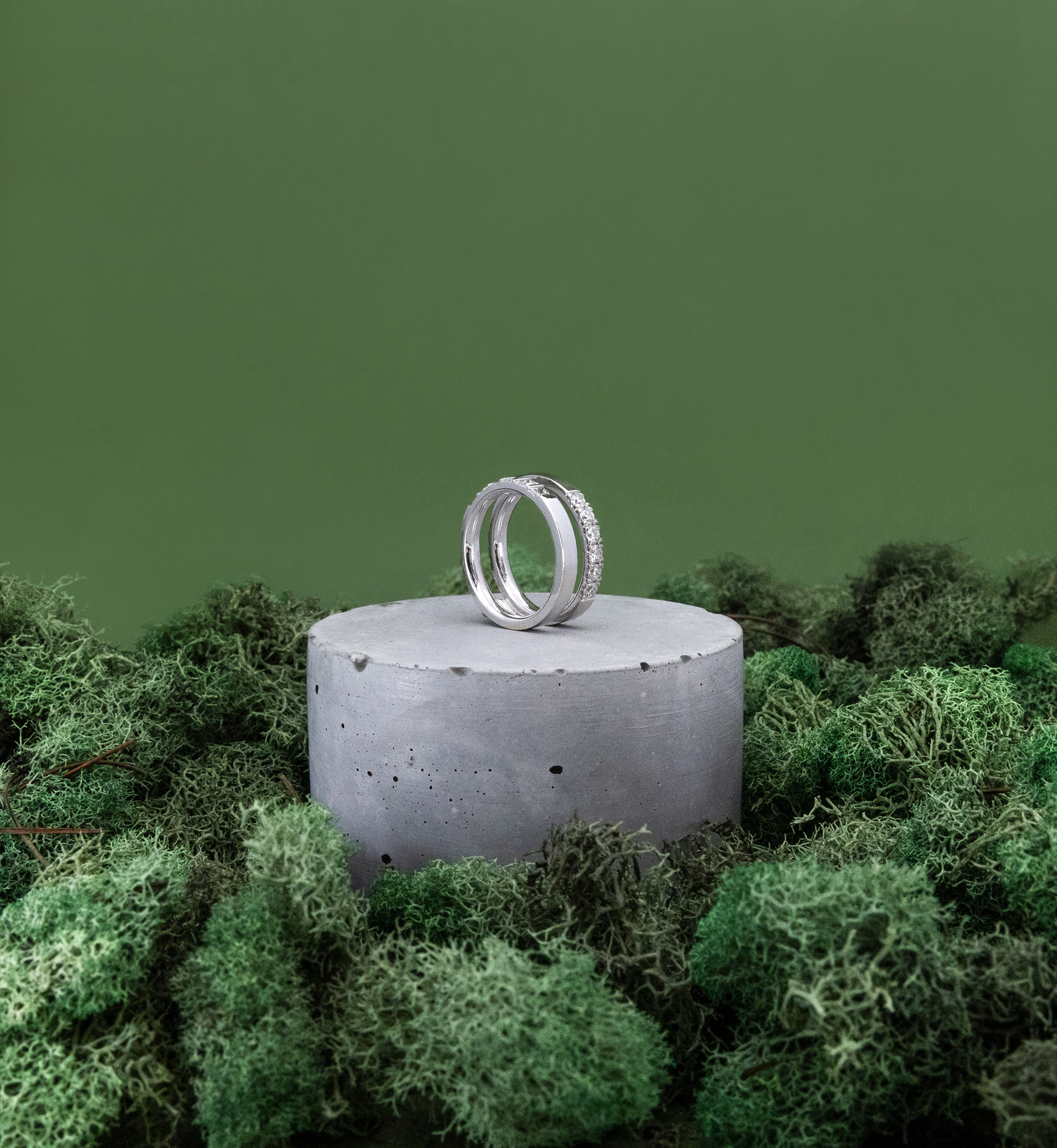
Shearman was assembling a team as well as a process. Wojno brought jewelry manufacturing experience. Anthony Ippolito joined as chief technology officer, Robert Hagemann worked on the brand and Jenna Housby on jewelry design. The technical achievement needed a form a buyer would want. Aether's early collections included bridal jewelry and pieces designed beyond the engagement-ring market. His past in fine jewelry gave him a vocabulary for that part of the problem.
There was also a distinction worth keeping clear. The carbon held inside a gemstone and the broader environmental commitments surrounding its sale are different quantities. Aether promoted additional carbon removal alongside its product. Those commitments were part of the company's positioning, rather than a description of how much material a ring physically contained. Shearman's commercial idea depended on customers caring about the production story as well as the finished stone.
The ring meets the balance sheet
Aether began shipping to consumers in mid-2021. In March 2022 it announced an $18 million Series A led by Helena and co-led by TRIREC, with investors including SOUNDWaves, Khosla Ventures and Social Impact Capital. The funding was intended to expand production and the team. That year also brought B Corp certification, a fine-jewelry launch called Bombé and inclusion in TIME's Best Inventions list. The idea had acquired products, institutional backers and public recognition.
Shearman's relationships extended into the established luxury business. Maison Luxe announced his appointment to its board in June 2022. Aether's appeal relied partly on a familiar luxury habit: buyers attach meaning to provenance. Here the origin involved atmospheric carbon and a reactor. The company sought room for a premium product within a growing laboratory-diamond market. The next challenge was whether that position could support the cost of producing it.
“The margin crunch that producers felt versus retail was real.”
Ryan Shearman · 2024
In August 2024, Grown Brilliance announced its acquisition of Aether. Shearman subsequently described the pressure on a producer manufacturing in the United States while competing with growers in India. He said demand had exceeded what Aether could make, but the cost structure was difficult. A compelling carbon story had not removed the problem of manufacturing margins. The buyer brought a larger diamond operation, while Shearman turned toward other applications of the technology.
What survived the sale
The connecting molecule was methane. Producing an appropriate gas for diamonds had required carbon-conversion expertise. Loa Carbon applies that work to synthetic natural gas, using captured carbon dioxide and hydrogen. Its stated focus is modular systems for energy providers, industrial operators and governments, with fuel that can use existing gas infrastructure. The customer and the scale of the intended application have changed; a familiar intermediate material sits between the two ventures.
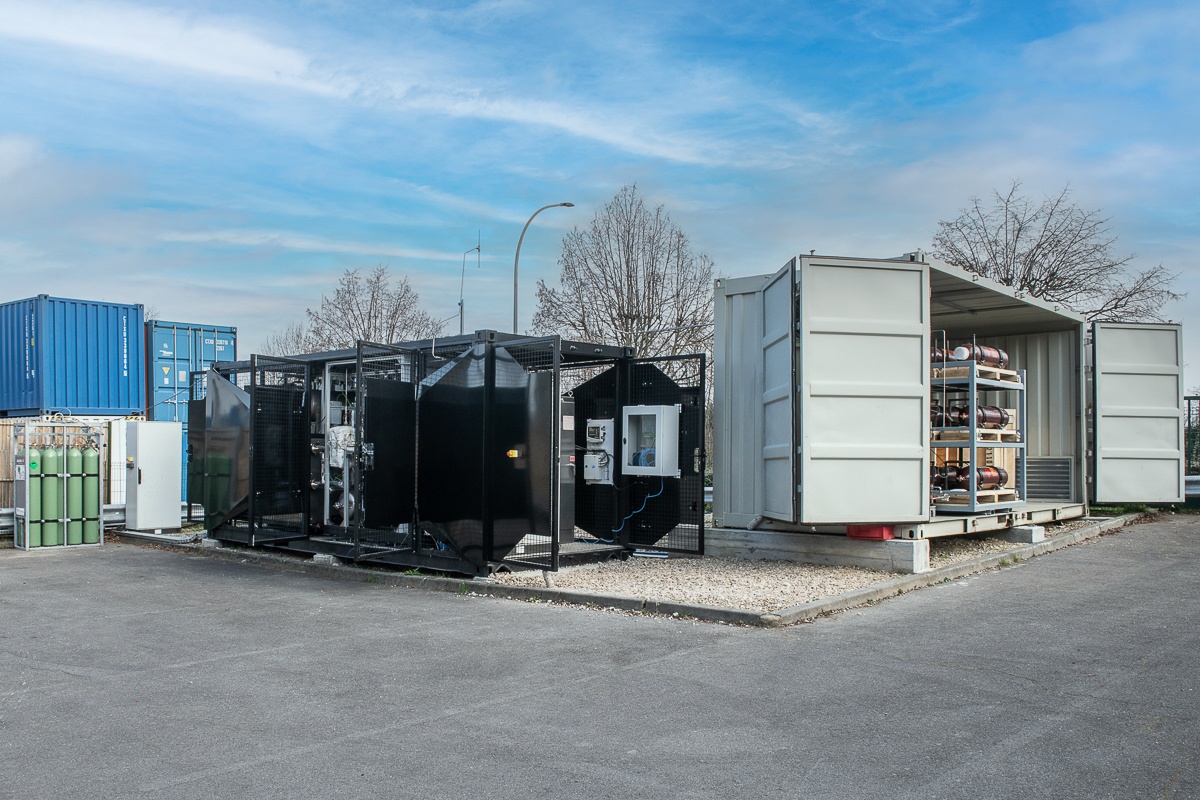
In September 2026, Shearman appeared on Product Talk as Loa's CEO and co-founder, discussing synthetic natural gas, product development and commercialization. The questions have become industrial ones. His career has prepared him to take those questions seriously: how to make a material, how to find its buyer and how to connect the two at a workable price. Aether gave him another set of answers, including some that arrived through difficult economics.
The route back to energy has involved a foundry, a jewelry workshop, motorcycles and a diamond reactor. It is a peculiar itinerary for someone who once pictured a job in electric vehicles. Each stop left him with a technique, a collaborator or a constraint he could use later. The old textbooks offer a pleasing detail in that history. He kept them because they had cost so much. Then a question came along that made them useful again.