The email was impressively unhelpful. It arrived at Ryan Maher's dealership during a busy weekend and announced that 42 vehicles in the store's primary market area carried open recalls. Attached, in essence, was a list of VINs. Missing was the rather important part: a practical way to locate the owners, reach them and put the repairs on a calendar.
Maher knew the dealership side of this absurdity by inheritance. His grandfather built the family business, his father carried it forward, and Ryan began washing cars at 12. He remembers climbing around the new inventory and setting off a few alarms, an occupational hazard for a child whose playground came with panic buttons. By adulthood he had worked in both sales and fixed operations, the unglamorous half of a dealership where parts, service and repair orders keep the enterprise breathing.
He also knew the owner's side. His wife once received a recall notice for a vehicle she had sold five years before. Even with a dealer in the family, the route from alarming letter to completed repair was confusing. One side had defect data but stale ownership records. The other had service bays but no clean path to the current driver. Between them sat millions of cars and an astonishing amount of administrative shrugging.
Before the software, the Saturday lot
There is a line through Maher's career, although it takes a few turns. He grew up in the Midwest, attended Colby College in New England, and after 9/11 chose military service. As a Marine Corps infantry officer, he deployed to Haiti, Afghanistan and the Horn of Africa. He has recalled leading 44 people in Afghanistan. Decisions came with incomplete information, real stakes and no appetite for a committee meeting about the committee meeting.
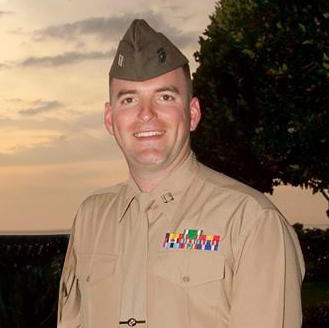
His lesson about leadership was less about command than proximity. Barking orders, he wrote later, can finish a task while losing the team. Sharing the hardship gives the group a chance to finish the mission together. It is a useful distinction for any founder tempted to confuse authority with effectiveness.
After the Marines, Maher earned an MBA in strategy and entrepreneurship at Washington University's Olin Business School in St. Louis. He moved into out-of-home media, including a stint as chief operating officer at Mid America Advertising. Leaving the family trade mattered. When you grow up inside an industry, he has explained, there is a pull to prove yourself beyond it. The distance gave him a different threshold for problems and, eventually, a different view of the one waiting at home.
“A good plan today, aggressively executed, is better than a perfect plan tomorrow.”Ryan Maher on the 70 percent solution
The useful little hack
The first version of the idea barely looked like software. Maher searched AutoTrader within 25 miles of the dealership, hunting for used vehicles on nearby lots that might have open recalls. Find the car, arrange the warranty work, bring it into the service department. He says the experiment generated $40,000 in its first month. Then the pandemic arrived. With ordinary business disrupted, recall repairs became one way to keep technicians working.
The recall loop, rebuilt
The prototype contained the eventual company's argument in miniature. A recall could be more than a compliance chore. It could be a legitimate reason to reopen a customer relationship, fill otherwise idle capacity and repair a known safety defect. These goals did not need to compete. With the right plumbing, each made the others easier.
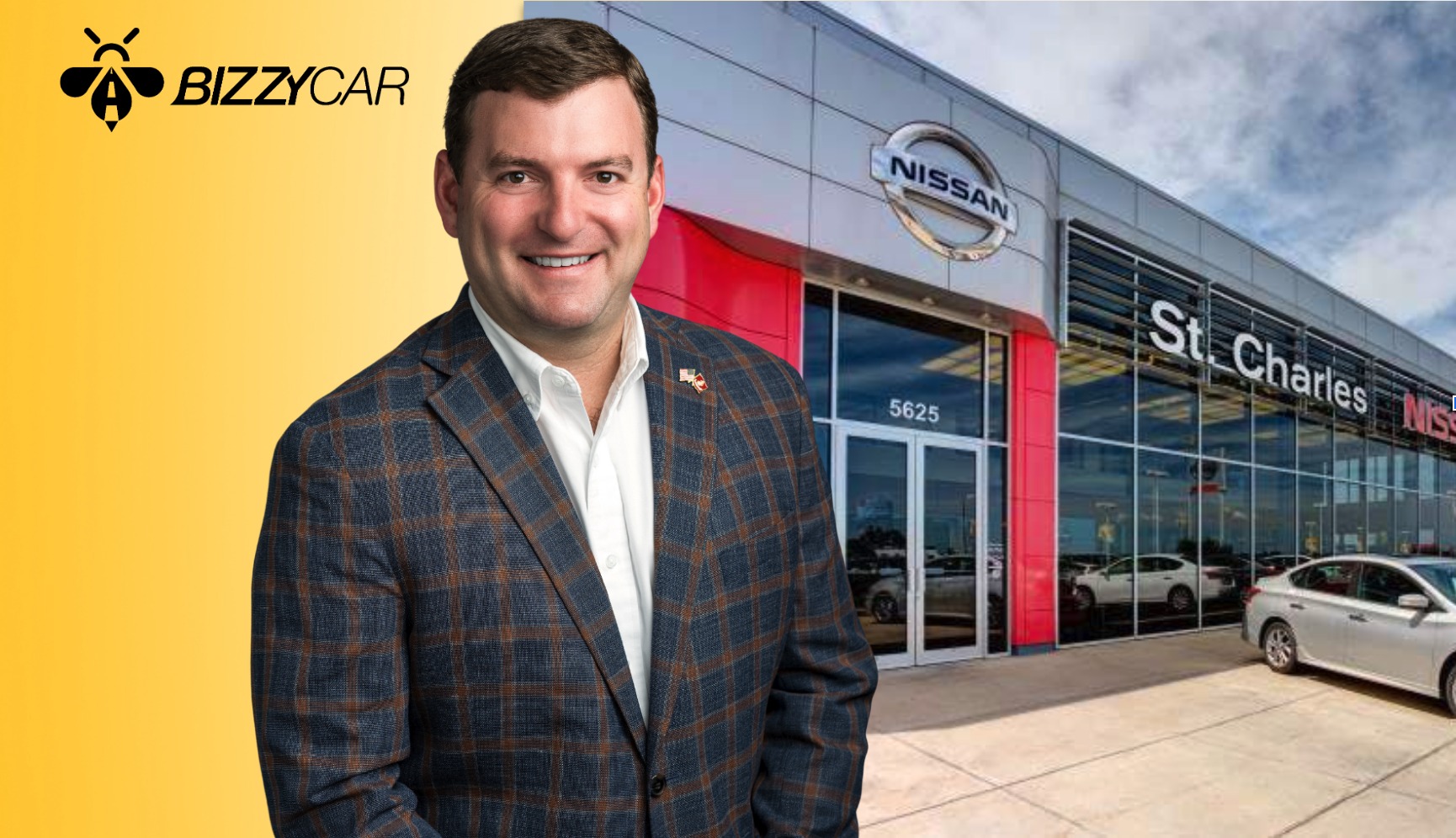
BizzyCar was founded in 2018. Its product turned that manual scavenger hunt into a system: find affected vehicles, conduct AI-assisted outreach, respond over text, account for parts and bay availability, and schedule appointments through the dealership's management software. The customer receives a useful route to action. The dealership receives booked work. The employee receives no fresh password to forget.
The disappearing dashboard
Maher's product test is concrete: does it help a service adviser with twelve cars in the lane and a ringing telephone? Dealer technology has a habit of arriving with a dashboard, a training session and an implied new occupation. He wants automation to work quietly in the background. The appointment should appear inside the systems the store already uses, only when parts and capacity make it feasible.
This is also how he talks about artificial intelligence. He is interested in the hours it removes, not the theatre it creates. Internally, tasks that took hours can take minutes. On the dealership side, automated communication and scheduling should prevent customers from slipping through operational cracks. The trick is not making a machine seem human. It is making a maddening process feel ordinary.
Investors followed the operating proof. BizzyCar announced a $15 million growth round in October 2024, led by Dealer Tire. In September 2025 it added a $20 million follow-on led by Dealer Tire with FM Capital participating. Its dealer customers had generated more than $250 million in incremental revenue by then, while BizzyCar was adding more than 100 dealership rooftops a month.
Private-company numbers deserve the usual caution, and even BizzyCar's total-funding figure varies by definition. The clearer signal is what the money was assigned to do: expand AI-led product development, deepen the platform and scale operations. Maher's ambition has widened from recall outreach toward mobile service and the broader economics of fixed operations.
High expectations, then room to work
Maher describes his leadership style as high expectations and trust. Put the right people in the right seats. Explain where the company is going and why it matters. Then get out of the way. His favored Marine-derived idea is the 70 percent solution: move decisively once there is enough information, rather than allowing analysis to turn into shelter.
It makes sense for a company built around neglected action. A recall is already known. The repair is already authorized. The dealership already has technicians. Yet the car remains on the road because the connective tissue is weak. BizzyCar's business is the last mile between knowledge and behavior, a place where perfect information is always arriving tomorrow.
Maher also insists that the customer reveals what to build. Early on, solving only the dealer's problem proved insufficient. The vehicle owner needed clear communication, answers and convenient scheduling at the same time. Ignore either party and the loop breaks. In an industry fond of talking about funnels, he pays attention to the person behind the wheel.
“The customer always shows you what you need to build.”Ryan Maher
The next service lane may have no lane
Maher's current thesis has three parts. First, tighter vehicle margins and older cars make fixed operations more central to dealership economics. Second, dealers are tiring of products that require a dedicated operator, so automation must reduce workload in practice. Third, mobile service is shifting maintenance from a place the customer visits to a capability that visits the customer.
That last move brings the story back to friction. A recall letter that reaches the wrong owner is friction. A repair that demands a day off is friction. A service adviser asked to learn one more isolated system is friction wearing a lanyard. Maher's opportunity has come from finding those points and removing enough of them for everyone to do the sensible thing.
The stated mission is larger than a fuller bay. Maher wants BizzyCar to be responsible for a significant reduction in unrepaired recalls on American roads. He pairs that professional aim with a precise personal one: he does not want to miss his children's games and events. He would rather work early mornings and late nights to make room in the day. It is a revealing form of scheduling from someone whose company schedules for a living.
Perhaps that is the most useful reading of his career. The wash bay, the infantry unit, the MBA classroom and the media office did not point neatly toward recall software. They taught him to notice the work in front of him, act before the plan was immaculate, and respect the human being stuck inside the process. The result is a company built on a modest promise: fewer gaps between what is known and what gets done.