The Story
A phone call he couldn't make
It started with a favour. Rustam Sengupta's parents were in Singapore - his mother 80, his father 86 - and the pandemic had locked the borders. He was stuck in Vancouver, an ocean away, unable to so much as drive his dad to the hospital.
So he did what people have always done when the village disappears: he called in favours. "We were basically calling in favours," he recalls, "'Can you go check on my dad and take him to the hospital?'" His wife had suggested simply asking for help. The asking worked. The asking also revealed a hole in the modern world large enough to drive a company through.
That summer of 2021, Sengupta and eight or nine friends started showing up for strangers. They delivered groceries in Kitsilano. They drove seniors around Kerrisdale. They fixed the wifi and stayed for tea. And somewhere between the errands and the conversations, the pattern clicked into place. "While healthcare is taken care of," he says, "nobody takes care of companion care when people grow old."
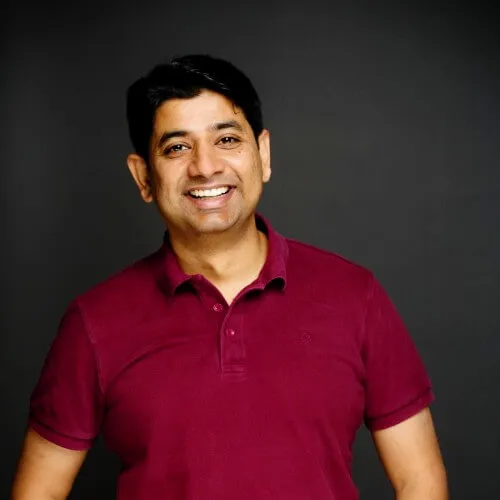
Today Sengupta is the founder and CEO of Tuktu Care, a Vancouver-born platform that matches older adults with vetted community helpers - the company calls them "Tuktus" - for the unglamorous, deeply human work of staying independent at home. Errands. Gardening. Tech support. A ride. A visit. The things a neighbour used to do before neighbours got busy.
While healthcare is taken care of, nobody takes care of companion care when people grow old.
Rustam Sengupta, on the gap he built Tuktu around
Why a reindeer?
The name is not an accident, and it is not random whimsy. "Tuktu" is the Inuktitut word for caribou, or reindeer. Sengupta chose it because, in his telling, "reindeer are the bearer of good things." He launched around Christmas and was happy to let people think of Rudolph. A care company named after the animal that pulls the sleigh of gifts through the dark - that is a founder who thinks about metaphor as much as margin.
There is a philosophy underneath the branding. Sengupta cites Gandhi and Tagore, and talks about service as something larger than a balance sheet. "We are all here to serve a purpose," he says, "which is beyond monetary value." It is the kind of line that sounds like a poster until you remember the man saying it builds companies for a living and means to make this one work.
The Long Way Round
From microgrids to matchmaking
Sengupta did not arrive at eldercare by the obvious door. For more than a decade he worked in clean energy. In 2010 he founded Boond, a solar rooftop and microgrid company that became one of India's recognized names for bringing power to rural and off-grid communities. In 2016 he co-founded Mynergy, a solar asset management business. He has sat on boards from Emsys Electronics to climate non-profits like EarthON and EnAccess.
Look closely and the through-line is obvious: both jobs are about delivering an essential service to people the system tends to forget. A village without electricity and an 86-year-old without a ride share the same root problem - infrastructure that never reached them. Sengupta likes to compare his approach to Shopify: take an old, fragmented, friction-heavy industry, and let technology quietly do the plumbing while humans do the human part.
His credentials read like a passport with a lot of stamps. An MBA from INSEAD. A master's in electrical engineering from UC Irvine. A Chevening Fellowship from Oxford. Stints with Sustainable Development Technology Canada as an investment lead, with the Foresight Cleantech Accelerator as an Executive in Residence, and with Johns Hopkins on sustainable energy research. He has written books on impact investing and social enterprise. He still teaches the subject, part-time, at the University of Vermont's Grossman School of Business.
We are all here to serve a purpose, which is beyond monetary value.
Sengupta, channeling Gandhi and Tagore
The Climb
Building the village back
In 2023, Tuktu Care was picked for the Techstars Future of Longevity Accelerator, run in partnership with Pivotal Ventures - the investment firm of Melinda French Gates. It put Sengupta's neighbourly experiment on a serious stage, alongside backers like Loyal VC, the Center on Rural Innovation, and the Sendari Family Office. The company has raised on the order of two million dollars and pushed its model out of British Columbia into Edmonton, Calgary, Ontario, and across the border into the United States.
The product has grown teeth, too. What began as friends with a sign-up sheet now runs on a matching engine - increasingly AI-powered - that pairs each senior with the right helper, vets every Tuktu through resumes and references, and lets family members manage the whole thing from a phone, even from another country. Which is, of course, exactly the problem Sengupta started with: a son who could not be in the room.
There is a tidy symmetry to it. The company that exists because he could not reach his parents now exists so that other people can reach theirs. He did not set out to disrupt anything. He set out to make a phone call easier. The disruption was a side effect of taking loneliness seriously.
The Idea
What exactly is a "Tuktu"?
A Tuktu is a person, not an app feature. The company recruits helpers from the same neighbourhoods as the people they serve, then vets them through resumes, references, and background checks before they ever knock on a door. Helpers set their own rates - roughly $20 to $45 an hour - capped by the company so the service stays within reach. The result is hyperlocal by design: the person who drives you to your appointment might live three blocks away.
The tasks are deliberately ordinary. Groceries. Gardening. A lift to the clinic. Help with a stubborn phone. Company for an afternoon. Tuktu's bet is that this ordinary stuff - the connective tissue of daily life - is exactly what the formal care system was never built to handle, and exactly what keeps a person in their own home rather than a facility. Families create and manage profiles for their loved ones, approve bookings, and get real-time updates, which means a daughter in another city can quietly orchestrate her father's week from a screen.
It is a small idea with a large surface area. Populations are aging faster than care systems can staff up, and the part of aging that hurts most is often not medical at all - it is isolation. Sengupta keeps returning to that distinction. Health care, in his framing, is solved; companionship is the orphaned half of the problem. Tuktu is an attempt to give that half a business model, a workforce, and a name.
The Other Job
The founder who grades papers
Most founders treat their company as the whole of their identity. Sengupta keeps a second life as a teacher. He lectures part-time at the University of Vermont's Grossman School of Business, where he has helped shape thinking around building entire ecosystems of startups, and he mentors founders at the Foresight Cleantech Accelerator. He has written books on impact investing and social enterprise. He is, in other words, someone who has thought hard about how good companies get built - and then went and tried to prove the theory with his own.
That combination - the practitioner who also teaches, the engineer who quotes Tagore, the climate-tech veteran who pivoted to eldercare - makes Sengupta hard to file under a single label. The connecting thread is not an industry. It is a question he keeps asking in different forms: who is the system leaving behind, and what would it take to reach them? First it was villages without power. Now it is parents without a village. The technology changes. The instinct does not.
#agetech#aginginplace#companioncare#socialenterprise#longevity#vancouver#impactinvesting