Software has a talent for misbehaving at the least convenient moment. A service works during a demonstration, then slows when customers arrive. A routine change disturbs something that appeared settled. Rupesh Garg has built his business around finding such trouble before the customer has the privilege. It is an occupation that rewards curiosity about failure, though failure itself is rarely invited to the awards dinner.
Garg is the co-founder, CEO and Chief Architect of Frugal Testing, working alongside co-founder Bharti Garg. Based in Hyderabad, he has a career that passes through consulting firms, banking technology, an American engineering university and public speaking. The titles suggest a crowded diary. The more interesting connection is the movement between technical work and the people who must understand it.
A testing architect needs to ask precise questions about a system. A chief executive needs to ask useful questions about a business. A speaker needs to notice whether anyone understands the answer. Garg’s public work gives all three activities a place in the same story.
A mechanical engineer enters the software room
His academic starting point offers a pleasing detour. Garg earned a master’s degree in mechanical engineering at Oklahoma State University. Software testing was not the name printed on the qualification. Engineering, however, has room for careers that wander beyond the original department.
His university years also involved Toastmasters and international student leadership. These are revealing companions to technical study: one asks a person to explain an idea aloud; the other puts them among people with different expectations and experiences. Neither activity can be completed by producing a technically correct answer and leaving the room.
The combination makes his later public work easier to understand. He would go on to write instructions for software practitioners, talk to students about employment and speak about the company he was building. Communication appears repeatedly in the record, alongside engineering, rather than arriving as an accessory to the executive title.
It would be too tidy to turn a university course into a complete explanation of a founder. Careers contain choices, accidents and changes of direction. What can be seen here is a technical education followed by work that increasingly required both specialist knowledge and the ability to carry other people along.
Before the company, the corporate apprenticeship
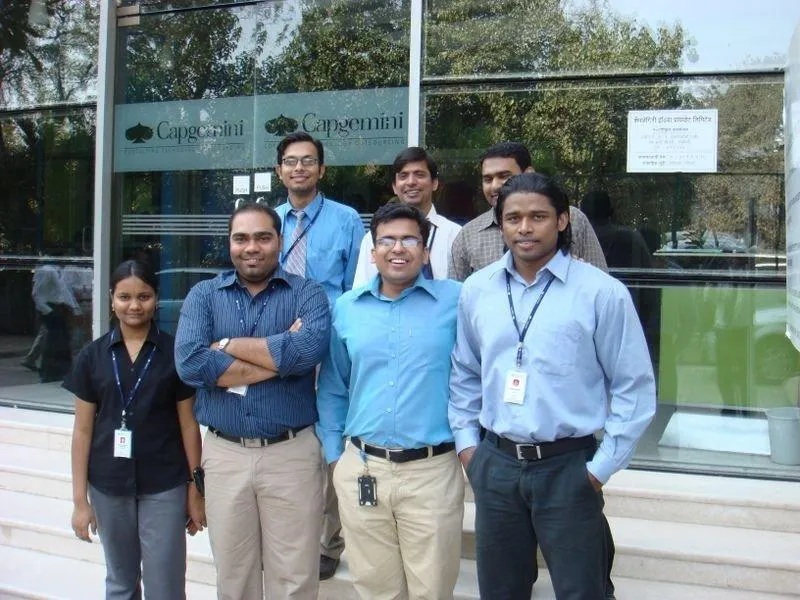
Garg’s professional history includes Capgemini, AppLabs, Wipro Technologies and Bank of America Merrill Lynch. His listed roles range from consulting manager and principal consultant to principal advisor and assistant vice president. These jobs preceded his publicly listed founder and chief architect role at FrugalTesting, dated from September 2018.
The sequence matters because the founder title can conceal the years spent working inside other organisations. Consulting and banking technology involve different clients, responsibilities and constraints. Garg came to entrepreneurship with experience of those settings, rather than encountering business customers for the first time after choosing a company name.
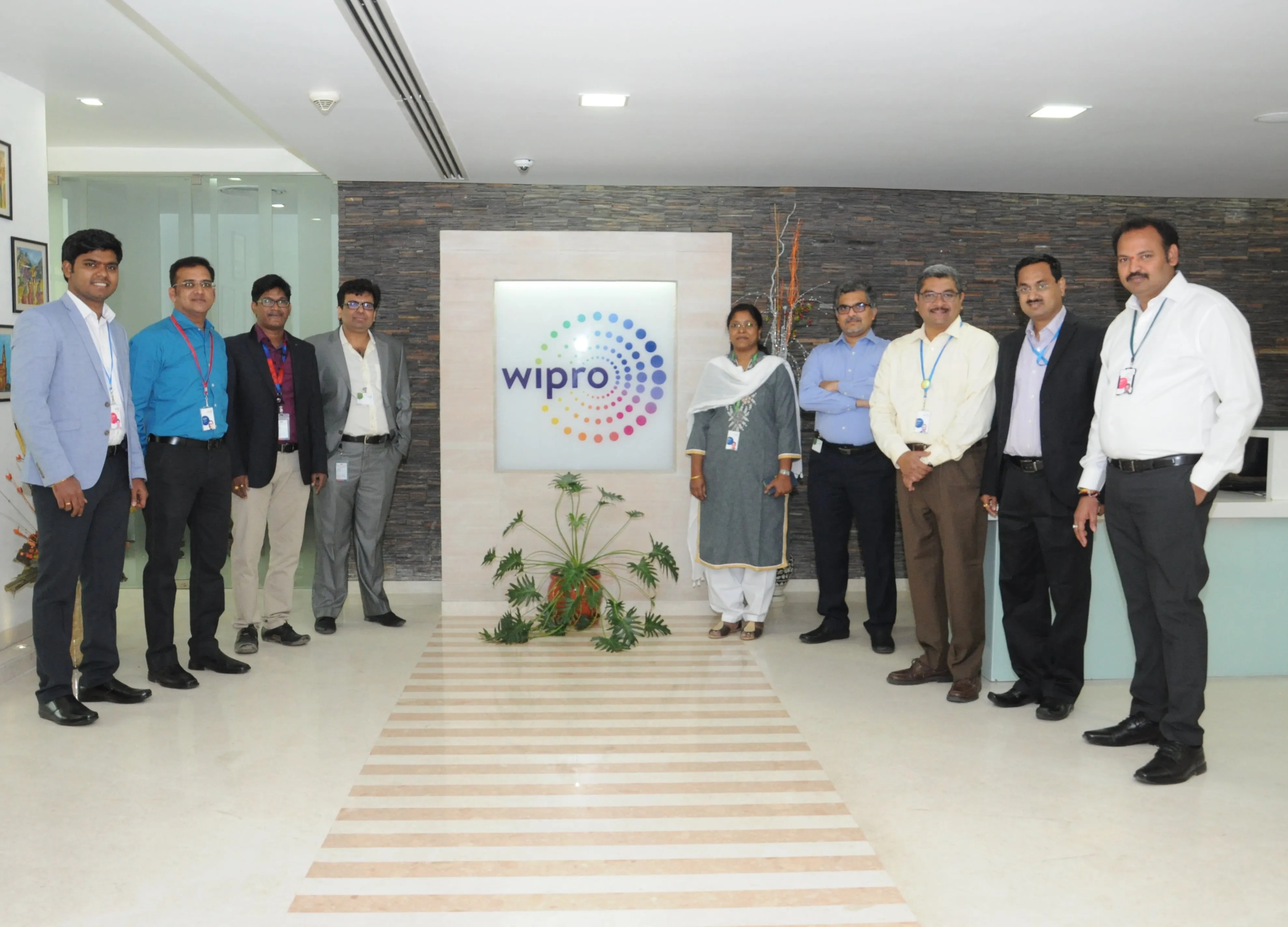
One episode he has revisited is an Academy of Customer Excellence program through Wipro and Harvard Business School Publishing, which he says he completed in January 2012. In discussing it, he connects customer confidence with consistency, clarity and honesty. That is a useful vocabulary for a business whose clients are paying to discover unwelcome information.
A testing engagement is an unusual commercial relationship. The client wants good news about the product, while needing the tester to report bad news accurately. The service becomes more useful when difficult findings can be explained plainly. Garg’s account of customer excellence places that relationship close to the centre of his thinking.
Two founders, room for two opinions
Frugal Testing’s own history reaches back to 2016, and the company celebrated its ninth anniversary in 2025. Garg’s individual career listing begins his founder role later. The anniversary and the employment entry describe different milestones in the same business, whose leadership includes Bharti as CTO and co-founder.
Bharti brings her own technology background, including experience at Infosys and Honeywell. A profile of Rupesh loses something essential if she becomes merely a supporting character. They appear together in discussions of the company, including a founder interview that produced a small, telling observation from its interviewer.
Shruti Pandey recalled that Rupesh said he would not be interviewed alone. Both founders took part. It is a modest anecdote, mercifully free of a motivational soundtrack, and it gives the partnership a concrete shape: the conversation about the business would include both people building it.
Testing entrepreneur Pradeep Soundararajan has also described knowing the pair for close to a decade. His account allows room for different approaches, argument and agreement. He recalled a meeting in which Bharti welcomed learning from his questions, and he responded that he would learn from their answers. Expertise, in that exchange, travelled in both directions.
A shared company does not require identical minds. The interesting work lies in what happens when different judgements meet a decision that must actually be made. The public glimpses of this partnership leave space for that ordinary, demanding process.
The useful detail in an old tutorial
For a closer view of Garg’s technical side, turn to a subject with fewer ceremonial possibilities: recording mobile application traffic with Apache JMeter. He published a DZone tutorial on it on November 14, 2018. It covers Android and iOS applications and begins with putting the appropriate proxy in place.
The article walks through configuration, including a thread group, a recording controller and a results listener. It belongs to the practical literature of getting a tool to behave, where a missing step can be more consequential than a polished introduction. The reader needs instructions that survive contact with a screen.
That writing gives substance to the architect part of his job. It also shows another form of communication: explaining a technical procedure carefully enough for someone else to attempt it. A conference audience may applaud a broad idea; a tutorial reader is likely to ask which menu to open next.
Garg’s public writing has also addressed JMeter reliability, distributing user load and automation testing. Taken together, the subjects show a recurring interest in how testing is performed. His public presence includes the tools and procedures underneath the business discussion.
What he takes back to the classroom
When Garg speaks to students, his subject often widens beyond a particular tool. At NMIMS Bangalore, he discussed the transition from student life to corporate work, including communication, leadership, problem-solving and the need to keep updating skills. He described responsibilities changing as a person moves from a first role towards leadership.
Those are practical concerns for an audience whose next challenge may be a first job. Academic schedules offer a degree of structure. Work introduces competing demands, other people’s priorities and problems whose boundaries are less politely drawn. His talk asked students to prepare for that adjustment.
A CrazyTok appearance focused on making use of internships. At an eChai meetup in Hyderabad, the discussion moved to coordinating development, testing and operations within startups. Across these settings, the audience changes, but the conversation keeps returning to how technical knowledge becomes effective work with other people.
There is something appropriate about a testing founder spending time on that transition. An internship, a new responsibility and a young business all expose assumptions to reality. The value comes partly from discovering which expectations need revising. A carefully prepared plan can still receive an impolite review from the working day.
Oklahoma returns to the story
In March 2025, Garg received Cowboy 100 recognition through Oklahoma State University. Frugal Testing announced a second consecutive honor in March 2026. The university connection, established during his master’s years, had become part of the company’s later public story.
“Innovation is a continuous journey, and we are just getting started.”
Rupesh Garg, reflecting on the 2025 recognition
Awards make convenient punctuation. They give a career a date, a stage and a photograph. They also risk crowding out the more useful questions about the work: what the business does, how its founders make decisions and what they intend to improve. Garg’s stated direction includes AI-driven testing, further automation and international expansion.
The next chapter therefore concerns the same assignment in new technical circumstances. As software changes, testing has new behaviour to examine. AI adds opportunities for the business, while retaining the need to establish what a system actually does when someone uses it.
Garg’s story holds together through that practical obligation. There is the engineer looking closely, the speaker explaining the finding and the co-founder building a service around it with Bharti. The demonstration may have gone beautifully. His working life leaves room for the question that follows: what happens when the customers arrive?