Before a car can leave an auction lot, somebody has to answer a surprisingly consequential question: does it have keys? A vehicle can exist in an inventory system, have a buyer and have a truck waiting outside, yet remain immovable. RunBuggy’s order form asks about keys, whether the car drives and whether it rolls. The little checkboxes explain the business better than a grand theory of transportation ever could.
- The connection: a marketplace linking vehicle shippers with independent haulers.
- The control room: Hitch brings private fleets, partner carriers and outside capacity together.
- The useful experiment: AI that collects updates and puts them where operators can act.
RunBuggy sells coordination. Dealers need inventory moved. Auctions need purchases collected. Fleets, lenders and consumers need vehicles delivered. Transporters need worthwhile loads. Between these groups sit gate passes, inspection photographs, arrival estimates and payments. Each is small enough to sound administrative. Together they determine whether the car moves at all.
01 / The truck is only half the journey
Launched in 2018, RunBuggy built a digital marketplace around these handoffs. Shippers place orders; haulers find and claim work. The app carries documents, inspection records and communication alongside the shipment. Its published product materials advertise access to more than 17,000 drivers. That is a network count, of course, rather than a promise that a particular truck will be available tomorrow.
For a carrier, the attraction is practical. The app is free to download and use. It supports direct-deposit payments, recommended orders, offline inspections and signatures collected remotely. A driver can complete an inspection without reception. A customer can sign without standing beside the driver’s phone. Small conveniences become rather substantial when multiplied across working days.
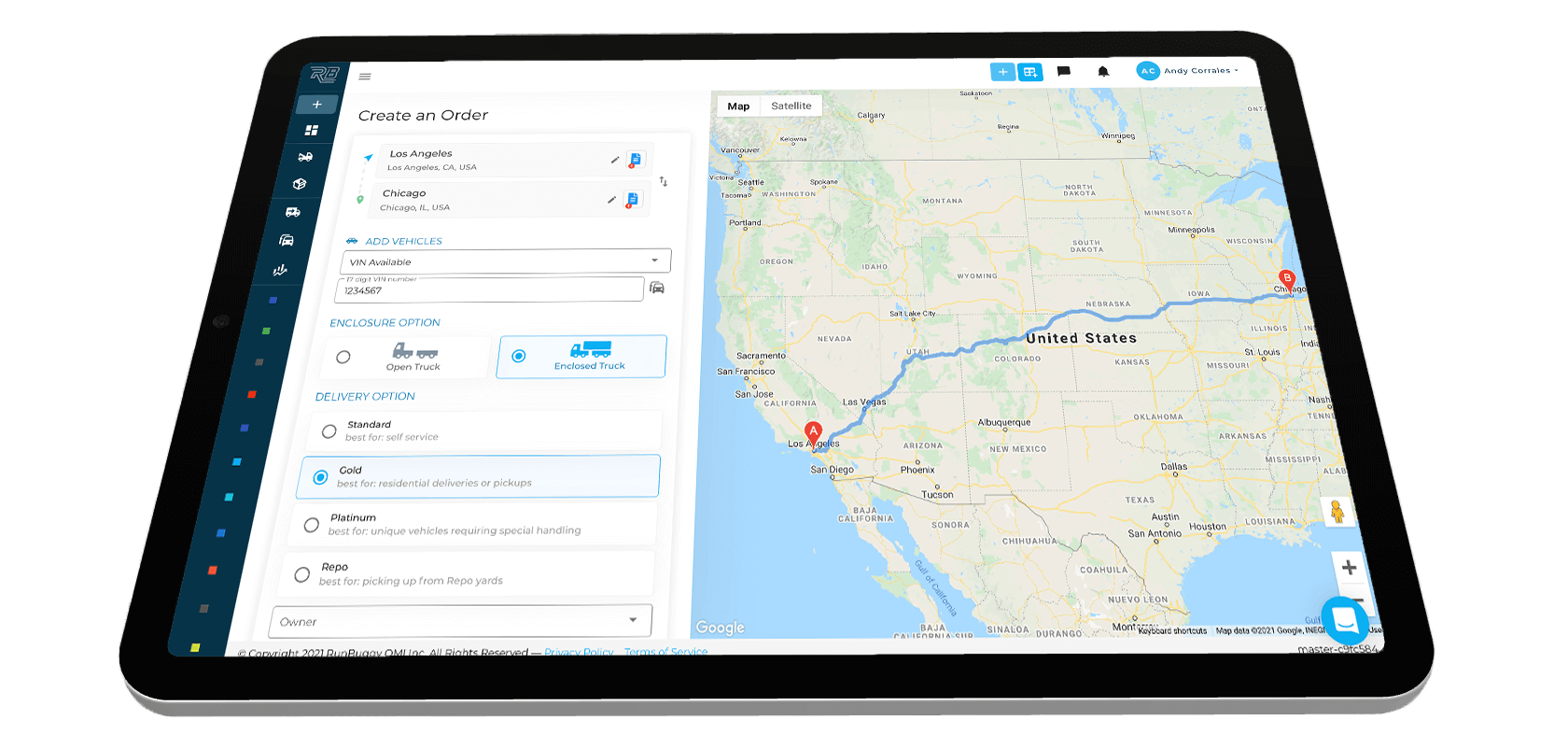
The shipper pays for transportation. RunBuggy’s documentation says the company determines marketplace order prices and driver payouts. Its consumer service, RunBuggyOne, quotes from vehicle and route details. Distance, season, equipment and whether the vehicle runs affect the job. A free carrier app therefore coexists with paid shipping; the two sides enter the marketplace for different reasons.
For an individual, the immediate choice is often between open and enclosed transport. RunBuggyOne describes open carriers as the common, less expensive option; enclosed trailers shelter valuable cars from weather and road debris. A non-running vehicle needs suitable loading equipment. The sensible way to compare a quote is to keep those requirements consistent. Changing the vehicle’s condition or the service changes what the carrier must actually do.
02 / Keep the drivers. Change the desk.
A dealership group may already have drivers it trusts. Requiring it to abandon those relationships would create a peculiar sales pitch. Hitch, RunBuggy’s transportation management software, takes the more accommodating approach: manage internal transport resources and partner carriers, then reach into the marketplace when extra capacity is needed.
The software covers dispatch, customer access, inspections, payments and reporting. In its Hitch launch announcement, RunBuggy named online retailer Shift among the businesses that had tested it. The appeal was one place to oversee work stretching from vehicle preparation to delivery. That is a broader job than simply finding someone willing to haul a car.
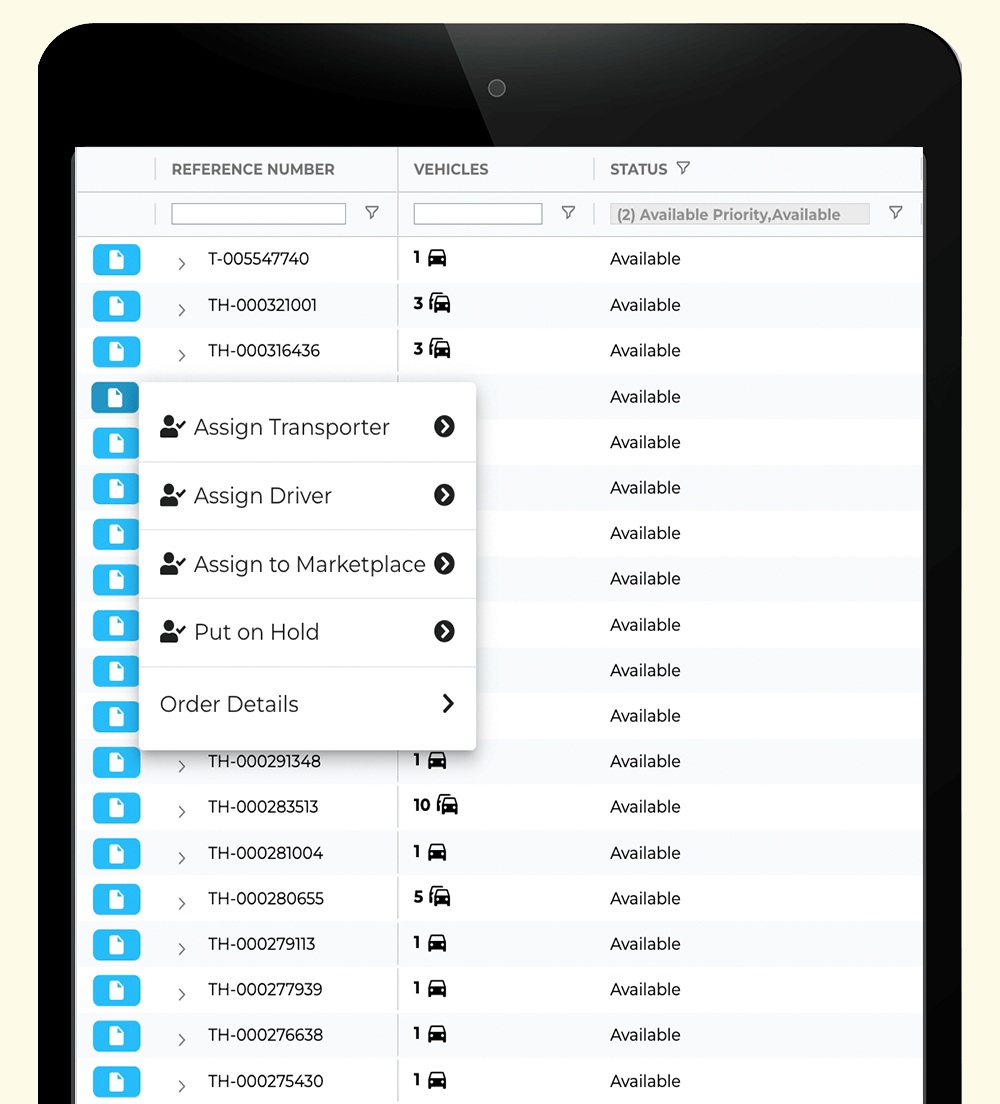
This places RunBuggy between several familiar alternatives. A shipping broker can arrange a move. A load board helps connect demand with capacity. Fleet software organizes an operator’s work. RunBuggy’s proposition combines the transaction with the operating system around it. Its expertise sits in those connections: vehicle-specific data, carrier matching and the unglamorous sequence required to finish an order.
Distribution matters, too. In 2023, RunBuggy and PrivateAuto announced shipping tools embedded in PrivateAuto’s app. Buyers could quote, arrange, track and pay for transport in the same environment as the vehicle transaction. The logic is easy to appreciate: delivery becomes a decision made while buying the car, rather than another project afterward.
03 / Then the phone started ringing
A marketplace can digitize an order without making the world outside it orderly. RunBuggy’s February 2026 account describes the resulting strain: driver changes and shipment updates continued to arrive through calls, texts and email. Operations staff chased information. Problems sometimes surfaced after delays had already spread. The first pressure point in that account was keeping the record current.
“As we scale, we need better information earlier and fewer preventable failures.”Kevin Malik, CEO · February 2026
RunBuggy worked with Sierra on voice agents that call transporters for updated arrival times and assignments. The consequential step comes after the conversation: validated information goes back into operational systems. An update can close a task or send an exception to a person. A transcript alone would leave somebody with another thing to read.
RunBuggy reported more than 10,000 automated calls monthly and approximately 20 percent fewer total calls. Sierra’s case study describes nearly 1,000 hours a month redirected toward exceptions and higher-value work. These are reported operational results, rather than a guarantee of what another company would save.
The implementation required engineering, operations and data-science teams to translate procedures into controlled workflows. Coverage expanded after performance met human benchmarks. That provides a useful explanation for confidence in the system: observed call quality justified wider use. The transferable lesson is to define the task, connect the result to the record and preserve a route to human judgment.
That emphasis fits the company’s stated culture of transparency, realistic expectations and continuous improvement. Its leadership combines automotive experience with enterprise technology: CEO Kevin Malik previously held roles at Starwood and IO, while CTO Sasha Jovicic leads the software portfolio. The mix helps explain why the product pays attention to both the driver’s next stop and the customer’s existing systems.
04 / Trust still needs an operator

RunBuggy’s September 2025 Series B brought $37 million from a round led by Centana Growth Partners, with OMI Capital participating. Earlier backing included Porsche Ventures, Hearst Ventures and the Larry H. Miller Company. Hearst’s Bring a Trailer already had a shipping relationship with RunBuggy before the investment. Capital followed a connection to the actual work.
Its newer products put more definition around trust. February 2026 brought Reserve, a selective carrier tier for valuable vehicles, with ongoing performance evaluation. In May, RunBuggy described a GM Financial integration that puts user authentication under the lender’s existing identity controls. Carrier quality and controlled access solve different problems. Enterprise customers need both.
The limits remain physical. Incorrect vehicle details can send the wrong equipment. A locked gate can defeat a sensible schedule. Automation depends on reachable people, accurate information and clear escalation. For someone copying RunBuggy’s approach, start with the recurring handoff that wastes time, then measure whether the next person receives something usable. Before asking how quickly the car can travel, establish whether it can leave.