Before Liberty National became a place to play golf with the Statue of Liberty in view, its designers had worked through some 60 to 70 possible routings. The Jersey City site carried a long industrial history. The plans were difficult, the permitting demanding, and the project came close to dying. Rowland Bates entered the story at that awkward moment when a promising idea needed someone who could get another person to take it seriously.
Bates was a friend of course architect Bob Cupp. He brought in his business partner, Paul Fireman, and the development survived. There is a certain economy to that account: years of design and uncertainty, then a connection that allowed the work to continue. Golf courses are measured in yards. Sometimes the consequential distance is the one between two people.
That episode offers a useful introduction to Bates, whose career crosses hospitality, residential development and golf. Today he is co-CEO of IE Homes, Clubs & Resorts, based in the Charleston area, and president and CEO of New Seabury Homes on Cape Cod. His work concerns the arrangements behind places that promise an easy afternoon: acquiring property, planning development, building homes and keeping a business moving.
A view with a considerable backstory
At Liberty National, Bates held the role of senior managing director. His responsibilities covered development planning and implementation for the golf club and proposed residential development. The course's designers, Cupp and Tom Kite, were dealing with a property whose previous uses included oil tanks and wartime ammunition. An attractive location had come with an unattractive amount of work.
The practical constraints extended underground. A liner installed during environmental mitigation could not be pierced during construction. The design had to respect what lay beneath it. Bringing in soil and shaping the course above that barrier made the landscape an engineering problem as well as a golfing one. A bunker, that innocent-looking patch of sand, could demand a surprisingly serious conversation.
In 2007, Bates described the opportunity with a mixture of pleasure and finality. His remark left room for uncertainty, a modest qualification for a project with such a conspicuous skyline. Experience seems a more fitting register for the story than a slogan.
“This is something special and won't come along again, I think.”
Rowland Bates on Liberty National, 2007
The club would later host the 2017 Presidents Cup. A televised competition offers the finished view: players, spectators, the harbor. Bates's part of the story sits earlier, among the decisions that made a finished course possible. The tournament and the development are different achievements, separated by years of work. His contribution belongs to that long preparation.
When the financing gets a turn at the microphone
Bates studied at Cornell's School of Hotel Administration, earning a bachelor of science and a master of professional studies focused on finance and real estate. Hospitality is a fitting starting point for a career in which a property must work both as a business and as somewhere people want to spend time.
By the early 1990s, he was president of Golf Realty Advisors. His work included permitting, financing and construction management for six Massachusetts golf courses. Each item in that list represents a different kind of agreement: permission to build, money to proceed, and the coordination needed to turn a plan into something usable.
One town account supplies an unusually concrete glimpse of that work. At Scituate's discussion of a golf course at the Driftway site, architect Michael Hurdzan presented the course concept. Bates presented the financial arrangements. The town's annual report records strong support for proceeding and explains enabling legislation that allowed bond financing to cover costs during construction and the course's growing-in period.
It is a small civic scene with a large professional lesson. A drawing can show where the holes will go. A financing arrangement must explain how the project gets through the period before it can function. In that room, design and arithmetic each had a speaker. Both were necessary to the proposal.
The expensive interval before the first sale
At Willowbend Development and then Southworth Development, Bates worked in acquisitions and development. His portfolio experience included Creighton Farms in Virginia, the JW Marriott Starr Pass in Arizona and The Abaco Club in the Bahamas. These were properties with distinct settings and development demands, linked by the combination of recreation, hospitality and residential real estate.
Speaking in 2012 about golf communities after the financial crisis, he explained how much spending arrives at the beginning. Roads, utilities, clubhouses and courses require capital before a community can generate a steady run of home sales. The sequence matters. A completed set of amenities and a project still waiting to build them face very different commercial circumstances.
He also described Southworth's interest in buying properties below their replacement cost, particularly those with infrastructure already installed and lots ready for sale. His attention was on the work that had already been paid for and the time required to begin selling. The economics of a pleasant place could be considerably less leisurely than the place itself.
In Bermuda, the arrival was part of the plan
At a February 2015 town hall in Bermuda, Bates appeared with the team discussing the proposed Morgan's Point resort. The plans included a hotel, residences and a marina on a former US naval base. He addressed something more specific than the broad appeal of a waterfront location: how people would arrive.
He described guests and Bermudians coming by boat, dropping passengers at a dock, moving the boat to the nearby marina, and then joining dinner or an event. His explanation followed a visitor through the property. A waterfront could be scenery; this proposal treated it as an entrance and a route through an evening.
Those remarks concerned a planned development, not a report of completed construction. Their interest lies in the detail of his explanation. The guest's journey had to connect the water, the dock, the marina and the gathering spaces. A beautiful arrival still needs somewhere sensible to leave the boat.
His 2018 conference biography described an advisory role at Caroline Bay covering planning, design, financing, branding and hotel management agreements. That year's CHICOS agenda also placed him on a panel about Caribbean construction and renovation. The subject brought design into conversation with costs, insurance and choosing teams familiar with island conditions.
New Seabury, then another chapter in the pines
In February 2021, New Seabury's Peninsula Council welcomed Bates as president of New Seabury Homes and New Seabury Properties. The notice outlined his development background and the residential work ahead. It also anticipated cooperation with the council and its architectural review committee. A new executive had arrived in a community that already had its own institutions.
That setting gives the job a particular texture. New construction occurs alongside existing homes and residents. The company's current team page assigns Bates responsibility for construction, sales and marketing. Those functions must meet in the same finished house, though they approach it with different questions. Building a community requires repeated coordination, long after the first presentation.
A later acquisition extended the story to North Carolina. Pinewild Country Club changed hands in November 2023. The buyer was AEP Pinewild Holding LLC, a partnership led by Bates. The property included established courses and land for residential development, bringing an operating club and future homebuilding into the same transaction.
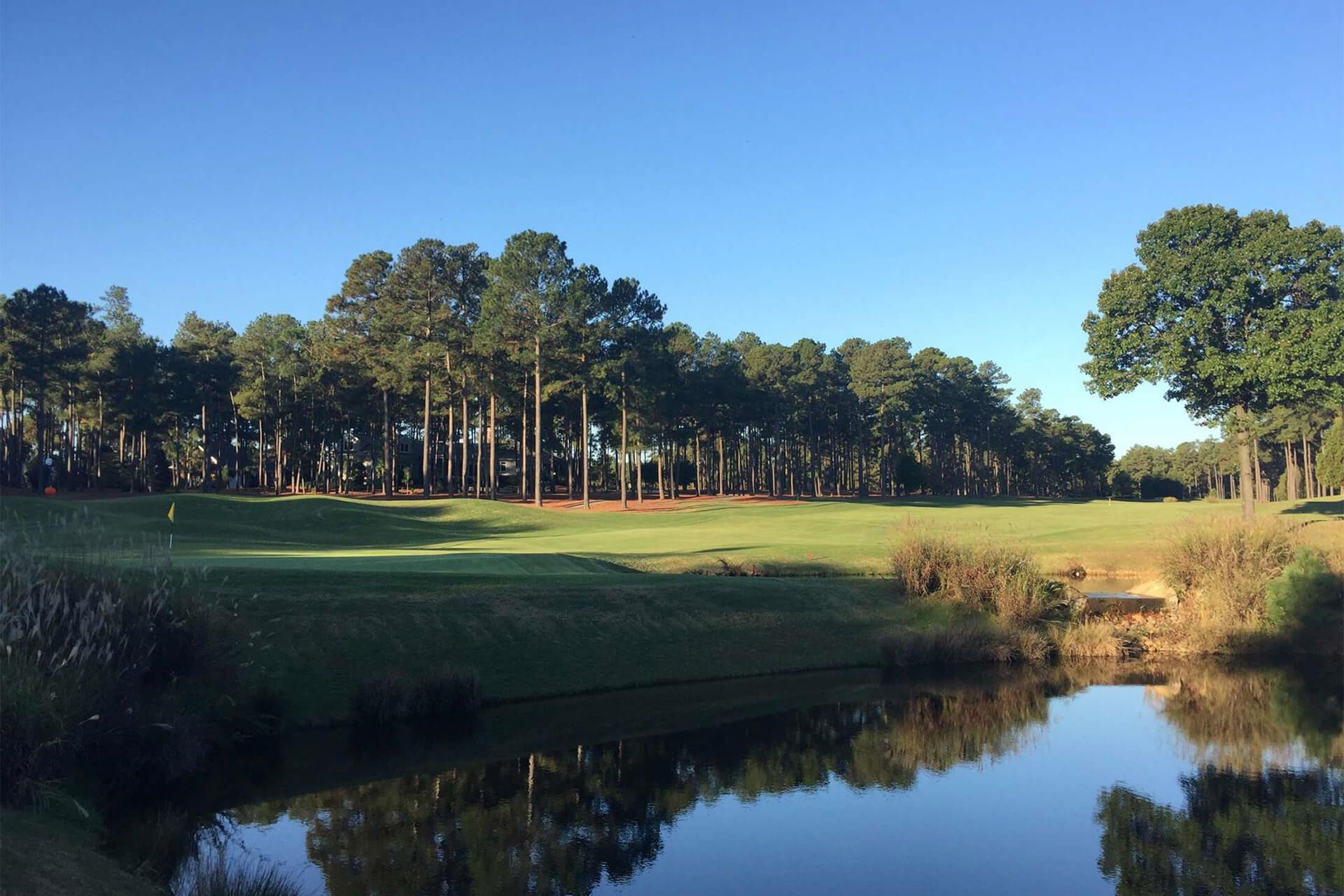
By October 2025, plans described an $18 million clubhouse renovation, course improvements and Azalea Place, a collection of 77 homes. These were announced plans, with their own schedule of work ahead. Bates's co-CEO, Chris Card, brought a background in club and resort operations. The partnership joined development responsibilities to the business of running the places people already use.
Bates's pitch for Pinehurst had an agreeable restraint: “You don't have to be a golfer to love living in Pinehurst,” he said, “but it doesn't hurt.” The line allows the course to remain an attraction without making it the sole reason for buying a home. Even in a golf community, life has an inconvenient habit of continuing between rounds.
The committee room and the basement workshop
Bates's involvement in institutions extends beyond real estate. He formerly served as vice chair of the trustees at Andover Newton Theological School, with work on finance and building and grounds committees. He also participated in early discussions of a possible relationship with Yale Divinity School. He now appears on Andover Newton Seminary's advisory council.
At Hingham Congregational Church, his roles included chairing deacons and stewardship, serving as moderator and chairing a senior pastor search committee. These are specific responsibilities with budgets, people and decisions attached. They add another setting to a career often described through properties: the committee room, where an institution works out what comes next.
He lives in Mount Pleasant, outside Charleston, with his wife, Beth Mays, and their goldendoodle, Beau. Away from development, his New Seabury biography lists boating, summer golf and occasional singing in the shower. It also describes his enjoyment of building furniture in the basement, with a frank acknowledgment of the mess involved.
The furniture detail is a pleasing place to leave him. After the financing arrangements, development plans and committee agendas, there is a smaller project with its own materials and dimensions. A basement workshop offers no harbor panorama and no tournament crowd. It does, however, offer the familiar satisfaction of making something fit.
Follow the work
- Rowland Bates on LinkedIn
- New Seabury team biography
- Andover Newton advisory council
- Liberty National's course history
- Pinewild acquisition coverage
- Pinewild's October 2025 plans
- Bermuda town hall & videos
- Watch town-hall coverage
- Bates on golf-community economics
- Icahn Enterprises website
- Liberty National construction, 2007
- CHICOS speaker biography, 2018
- New Seabury welcome, 2021
- Scituate town report