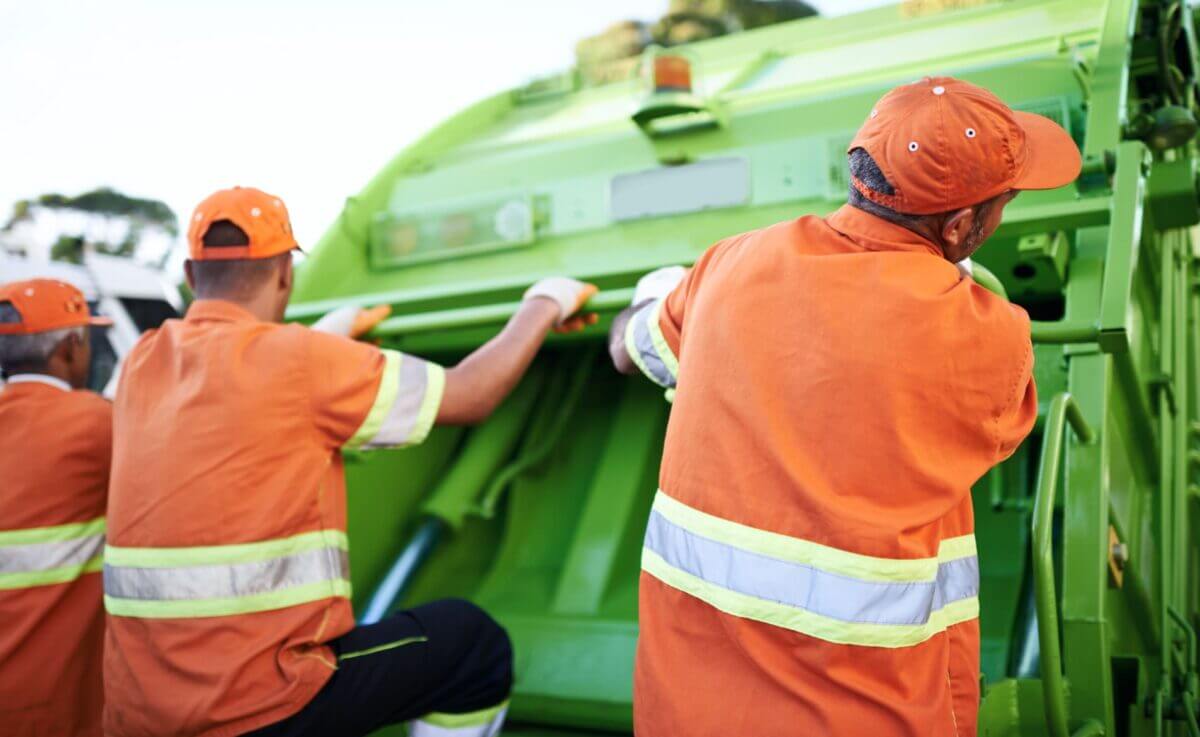
In Waterloo, Iowa, the garbage was being collected. The accounts were another matter. Carts in the field did not line up neatly with the city’s billing and inventory records. During the pandemic, household waste increased and carts migrated. Some people removed their RFID tags. A collection route, it turns out, can contain a small accounting mystery.
- The job: connect collection crews, dispatchers, billing teams, and residents.
- The clue: Waterloo reported $11,000 a month in additional collection fees after reconciling accounts.
- The lesson: record what happens in the field, then make that record useful.
The bin and the bill
Routeware supplied onboard computers, service verification, and photographs. The city could compare the work happening on the street with the accounts in the office. Its published customer story reported another $2,600 a month saved in landfill tipping fees. These are results from one deployment, reported in Routeware’s own case study. They describe a particular operation, rather than a return every buyer should expect.
“A lot of our savings came from recouping carts we were servicing but that were not being paid for.”
Scott Brunson · Waterloo sanitation director
The useful detail is the unpaid cart. Route optimization suggests an elegant mathematical problem: find the efficient path between stops. Waterloo had a messier problem. Which stops belonged on the route? Which containers belonged to paying accounts? A shorter journey would leave that uncertainty intact. The city needed a better account of the journey.
Two different benefits from account reconciliation. Customer-reported figures, 2022.
First, get the data out of the truck
Routeware’s early system had a wonderfully physical answer. Drivers returned to a depot and pulled a retractable cable through the truck window to download the day’s records. Wi-Fi removed the cable but introduced range and line-of-sight problems. A historical Sierra Wireless case study identifies founder Steven Kaufman and dates the original in-vehicle system to 1999.
Cellular connectivity changed the opportunity. In 2007, Routeware introduced a Windows touchscreen platform and a dashboard for live operational information. An early modem choice suffered quality and connection problems. The replacement AirLink equipment cost more upfront; the case study describes lower overall ownership costs. The lesson for anyone building field software is blunt: a garbage truck will test the hardware before a dispatcher gets to test the interface.
One pickup, several businesses
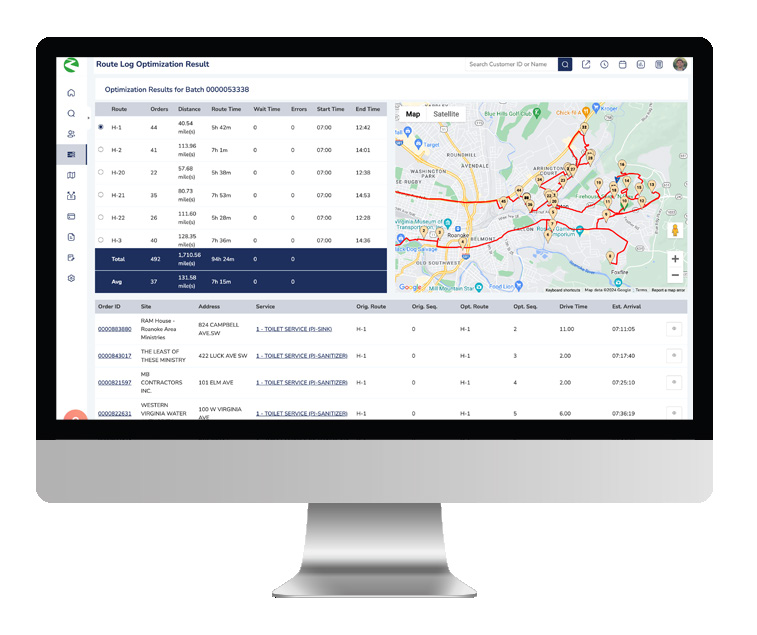
Today, Routeware sells connected tools for the work around that truck. Elements serves haulers with dispatch, routing, driver workflows, customer service, billing, and payments. SmartCity addresses municipal fleets, including waste collection, street sweeping, and snow operations. ReCollect handles the resident’s side: collection reminders, calendars, and answers about which materials go where.
The distinction matters. A driver needs to know the next stop. A dispatcher needs to know which route is falling behind. A billing clerk needs a service record. A resident needs to know whether that awkward plastic object belongs in recycling. Routeware’s proposition is to connect those questions, giving each person information they can act on.
The company reports more than 1,500 customers. In February 2026, its CEO put deployment at 18,000 waste vehicles. It occupies the specialist waste-software market, where AMCS also connects operations and billing, while RouteSmart offers focused route planning. Routeware’s case rests on its combination of waste-specific workflows, field technology, and resident communication. Integration partners such as Geotab and Samsara extend the fleet data available to those workflows.
Acquisitions assembled much of that breadth. Core Computing Solutions added billing capabilities in 2020; ReCollect joined in 2021. In August 2024, Routeware acquired Wastech, owner of the former Rubicon SmartCity and Pro platforms. K1 backs the business; earlier investor Banneker marks its investment fully realized in February 2024.
A price tag you can actually read
Subscriptions make this an ongoing operating expense, with implementation alongside them. Routeware quotes deployments individually, according to fleet size, services, and operational requirements. That leaves buyers with a familiar procurement question: what does a real scope look like?
Software, support, and maintenance
An Oakland Park purchasing proposal specifies $20,520 annually for software, support, and maintenance, plus $5,737.50 for training and installation. Three years total $67,297.50. Those figures give a buyer a useful distinction: paying for access and paying to make the system operational are separate tasks. They do not establish what a different fleet would pay.
PermiServ adds an unusually tangible service to the software portfolio. Councils can manage garden waste permits through a portal while the business prints and dispatches them to residents. A visible permit helps crews recognize a subscription at the bin. It is a useful reminder that the interface an operator needs might be a brightly coloured sticker.
The habit behind the hardware
Spokane offers another sort of return. Geotab’s joint deployment account describes replacing paper processes and saving up to $25,000 annually in printing costs. Less paper sounds modest beside an optimization algorithm. Ask the people who previously prepared and handled it.
Adoption is the less photogenic dependency. In a June 2026 company interview, technical account manager Ryan Purcell described resident engagement tools being configured and then forgotten. He also acknowledged limits in custom reporting. The practical implication is clear: assign someone to maintain communications, review route completion and exceptions, and check whether field records reach the accounts that need them. Unused reminders and disconnected records cannot deliver the same benefit.
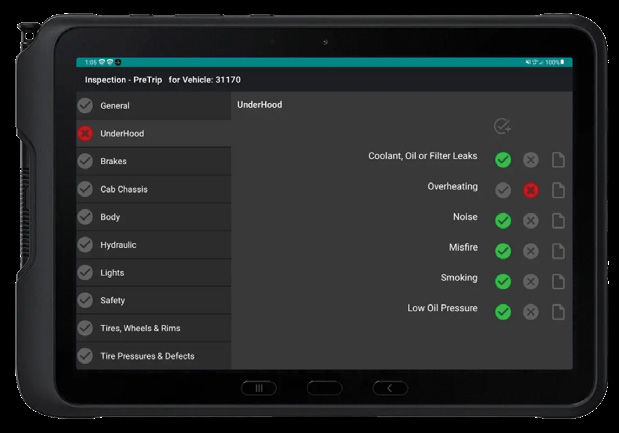
The next test is integration. A June 2026 Elements release added live fleet mapping, Samsara imagery requests, automated rejected-payment handling, and improved scale-ticket capture. April’s PermiServ acquisition brought UK garden waste permits into the portfolio. By September, Routeware reported more than 170 UK customers. Each addition asks the same question as Waterloo’s unpaid cart: can the organization connect the service it delivers with the records it keeps?