Ross Hendrickson had more than 300 employees, more than 15,000 nonprofit customers and a company he had helped build for ten years. In January 2023, he announced that he was leaving the CEO job. He sounded proud of Bloomerang. He also sounded ready to let somebody else run it.
There is a pleasing complication here. Bloomerang was built to help nonprofits keep people coming back. Its co-founder eventually decided that his own place in the business should change. The customers needed continuity. So did the company. Continuity, in his case, required a new person in the chair.
He had already been doing the less photogenic work of making that possible: adding executives, shifting responsibilities and assembling a leadership team. A founder’s departure can look like a single announcement. Hendrickson’s had a long preamble.
The story begins well before the handover, with a particular fondness for order and a business concerned with what happens after somebody gives.
A spice cabinet, a toolbox, a donor record
In a 2014 article, Hendrickson described enjoying alphabetizing his spice cabinet and sorting the wrenches in his toolbox. Some people relax by allowing things to fall where they may. His publicly offered examples ran in the other direction. Even the paprika, apparently, deserved a dependable address.
That detail sits comfortably beside an argument he made the same year about donor records. A nonprofit might know two people as a couple, yet need to remember them separately. Which person attended the school? Which person received the message? A shared household does not make two histories interchangeable.
The pricing could complicate matters. If every record counted toward a software license, an organization had an incentive to squeeze spouses into one entry. Tidier billing could produce muddier information. Hendrickson explained a change that allowed linked household records to count as one constituent for licensing, while the people retained separate records.
It was a small rule with a practical consequence. The customer could preserve useful detail without being pushed by the price to blur it. You do not need a dramatic product launch to see a founder’s priorities. Sometimes a counting rule gives a clearer view.
The second gift
Bloomerang’s founders entered a market where online giving already existed. Hendrickson’s account of the opportunity was more specific: the experience could be poor, and donor retention was low. Making it possible to give was only part of the job. Making a donor feel connected enough to give again was another.
The distinction changes what software has to remember. A payment tells an organization that money arrived. A useful donor history helps a fundraiser prepare the next conversation. The thank-you and the follow-up become part of the product’s purpose, rather than tasks left to someone’s memory.
Hendrickson described intuitive tools as a way to return time to nonprofit staff. He also described empathy as the starting point for his leadership. The biggest thing for me is empathy.
He applied that idea to understanding customers and supporting the people working alongside him.
Those two concerns belong together. A fundraiser faced with awkward software has a practical problem before any lofty question about generosity begins. Time spent untangling records is time unavailable for other work. In Hendrickson’s telling, the product should anticipate questions and make the routine easier. The human relationship remains the reason for doing it.
The first set of keys
Before Bloomerang, Hendrickson earned a B.S. in Economics & Engineering Science at Vanderbilt University and worked in product management at Bostech Corporation and Avectra. The combination of finance and product would become a recurring feature of his career.
He co-founded Bloomerang in 2012 with Jay Love, Rob Signorelli and Melissa Signorelli. Love was its first CEO. Hendrickson handled operations and finance, with responsibility for product development. His route to the top job passed through the machinery of running the business.
On July 1, 2017, he succeeded Love as CEO. The transition had been planned from the company’s beginning. Love remained involved as chairman and chief relationship officer, leaving Hendrickson able to draw on his experience while taking responsibility for the daily business.
That earlier handover gives the later one some context. Bloomerang already had an example of a co-founder changing jobs without severing his connection to the enterprise. An organization could keep the benefit of someone’s knowledge while another person took on the executive role.
- Co-founderOperations, finance and product development
- CEOSuccession from Jay Love, effective July 1
- The handoverDennis Fois becomes CEO in January
- Strategy & financeJoins Infinite Giving in June
Growth changes the guest list
In September 2020, Bloomerang received a growth investment from JMI Equity. Hendrickson described the partnership as a way to retain the company’s autonomy while gaining resources to expand its work. JMI’s Larry Contrella, David Greenberg and Vinny Prajka joined the board alongside Love and Hendrickson.
The announcement also recorded a business making room physically: Bloomerang had purchased and renovated a historic building beside its headquarters, nearly doubling its campus. Growth was becoming a question of space, expertise and governance as well as customers.
The acquisition of Kindful followed in January 2021. Hendrickson’s explanation concentrated on what the combination could give fundraisers. Kindful brought online giving tools and integrations. Bloomerang brought its emphasis on identifying, cultivating and retaining donors. He wanted those capabilities working together so nonprofit staff could spend more time on their missions.
An acquisition introduces another kind of operational work. Products have to coexist. People have to work together. Customers need a reason to believe the combination will help them. Hendrickson presented the deal as a product and people decision, connecting it to the same problem of making fundraising less cumbersome.
Whose milestone is it?
The figures from his final full year as CEO deserve careful labels. On Giving Tuesday 2022, Bloomerang and Kindful’s nonprofit customers raised $42.4 million. The average gift was $331. Bloomerang employees, meanwhile, gave $24,022 to 334 causes.
The customer total belongs to the nonprofits and their donors. The company supplied tools used in the work. Keeping that distinction intact puts the founder in a more useful frame: his business operated alongside organizations whose purposes extended far beyond the software itself.
Raised by Bloomerang and Kindful’s nonprofit customers
There were measures of the workplace, too. In 2018, Bloomerang appeared on Indiana’s Best Places to Work list for the third consecutive year it had applied. The selection included employee surveys. Hendrickson connected customer success to employees being happy, productive and fulfilled in their work.
By February 2022, the company was refreshing its visual identity, mission and values after stakeholder interviews and customer input. The stated values included empathy, stewardship and transparency. Those words acquire meaning through everyday decisions: the support someone receives, the record they can find and the room they have to do their job.
Learning to leave the chair
Hendrickson’s later account of succession described hiring a CFO and building the infrastructure that would allow him to step down. He had carried several responsibilities himself. Growth required more people with defined expertise, and his own work shifted toward putting them in place.
He plays guitar and drums, and has compared assembling a startup to assembling people to play music an audience wants to hear. It is an apt analogy for the handover: a group needs people who can do their parts, with enough attention left to hear everyone else.
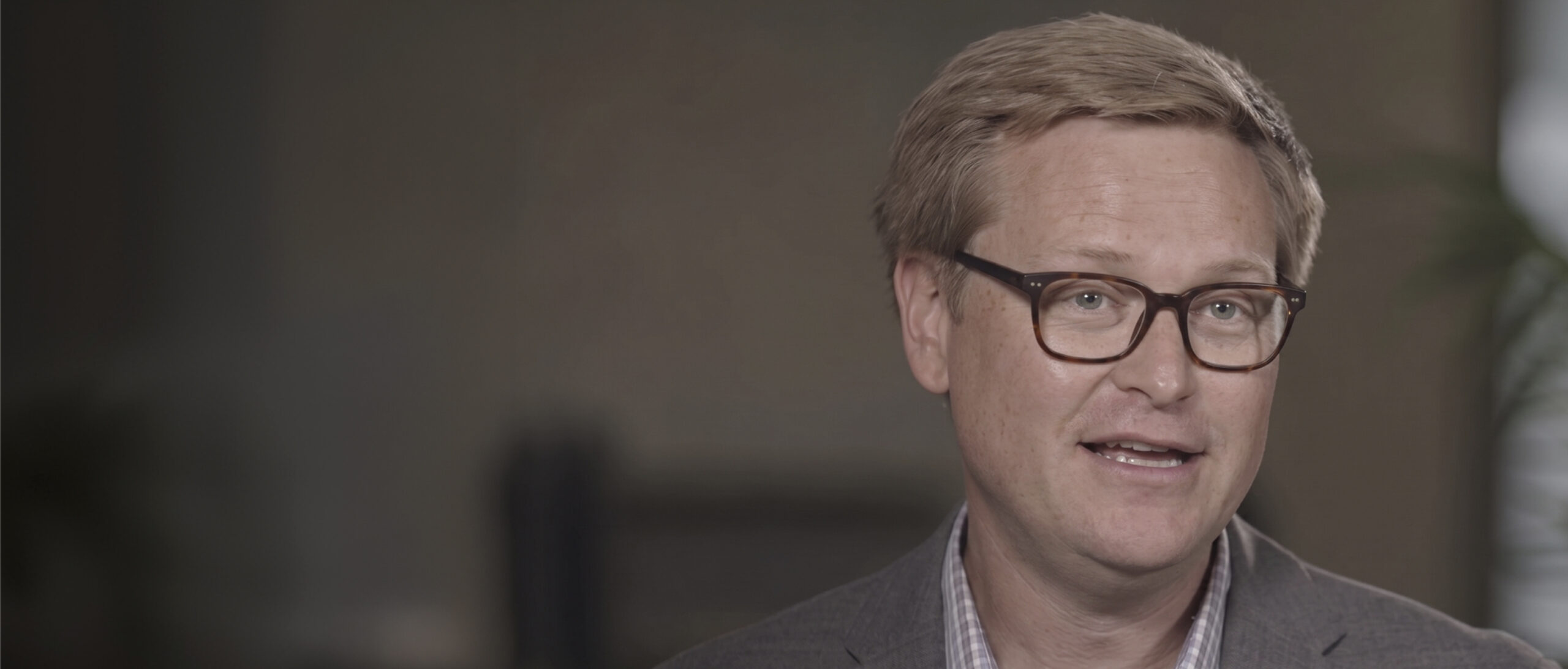
His departure announcement thanked his wife, Katie, for the support she had given during the decade of building Bloomerang. He wanted more time with her, their daughters and their dog, alongside time to explore technology. He announced that he would remain on the board and act as a strategic advisor.
Ultimately, I know that my best work is in innovation.
Ross Hendrickson, January 2023
That sentence made the change personal without making it mysterious. The job he had helped create had developed demands of its own. He could be proud of the company’s growth and interested in spending his days differently. Both thoughts fitted in the same announcement.
Finance, with a familiar purpose
His career continued through a CFO role at Hubstaff from June 2023 to April 2025. He joined Infinite Giving in June 2025. The company now lists him as Chief Strategy & Finance Officer.
Infinite Giving works on financial technology and stewardship for nonprofits. Its team includes founder and CEO Karen Houghton; Jay Love is listed as a board member. Hendrickson’s current work brings finance back alongside a familiar constituency, with another Bloomerang connection in the room.
His nonprofit connections include places closer to home. He has served on Conner Prairie’s Horizon Council, a young professionals leadership group. He also serves on the Board of Trustees at St. Richard’s Episcopal School, where his wife, Katie, has taught. These are organizations he has a relationship with beyond supplying a software product.
A school trustee and a software executive encounter an organization from different positions. The trustee participates in its governance; the executive develops tools that other organizations use. Including both jobs gives Hendrickson’s career a fuller shape. Nonprofits appear in the story as customers, places to serve and institutions connected to his family. The relationships extend past a company’s customer list.
The title is different from the one he handed over. The interest in helping nonprofit organizations remains visible in the choice of company. A founder’s career can continue through a succession, a finance job and a fresh set of colleagues.
Look back at the household records and the executive team, and the decisions have a practical resemblance. Give people a distinct place. Preserve the relationships. Arrange the work so someone else can pick it up. At Bloomerang, Hendrickson eventually applied that last requirement to his own job.