Ron Selewach has a complaint about résumés. They are advertisements, he argues, and employers have somehow agreed to treat them as evidence. A carefully arranged page earns a conversation. A less polished one may disappear into a system before its owner gets to say anything useful. It is an odd arrangement for a business that claims to be interested in people. The stationery gets the first interview.
Selewach founded Human Resource Management Center, known as HRMC, in 1984. From Tampa, he has pursued a practical alternative: ask applicants questions about the work, give them opportunities to demonstrate ability, and automate enough of the routine to make that possible for more people. The proposition sounds straightforward. The difficulty lies in getting an employer to change what it accepts as proof.
His LinkedIn introduction begins, “Everyone deserves an interview!” It is an expansive promise for someone selling automation, a technology often associated with narrowing the field. Read alongside his work, the sentence explains the attraction. A recruiter has a finite day. Software can ask another question after the recruiter has gone home. Whether the question deserves to be asked is where Selewach's argument becomes interesting.
“Everyone deserves an interview!”
Ron Selewach · LinkedIn
Before the software, the personnel office
Selewach studied at Cornell University from 1965 to 1969 and graduated from its School of Industrial and Labor Relations. His career began inside corporate human resources. An alumni update records him working as a manager of industrial relations for Honeywell Information Systems in Tampa. Alongside the job came a rather less corporate inventory of interests: boating, water skiing and flying.
Those details put a person behind the product vocabulary. This was someone working with the machinery of employment while enjoying actual machinery away from it. The same alumni item mentions his three children. Long before an online candidate journey could be diagrammed, there was a working parent in Florida, with responsibilities on land and interests that tended to leave it.
HRMC grew out of his dissatisfaction with repetitive recruiting work. He wanted better evaluations and a better experience for applicants, while making HR's contribution to business results more visible. That last ambition matters. Selewach's case for changing recruitment has always needed to persuade the employer as well as the applicant. Giving someone a chance must also help a company make a sound decision.
Industrial and Labor Relations
Recruiting becomes the business
A new interest becomes an engine project
The applicant who vanishes
In August 2011, he wrote for ERE about employers excluding people because they were unemployed. Against the backdrop of the recession, he challenged the assumption that a gap in employment was a convenient measure of ability. His concern was the shortcut: circumstances had changed, while some hiring habits continued as though an uninterrupted work history settled the question.
There is an accounting problem hidden inside that habit. A disappointing hire becomes visible. Someone rejected before an interview usually does not. The employer may never discover that the person could have done the work. Rejection closes the file and removes the opportunity to learn whether the original judgment was any good. Efficiency can look suspiciously like ignorance with a tidy desk.
By March 2019, Selewach was examining a related problem in Workspan: candidates whose careers changed direction. He used the example of an English teacher seeking a sales or marketing role. Listening and presentation skills might travel perfectly well across that boundary. The previous job title would not necessarily announce them. An assessment could give the employer something more relevant to consider.
That example helps explain his recurring preference for questions and work samples. A career change should invite investigation. It is possible to be inexperienced in an industry and practiced in an activity that industry needs. The employer still has to decide whether the person can succeed. Selewach wants the decision to happen after a useful encounter.
What the machine is supposed to do
Acclaim, HRMC's recruiting platform, puts that preference into a commercial system. Selewach describes an initial process built around direct questioning, evaluation and next steps. A résumé can be included, but it need not be the ticket of admission. In a June 2026 article, he again argued that technology makes it possible to interview interested candidates whom a busy recruiter could never individually reach.
His January 2018 Workspan article, Smart Sourcing, set out the division of labor he wanted. Automation would gather and organize information, leaving hiring managers time to apply their judgment at the final interview. The human decision remained central to his description. The software's value depended on the quality of the interaction it made possible before that decision.
For a founder whose business uses artificial intelligence, he can be notably skeptical about fashionable interview equipment. In an article questioning video interviewing, he asks what an employer actually gains by watching a candidate on camera. Remote conversation can be useful, he argues, while appearance and rehearsed camera behavior can distract from job performance. A webcam is a surprisingly expensive accessory if it mostly helps people admire their own intuition.
These positions share a demanding standard: explain what the information tells you about the work. A clear image, an elegant résumé and a confident performance may feel informative. His writing repeatedly asks employers to examine that feeling. The appeal of the argument is its specificity. You can inspect a question. You can ask why it belongs in an interview.
The customer has homework, too
Speed occupies plenty of space in Selewach's writing, particularly when companies need to hire at volume. He describes the strain of reviewing large numbers of applications and the inconsistent judgments that can follow. His proposed response combines repeatable questioning with exercises tied to the job. The aim is to preserve meaningful evaluation when the quantity of applicants tempts everyone to take shortcuts.
But applicants can leave of their own accord. His April 2026 article on application dropouts spends much of its time on ordinary courtesy: explain the process, stay available, communicate progress and make applying possible on a phone. He also urges employers to supply information about the job while asking candidates for information about themselves. An application is a demand on someone else's time.
The advice has a welcome lack of theatricality. Tell people what is happening. Avoid making them repeat work. Stop the process when a negative decision is clear, and communicate it. These are small acts of competence with consequences for the person waiting. They also complicate the idea that buying software is enough. The employer has to decide how it wants people to be treated.
A second business at the water’s edge
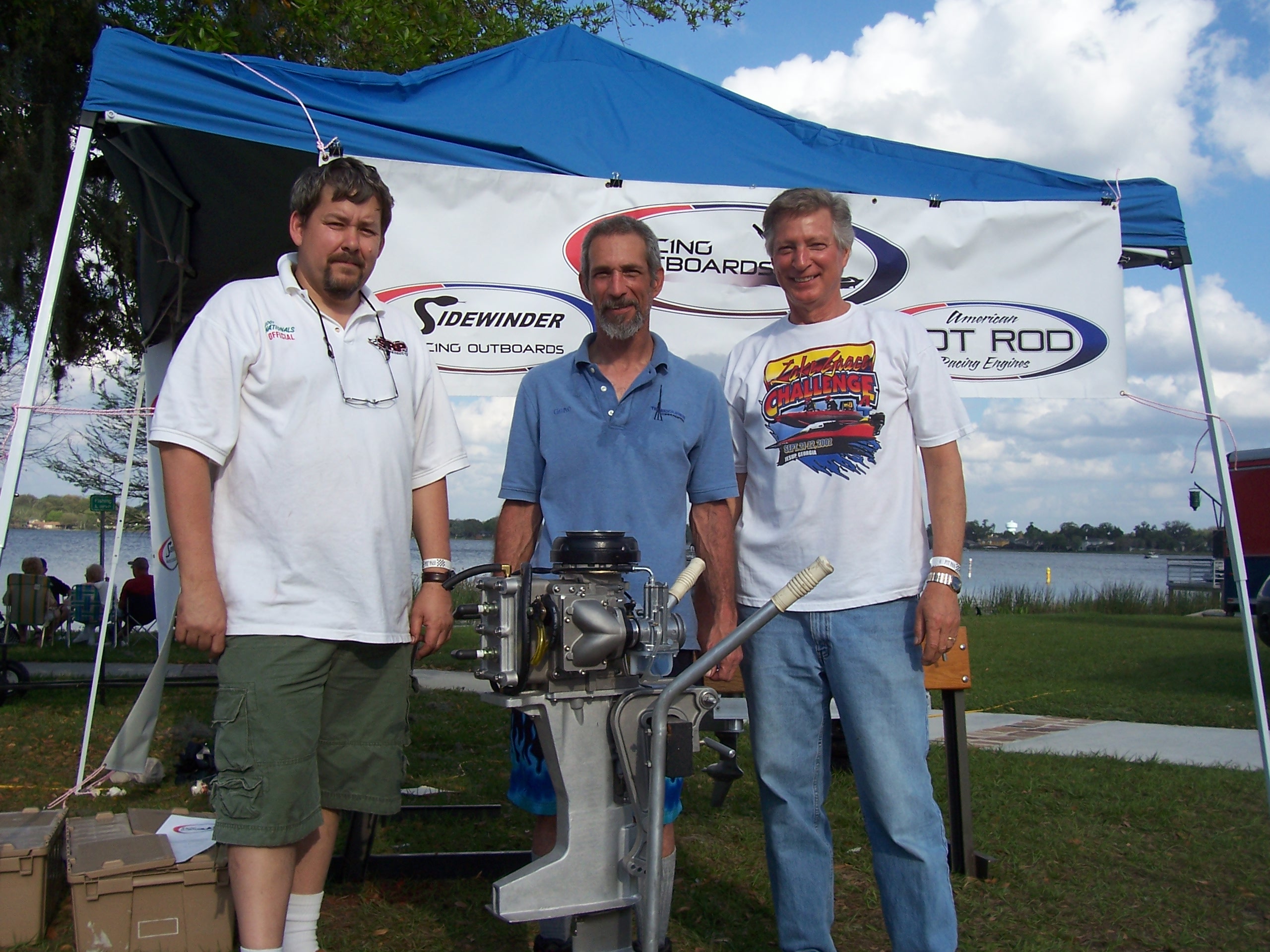
Away from hiring, Selewach runs Racing Outboards. His account of entering the sport begins around 2000, when he attended a race for the small, kneel-down boats he had admired as a child. He remembers meeting a disappointed boy who had been barred from racing that weekend because of poor grades. The family discipline impressed him; so did the families helping one another in the pits.
He found a sport he wanted newcomers to share, with a substantial practical obstacle: obtaining engines. He eventually bought the American Hot Rod line and worked with people including manufacturing veteran Dave Little and engineer Ed Runne. The project became the Sidewinder racing engine. A recreational interest had acquired a supply problem, collaborators and a production obligation.
His company's motto supplies a lighter explanation: “It’s never too late to have a good childhood.” Coming from a business executive standing beside an outboard motor, it has the advantage of being easy to believe. Some people revisit childhood by buying a model boat. Selewach found himself responsible for equipment other people needed to go racing.
Even the connecting rods get a vote
The engineering project also left an unusually concrete record of persistence. At the American Power Boat Association's 2019 stock outboard meeting, Selewach reported on a troublesome order of connecting rods. Casting and preparation problems had made parts unusable, and Racing Outboards absorbed the cost of replacement. The meeting discussed pending engines and the difficulties of supplying them. Good intentions still needed suitable metal.
That record gives the second business useful weight. A plan to encourage participation eventually becomes a conversation about suppliers, parts and delivery. The people waiting for engines need the engines. At the meeting, Selewach confirmed that customers did not have to pay until a motor was ready to ship. The discussion makes the practical burden of keeping a small sport equipped unusually plain.
A 2021 report signed by Selewach and Runne described their effort to reduce dependence on other manufacturers' components. They wanted Sidewinder owners protected from parts becoming unavailable when another business discontinued them. Here was another version of access: the ability to keep participating after the initial purchase. A starting line does little good if the equipment cannot be maintained.
The question that keeps coming back
Selewach's public work still returns to the status of HR itself. In August 2026, he argued for including human resources in the executive team, connecting workforce knowledge with strategic planning, succession and the company's future needs. It extends the ambition behind HRMC's founding: people decisions belong in the discussion of how a business succeeds.
Across the two businesses, a recurring concern becomes visible. An employer may miss a capable applicant because the first hurdle tests the wrong thing. A racing community may welcome new families while lacking equipment they can buy. The connection is an interpretation of Selewach's work, but the obstacles are tangible. Participation depends on what happens before anyone gets to demonstrate ability.
His answer has involved a long series of practical commitments: a company founded in 1984, arguments about interviews, recruiting software, a racing-engine project and the unromantic work of supplying parts. The most revealing question in that collection may be the one he keeps putting to employers. Before deciding what a person can do, have you given them a useful way to show you?