Three hours is a generous amount of time to give a question. On the journey between Gurugram and Noida, Rohan Nayak had one: why was it so hard to find something he wanted to keep listening to? He was working at Paytm after its acquisition of Cube26, the mobile technology startup where he had led product. The commute supplied an audience of one. It also supplied a deadline. Whatever filled the journey had to hold his interest until he got there.
The question became Pocket FM, founded in 2018 with Nishanth KS and Prateek Dixit. Years later, its business would involve fictional fortunes, secret identities, romantic reversals and listeners buying their way to the next episode. The origin was less theatrical: a product person, a long ride and an unsatisfactory choice of things to hear.
Nayak’s career has since become a study in the difference between finding spare time and earning repeat attention. A commute can put someone within reach. It cannot make them care about tomorrow’s installment. That part took work.
A banker with a different product in mind
Before the stories came mechanical engineering. Nayak attended IIT Kharagpur from 2010 to 2014, then worked at Credit Suisse in Mumbai as a Delta One analyst. His résumé includes a Barclays summer internship and, later, product management at Cube26. Moving from financial products to consumer apps changed the subject of his work, but kept him close to decisions made through numbers.
By 2018, Paytm’s acquisition had brought him into another consumer technology business. The professional path looks tidy when reduced to company names. Its destination was hardly obvious. Mechanical engineering does not prescribe a career in audio drama. Neither does banking.
There was a useful connection from college. Nishanth KS was his IIT Kharagpur batchmate; Prateek Dixit became the third co-founder. Their different experience would matter to a business that needed both a working product and a continuing supply of things worth playing.
Tomorrow was the missing feature
Pocket FM did not arrive at serialized fiction fully formed. The founders tried different kinds of audio over roughly two years. Podcasts were among the early possibilities. The trouble was finding a format that gave people a reason to return every day. Having something to play and having something you were waiting for turned out to be different propositions.
By Nayak’s later account, the early financing was uncomfortable too. Thirty investor meetings preceded a $5.6 million investment, which arrived when about a week of runway remained. His recollection includes confidence in his co-founders and a modestly unreasonable faith that they would work it out. “I knew we could figure this out,” he said.
The eventual answer borrowed television’s continuing plot. A story could unfold in installments, leave something unresolved and come back tomorrow. Audio let that pattern travel through a day without demanding that the listener keep watching a screen. The product acquired a small, durable obligation: continue the story.
First, earn a place in the day.
Average daily engagement at historical milestones, described in the March 2024 investor retrospective. Bar lengths share a 120-minute scale.
The sequence of Nayak’s work is revealing. First came engagement, then attention to whether people stayed, then the economics of acquiring and serving them. Five minutes of early daily engagement became 40 by Series A and 120 by Series B. Each stage gave the team a different problem to solve. It is difficult to improve every part of a business at once; it is quite easy to make every dashboard busier.
The audience gets a vote
Finding the format left another expensive question: which stories should fill it? Nayak described an approach that borrowed from fast fashion’s willingness to test many possibilities. Rather than committing everything to a finished show, Pocket FM worked with writers on inexpensive pilots. Around 100 pilots a month gave the company more chances to discover an audience before committing further resources.
The signals included social-media responses, behavior inside the app and willingness to pay. That makes the opening of a story a business decision as well as a creative one. A promising idea still has to survive its first minutes. Listeners owe a plot no patience simply because its author knows an excellent twist is coming later.
“Because, in the end, the audience knows what works.”
Rohan Nayak, 2025
In his April 2025 conversation with Michael Mignano, Nayak discussed testing content, using AI in production and improving discovery. The subjects fit together. Making a show is one task. Helping the right listener encounter it is another. A catalogue can grow while a person still struggles to find something to enjoy. For a founder selling continued attention, that gap is costly.
A cliffhanger crosses the border
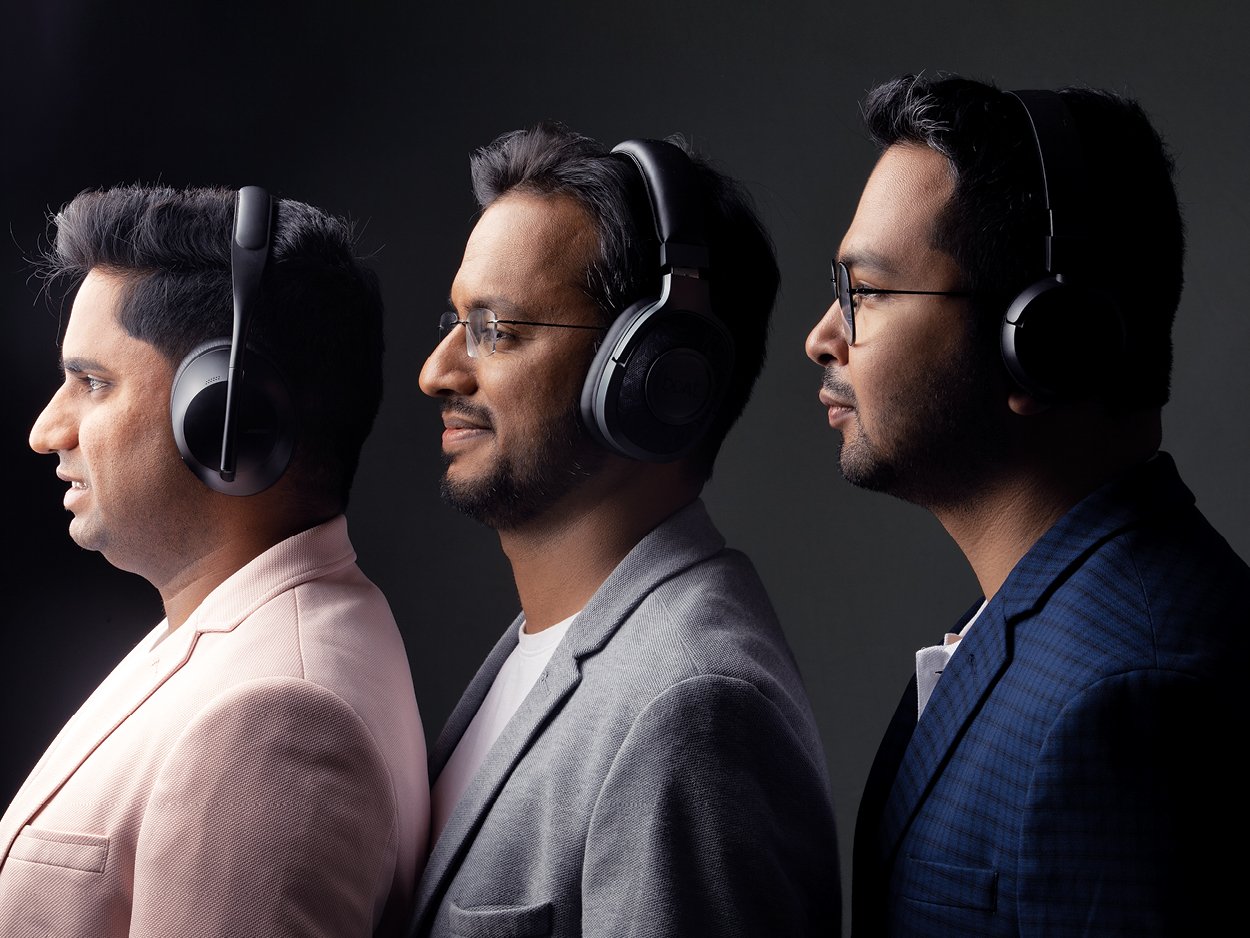
The co-founders appeared together in Fortune India’s 2023 40 Under 40, after the business had expanded into the United States in 2022. Recognition made for a neat milestone. The operating problem remained untidy: how do stories, payment habits and distribution choices carry from one market into another?
Nayak’s public conversations return to cultural adaptation. A story can keep its central conflict while changing the details that make it feel local. Language is one part of that work. The challenge is also whether the characters’ world makes sense to its new listeners. A literal translation has no special entitlement to emotional credibility.
The payment model makes that credibility consequential. Pocket FM offers free access and ways to unlock more episodes. Waiting, paying and, in some offers, watching an advertisement become different routes to continuing. The commercial decision sits unusually close to the dramatic one. A listener has already met the characters before deciding how urgently their next predicament needs resolving.
The tools changed. The test remained.
By November 2025, Nayak was describing AI as central to Pocket FM’s economics. At TechSparks, he said the company was generating free cash flow and credited AI with helping it grow profitably. These were his claims about the business. The argument behind them was practical: producing and adapting stories more cheaply could give more ideas a chance to find an audience.
He also recalled a writer in Banaras whose work reached listeners in America and earned money that helped support his family. In a conversation crowded with revenue and production figures, that example made the ambition legible. Distribution could connect a person writing in one city with people listening on another continent.
More production brings its own burden. Someone must still choose what deserves attention, maintain a story’s continuity and make the characters worth following. Pocket FM’s current description of its research addresses those problems directly, including memory across long narratives and cultural adaptation. A machine that remembers the plot is helpful. The plot must still give a listener a reason to remember it.
The experiment he stopped
Success in audio did not make every adjacent format work. In June 2026, Pocket FM closed Pocket TV after a beta of about five months. Nayak’s explanation concentrated on return visits. Bringing people in had proved easier than bringing them back. He also criticized business models that depended on making cancellation difficult.
Closing an experiment belongs in his story alongside opening a new market. The test had produced information, and the company stopped it. A founder can be persistent about an ambition while revising the product meant to deliver it. Nayak’s early audio experiments had already required that distinction.
The broader interest in visual storytelling continued. Pocket Entertainment’s current portfolio includes Pocket Saga, an AI microdrama platform. Pocket TV and Pocket Saga are separate products. Treating one closure as the end of the entire ambition would miss how this company works: a format remains an experiment until its audience gives it a reason to stay.
Even the launch acquired a plot
In September 2026, Nayak appeared alongside Chris Diamantopoulos in the campaign for Sherpa, the company’s fiction-writing platform. Diamantopoulos played a fictional investor with extravagant expectations. Nayak played the founder explaining the product. After years of working on other people’s stories, he had acquired a supporting role in his own marketing.
The joke served a concrete brief. Sherpa was presented as help for developing a sustained fictional world, with the characters and complications that a long-running series requires. The campaign travelled across India and the United States. For an executive usually talking about retention and production costs, performing beside a comic investor was a change of register.
That month also brought a company announcement: Pocket Entertainment had passed a $500 million annualized revenue run rate as of August. The figure annualizes monthly revenue; it is a measure of the current pace of business. It marks considerable distance from the original commute, while leaving tomorrow’s listener free to do something else.
Pocket Entertainment’s reported annualized revenue run rate.
Monthly revenue × 12. A company metric, distinct from full-year revenue.
Nayak’s interests point beyond the next financial milestone. An anime enthusiast, he has spoken about building an Indian superhero universe, with Shaktimaan Returns part of that ambition. The attraction is continuity on another scale: characters who can support more stories, more audiences and more ways of encountering them.
There is a pleasingly small unit underneath all of this. Before a fictional universe, a global platform or a production system comes one episode that somebody finishes. Then comes the decision to play another. Nayak began by wanting a better way to spend three hours. His work now depends on making the next few minutes worth choosing.