In May 2004, Robert C. Sledd had a quarterly report with two stories inside it. Performance Food Group’s sales had risen 15 percent to $1.5 billion. Net earnings had fallen 54 percent to $7.5 million. Growth was doing its job. Profitability needed attention. For a founder returning to the chief executive’s chair, this was a rather pointed welcome-back card.
Sledd had helped create the group in 1987. He had handed over the CEO title in 2001 and remained chairman. Then, in March 2004, his successor, C. Michael Gray, resigned. Sledd took the operating job again. The company described challenges carried over from the previous year, and he faced the familiar executive problem of making a growing business work better.
That return is a useful place to meet him. The founding date tells you when his PFG story began. The second appointment tells you something about the responsibilities that followed. His later work in Virginia economic development and Richmond housing organizations would bring different problems to the table, but the question of how an organization delivers remained relevant.
A new group with old roots
Food distribution rarely gets the starring role at dinner. Nobody books a restaurant because they admire its procurement arrangements. Yet the meal depends on a sequence of promises made before anyone sits down. The distributor occupies that busy territory between the producer and the kitchen, where an attractive sales figure eventually has to become an actual delivery.
Sledd’s preparation began well before PFG’s formation. He served as a director of Taylor & Sledd Industries from 1974 and as its president and CEO from 1984 to 1987. That business became one of PFG’s predecessors. He came to the new group with experience inside an existing distributor, rather than with a company name and an empty warehouse.
The distinction between PFG’s roots and its founding is worth keeping straight. Its corporate ancestry reaches back to Richmond in 1885, when James Capers began selling groceries for a wholesaler. The group Sledd co-founded arrived in 1987, bringing foodservice businesses together. An old trade acquired a new corporate arrangement.
Sledd became president and CEO. The company went public on Nasdaq in August 1993, gaining money to reduce debt and expand. In 1995 he became chairman while continuing as CEO. Those dates mark a change in the scale of his responsibilities: running a distributor, helping assemble a group, then leading a public company with investors watching its progress.
- 1987Co-founds the group; becomes president and CEO
- 1993PFG completes its Nasdaq public offering
- 1995Adds the chairman’s responsibilities
The invitation to return
The first handover came in August 2001, when Sledd’s initial CEO tenure ended. Gray took the role, and Sledd remained chairman. By 2003 the company had annual sales of $5.5 billion, up from $4.4 billion the previous year. There was plenty of expansion to discuss. There were also expectations attached to it.
Recognition followed. In June 2003, Sledd and Gray became regional winners in Ernst & Young’s Entrepreneur of the Year competition. They were subsequently national finalists in the consumer and business services category. A Virginia legislative resolution commending them described a business with more than $5 billion in annual sales and a place on the Fortune 500.
The resolution arrived in January 2004. In March, Gray resigned and Sledd returned as CEO. The proximity of those events gives the story its human proportions. Public recognition captures an achievement at a particular moment. A business keeps going the next morning, carrying its problems along with its awards.
Sledd acknowledged Gray’s contribution to the company’s growth when the change was announced. He also expressed confidence in the associates and leadership team taking the business forward. This was a return to a company full of other people’s work, including the work of the executive he was replacing. Founding it had never meant building it alone.
Compared with the prior-year quarter. Revenue reached $1.5 billion; net earnings were $7.5 million.
The May results made the immediate task clear. More business was coming through the system, while earnings had moved in the opposite direction. Sledd’s language emphasized efficiency and profitability across the operating segments. The challenge was less photogenic than an award presentation, and considerably harder to frame for the office wall.
A company bigger than its founding story
PFG’s operations also extended beyond the straightforward image of trucks delivering restaurant supplies. Its fresh-cut business included packaged salads. In June 2005, during Sledd’s second CEO period, the company sold the subsidiaries making up that segment to Chiquita. The sale changed the shape of the business and how its continuing results were presented.
By its 2006 reporting year, PFG described a range of more than 68,000 food and non-food products and over 41,000 customers. The customer base included independent restaurants, hotels, schools and chains. Broadline distribution and customized distribution addressed different kinds of demand. A single corporate name covered many separate relationships and a substantial amount of coordination.
Steven Spinner succeeded Sledd as CEO in 2006. Sledd stayed chairman until the company was taken private in June 2008. Blackstone and Wellspring completed the acquisition and combined PFG with Vistar. That transaction opened another corporate chapter. Sledd’s part in the story belongs to the group he helped establish and lead through its earlier public-company years.
The jobs that went somewhere else
After PFG, a location decision stayed with him. In an interview published in January 2010, he recalled the company choosing South Carolina over Virginia for an operations center. Incentives, workforce training and other services had helped the competing state win the investment. For an executive associated with Richmond, the decision was an uncomfortable illustration of how businesses compare places.
“I want to see those jobs stay here.”
Robert C. Sledd, January 2010
He also argued for more economic development resources and support for small businesses. Those were specific concerns about what Virginia could offer an employer. The memory of the operations center gave them an example: a company could have roots in one state and practical reasons to put its next facility in another.
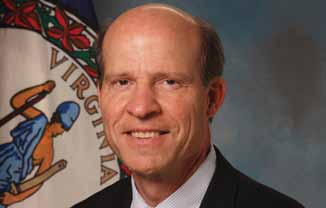
In January 2010 he became senior economic advisor to Governor Bob McDonnell, serving until January 2014. His responsibilities included developing Virginia’s strategic economic development plan and coordinating oversight with the commerce secretary. A proposed appointment as commerce and trade secretary had given way to the advisory role. The job title changed; economic development remained the assignment.
Finding a place in Richmond
His public-service years overlapped with a longstanding interest in housing. In Richmond he had served as Homeward’s board chairman and as a director of the Better Housing Coalition. These commitments were already part of his public record while he was running PFG. They continued to matter after his operating role at the company ended.
In 2006 he was helping develop a ten-year plan to end homelessness in the Richmond region and had helped lead a community strategy session. It was work requiring organizations to agree on an approach over time. The presence of a corporate executive could bring contacts and organizational experience, but the undertaking belonged to a much wider group.
During the McDonnell administration, Sledd helped establish an advisory committee to develop a statewide plan addressing homelessness. Virginia was dealing with the aftermath of recession and foreclosure. A later account of the state’s move toward rapid re-housing described his commitment and Homeward involvement as part of the effort’s background. His business and civic responsibilities had met in the same public assignment.
There was quieter institutional work too. In 2011 he co-chaired Housing Opportunities Made Equal of Virginia’s fortieth-anniversary celebration with Judy Anderson. The gathering recognized the organization’s history of fair-housing work. Sledd’s involvement places him within a local network concerned with access to housing, alongside the employers and investors more commonly found in an executive biography.
The long view from another boardroom
Distribution remained part of his professional life through corporate boards. He joined Pool Corporation’s board in 1996 and retired in May 2024. Swimming pool supplies differ from restaurant provisions, but both businesses give a director reasons to understand inventory, customers and the work of moving products. His tenure spanned twenty-eight years.
Universal Corporation added another setting when he became a director in 2009. Its board biography connects his food-industry operating experience with the company’s work in plant-based ingredients. By 2026 he continued to be identified as a director and managing partner of Sledd Properties, the investment company where he has held that role since 2001.
The named responsibilities are less dramatic than a founder’s first announcement: finance, pension investments, compensation and governance. They concern what happens to an organization over years. His continued presence in that work gives the later career its own shape, beyond a collection of former titles.
And then there is basketball
A small detail in his VCU Business Foundation profile provides a welcome change of register. Listed as a founding trustee, Sledd declares: “Huge VCU basketball Fan!” He earned his own Bachelor of Arts at the University of Tennessee. Richmond’s university has nevertheless acquired both his trustee service and his sporting enthusiasm.
The line is useful because it sounds like a person briefly escaping a board biography. Elsewhere there are committees, corporate combinations and years in office. Here there is a team to support. A local account in 2004 described colleagues finding him down-to-earth; the basketball declaration offers a modest, public glimpse of the person behind those formal appointments.
In 2007 he was inducted into the Greater Richmond Business Hall of Fame. By then his career already included the original build, the handover and the return. What followed took him into state government, investments and continuing civic commitments. The story moves well beyond the founding milestone, toward the recurring task of taking responsibility for what happens next.